The Willamette Valley, Oregon’s verdant heartland, is more than just picturesque rolling hills. It’s a tapestry woven with vineyards, each a testament to the region’s dedication to crafting world-class wines, particularly Pinot Noir. For wine enthusiasts, navigating this expansive landscape can feel overwhelming. This guide serves as your personal Willamette Valley wine map, offering insights into the diverse sub-AVAs (American Viticultural Areas) and helping you plan your perfect tasting experience.
Understanding the Importance of the Willamette Valley Wine Map
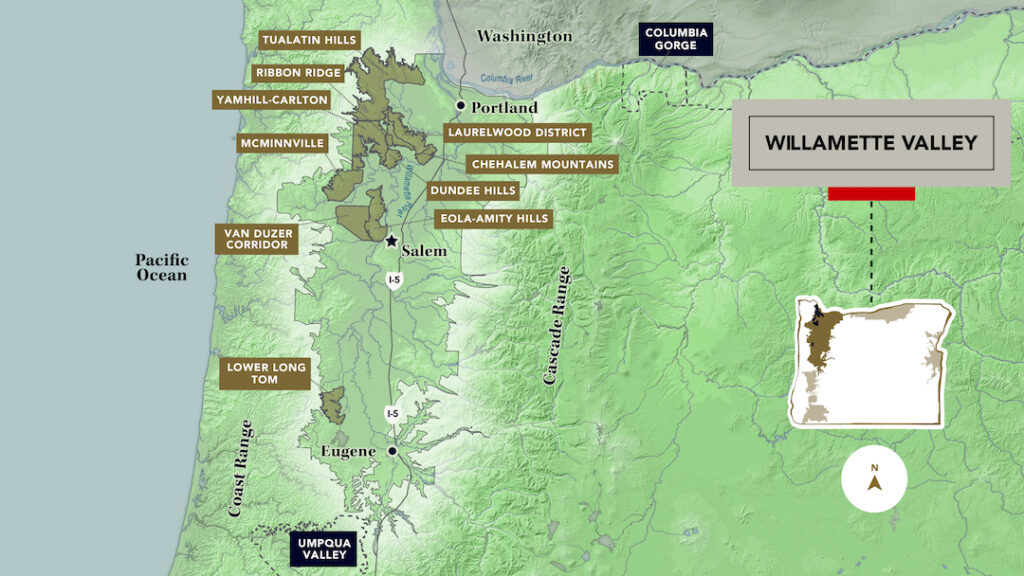
The Willamette Valley’s charm lies in its intricate mosaic of microclimates and soil types. This variation, influenced by the Coast Range, the Cascade Mountains, and the Van Duzer Corridor, creates distinct terroir – the "taste of place" that translates into wines with unique characteristics. Simply knowing that a wine is from the Willamette Valley is not enough. Delving deeper into its specific AVA reveals a wealth of information about the potential flavors, aromas, and structure you can expect.
A well-understood Willamette Valley wine map allows you to:
- Target specific wine styles: Knowing the characteristics of each AVA helps you choose wineries that align with your preferred palate.
- Plan efficient tasting routes: Group wineries within the same AVA for a cohesive and educational tasting experience.
- Appreciate the nuances of Pinot Noir: Experience how the same grape varietal can express itself differently across the valley.
- Engage in informed conversations: Impress your tasting room hosts and fellow wine lovers with your knowledge of the region.
A Journey Through the Sub-AVAs: Unveiling the Willamette Valley’s Diversity
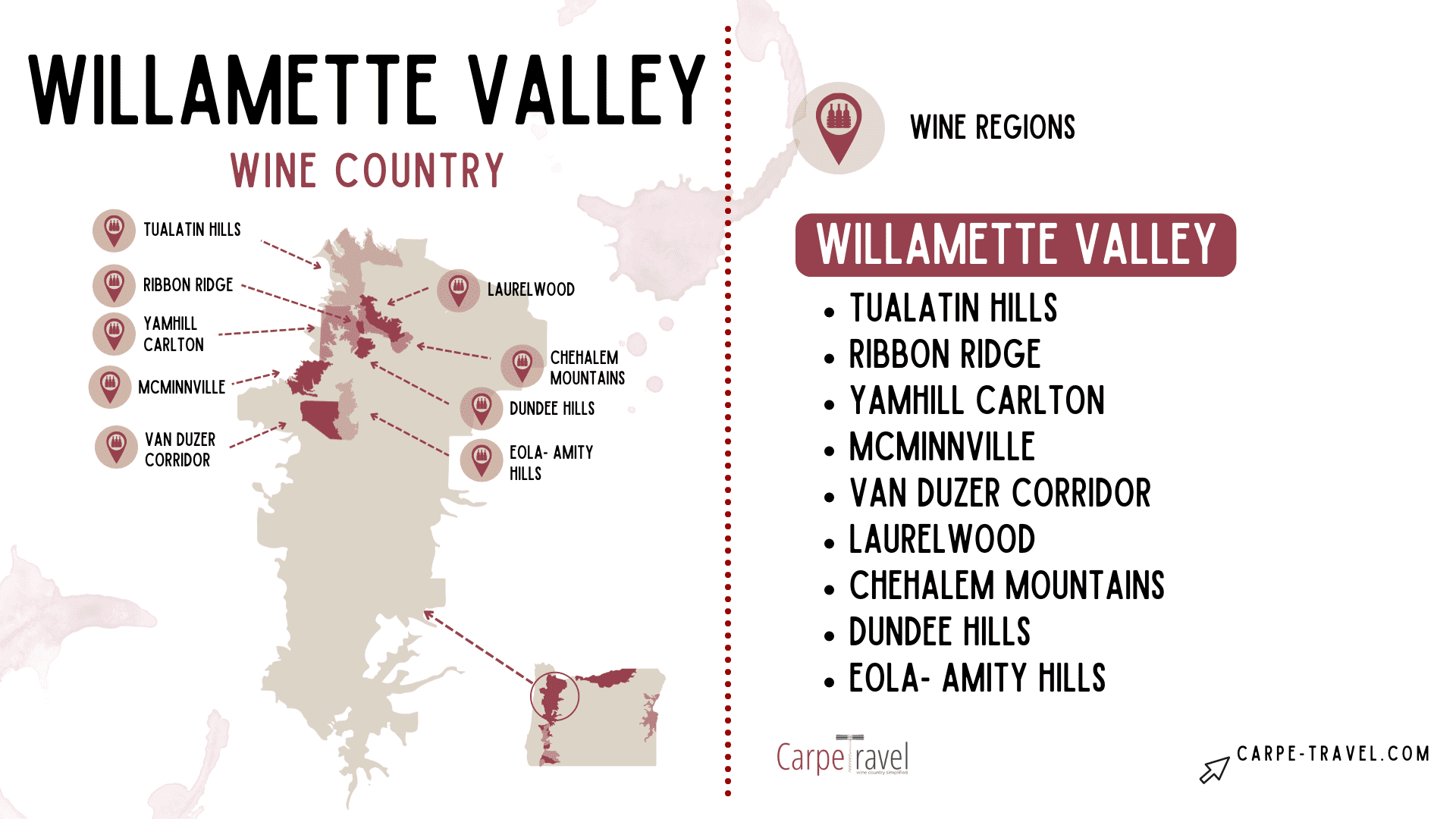
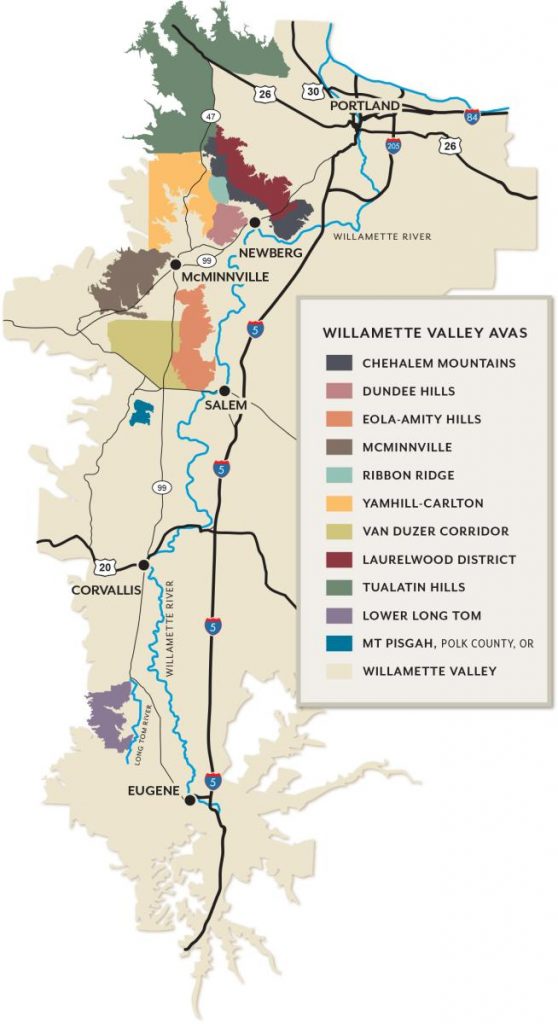
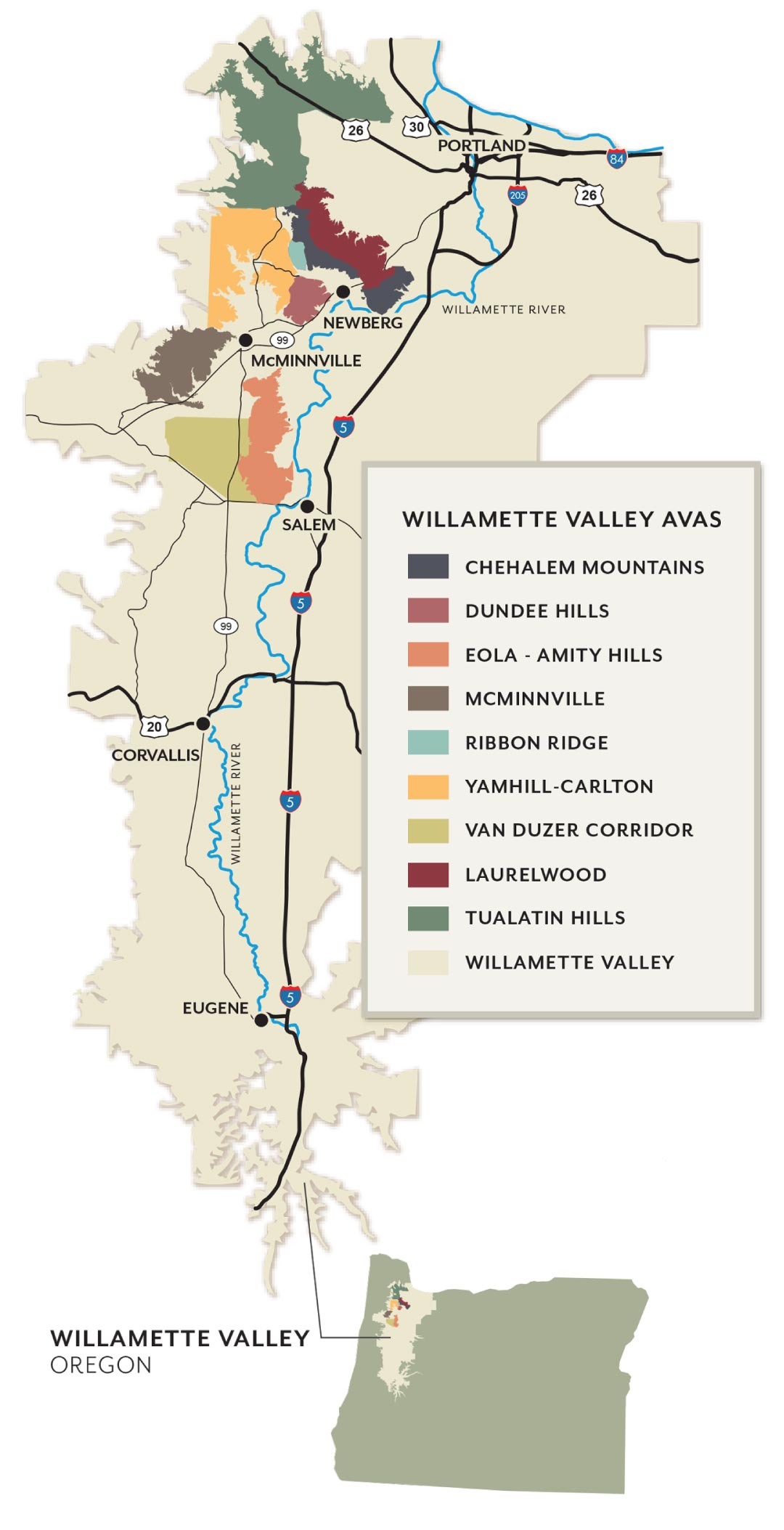
The Willamette Valley itself is a large AVA, encompassing a significant portion of northwestern Oregon. Within this overarching region lie nine distinct sub-AVAs, each with its own personality and contribution to the valley’s rich wine landscape. Let’s explore them, starting from the north and moving south:
1. Ribbon Ridge: Tucked within the Chehalem Mountains, Ribbon Ridge is a narrow, elevated ridge characterized by marine sedimentary soils. These well-drained soils, combined with a slightly warmer climate, contribute to Pinot Noirs with a distinctive earthy quality, often exhibiting notes of dark cherry, spice, and a firm structure. Ribbon Ridge wines tend to be age-worthy, developing complexity and nuance over time.
Key Characteristics:
- Soils: Marine sedimentary
- Climate: Slightly warmer
- Typical Wines: Pinot Noir with earthy notes, dark cherry, spice, and firm structure.
2. Chehalem Mountains: Encompassing Ribbon Ridge, the Chehalem Mountains AVA is the largest in the Willamette Valley. Its diverse topography, ranging from gentle slopes to steep hillsides, contributes to a variety of microclimates and soil types. This results in a wide range of Pinot Noir styles, from elegant and refined to bold and powerful. You’ll find wines with notes of red fruit, spice, and floral aromas.
Key Characteristics:
- Soils: Diverse, including sedimentary, volcanic, and loess
- Climate: Varies depending on elevation and aspect
- Typical Wines: Diverse Pinot Noir styles, red fruit, spice, and floral aromas.
3. Dundee Hills: Considered by many to be the birthplace of Oregon Pinot Noir, the Dundee Hills AVA is defined by its volcanic Jory soil, renowned for its excellent drainage and nutrient retention. This unique soil, coupled with a moderate climate, produces Pinot Noirs with a vibrant acidity, bright red fruit flavors, and a silky texture. The wines are known for their elegance and longevity.
Key Characteristics:
- Soils: Volcanic Jory
- Climate: Moderate
- Typical Wines: Pinot Noir with vibrant acidity, bright red fruit, silky texture, and elegance.
4. Yamhill-Carlton: Situated west of the Dundee Hills, the Yamhill-Carlton AVA is characterized by ancient marine sedimentary soils known as Willakenzie. These soils, along with the region’s cooler climate, contribute to Pinot Noirs with a more savory profile, often displaying notes of dark fruit, earth, and spice. The wines tend to be structured and age-worthy.
Key Characteristics:
- Soils: Marine sedimentary Willakenzie
- Climate: Cooler
- Typical Wines: Pinot Noir with savory notes, dark fruit, earth, spice, and structure.
5. McMinnville: Located on the western edge of the Willamette Valley, the McMinnville AVA benefits from the cooling influence of the Van Duzer Corridor, a gap in the Coast Range that allows marine air to flow inland. This moderating influence, combined with a mix of volcanic and sedimentary soils, results in Pinot Noirs with a balance of fruit, acidity, and earthiness. The wines often exhibit notes of red and black fruit, spice, and a firm structure.
Key Characteristics:
- Soils: Volcanic and sedimentary
- Climate: Moderated by the Van Duzer Corridor
- Typical Wines: Pinot Noir with balanced fruit, acidity, earthiness, red and black fruit, and spice.
6. Eola-Amity Hills: Directly south of McMinnville, the Eola-Amity Hills AVA also experiences the cooling effects of the Van Duzer Corridor. The combination of volcanic and sedimentary soils, coupled with persistent winds, creates Pinot Noirs with a distinctive earthy character, firm tannins, and bright acidity. Expect wines with notes of dark cherry, spice, and mineral undertones.
Key Characteristics:
- Soils: Volcanic and sedimentary
- Climate: Influenced by the Van Duzer Corridor, windy
- Typical Wines: Pinot Noir with earthy character, firm tannins, bright acidity, dark cherry, spice, and mineral undertones.
7. Van Duzer Corridor: While not technically a sub-AVA dedicated to wine, the Van Duzer Corridor is a crucial geographical feature impacting several AVAs. This natural gap in the Coast Range allows cool Pacific breezes to penetrate the valley, moderating temperatures and extending the growing season. This influence is particularly pronounced in McMinnville and Eola-Amity Hills, contributing to the distinct character of their wines.
Key Characteristics:
- Geography: A gap in the Coast Range
- Influence: Cools temperatures, extends growing season
- Impact: Affects McMinnville and Eola-Amity Hills Pinot Noirs.
8. Ribbon Ridge (already covered above): It’s important to remember that Ribbon Ridge is nested within the Chehalem Mountains, and both are distinct AVAs.
9. Umpqua Valley: Although often considered separate from the core Willamette Valley due to its distance south, the Umpqua Valley shares the larger Willamette Valley AVA designation. Its warmer climate allows for a wider range of grape varietals beyond Pinot Noir, including Syrah, Merlot, and Tempranillo.
Key Characteristics:
- Soils: Diverse, including volcanic and sedimentary
- Climate: Warmer
- Typical Wines: Pinot Noir, Syrah, Merlot, Tempranillo, and other varietals.
10. Applegate Valley: Similar to the Umpqua Valley, the Applegate Valley is another southern region that falls under the larger Willamette Valley AVA umbrella. Its warmer climate and diverse topography contribute to a variety of wine styles, including Pinot Noir, Cabernet Sauvignon, and Merlot.
Key Characteristics:
- Soils: Diverse
- Climate: Warmer
- Typical Wines: Pinot Noir, Cabernet Sauvignon, Merlot, and other varietals.
Planning Your Willamette Valley Wine Adventure:
With a better understanding of the Willamette Valley wine map, you can start planning your tasting itinerary. Here are a few tips:
- Focus on your preferences: If you enjoy elegant Pinot Noirs, concentrate on the Dundee Hills. For more savory and earthy styles, explore Yamhill-Carlton or Eola-Amity Hills.
- Consider location: Choose wineries within a specific AVA to experience the terroir firsthand.
- Check winery websites: Many wineries offer detailed information about their location, soil types, and winemaking practices.
- Make reservations: Especially during peak season, reservations are highly recommended.
- Allow ample time: Don’t rush your tasting experience. Take the time to savor the wines and learn from the winemakers.
- Designate a driver or utilize transportation services: Safety is paramount.
Beyond Pinot Noir: Exploring Other Varietals
While Pinot Noir is the star of the Willamette Valley, the region also produces exceptional Chardonnay, Pinot Gris, Riesling, and sparkling wines. Don’t be afraid to explore these other varietals, as they offer a glimpse into the valley’s versatility.
The Willamette Valley wine map is a guide to unlocking the secrets of this dynamic wine region. By understanding the nuances of each AVA, you can create a personalized tasting experience that will deepen your appreciation for Oregon wines and leave you with lasting memories. So, grab your map, plan your route, and prepare to be captivated by the beauty and flavor of the Willamette Valley. Cheers!