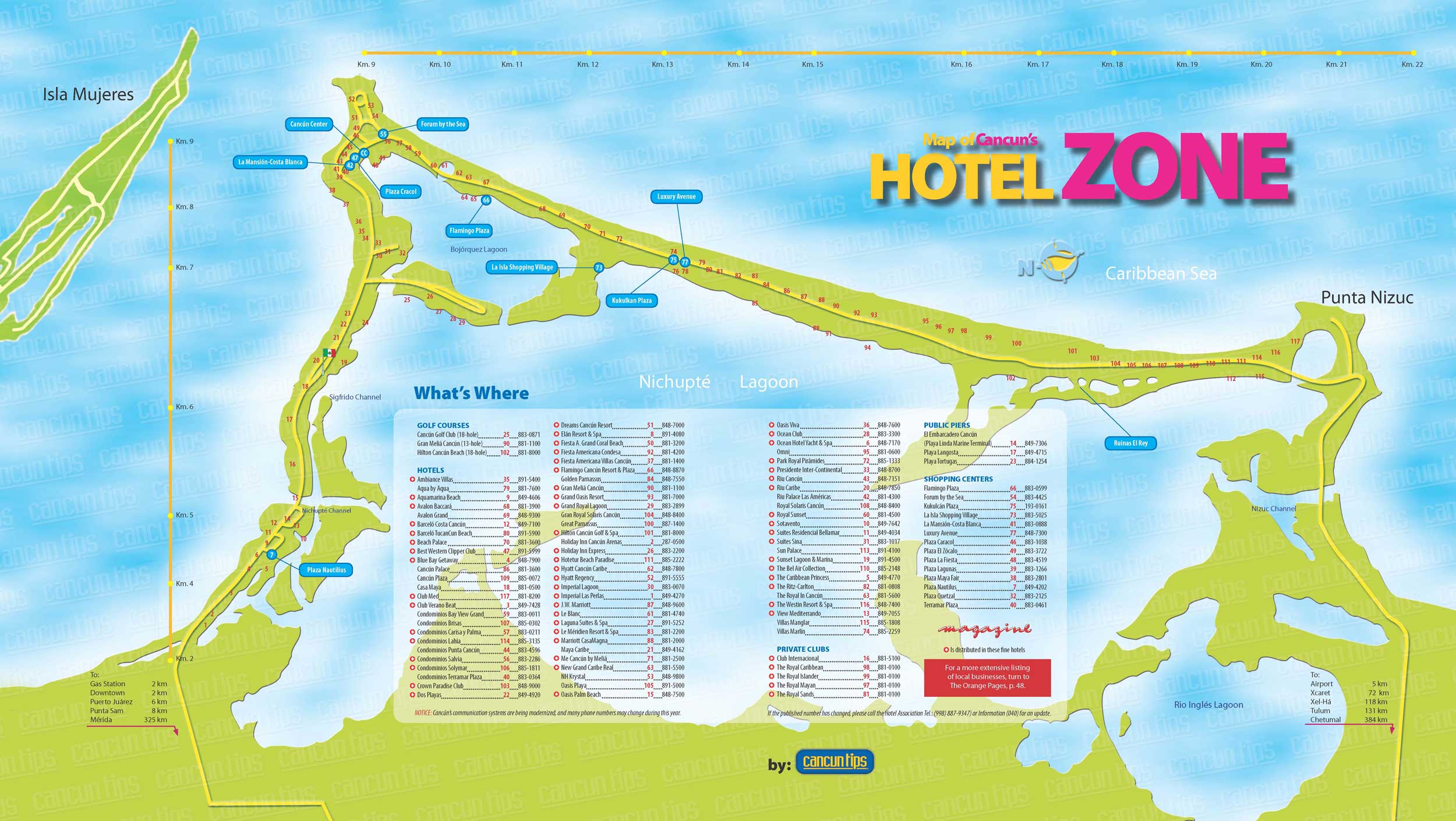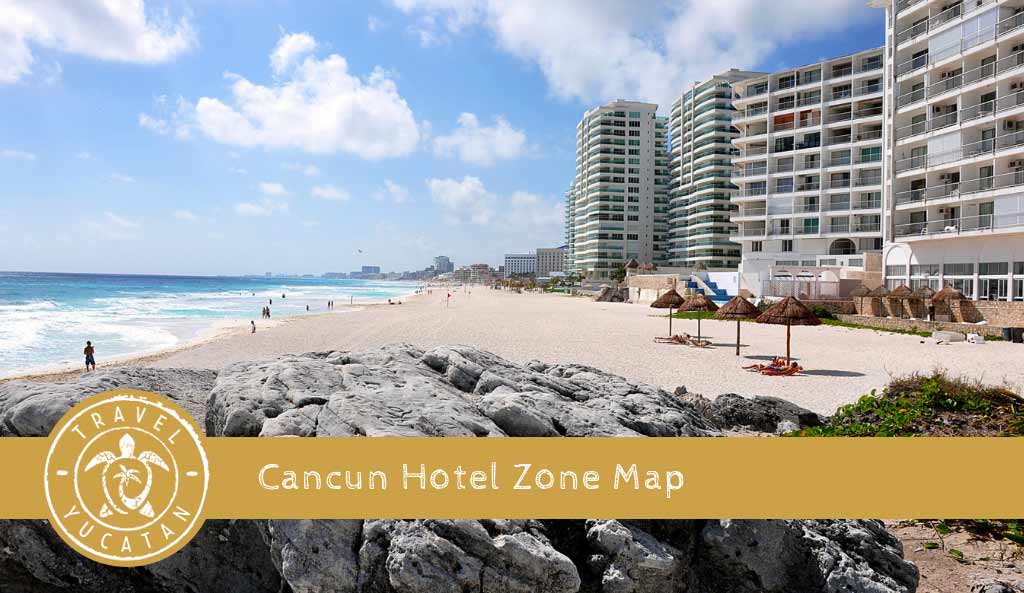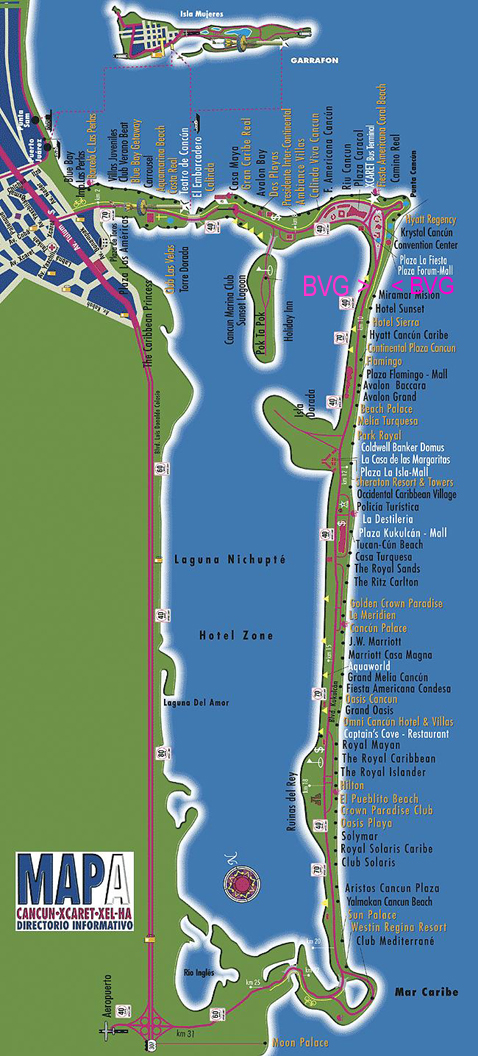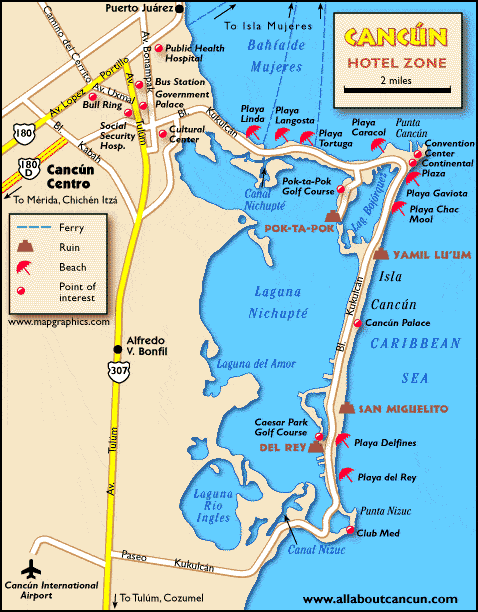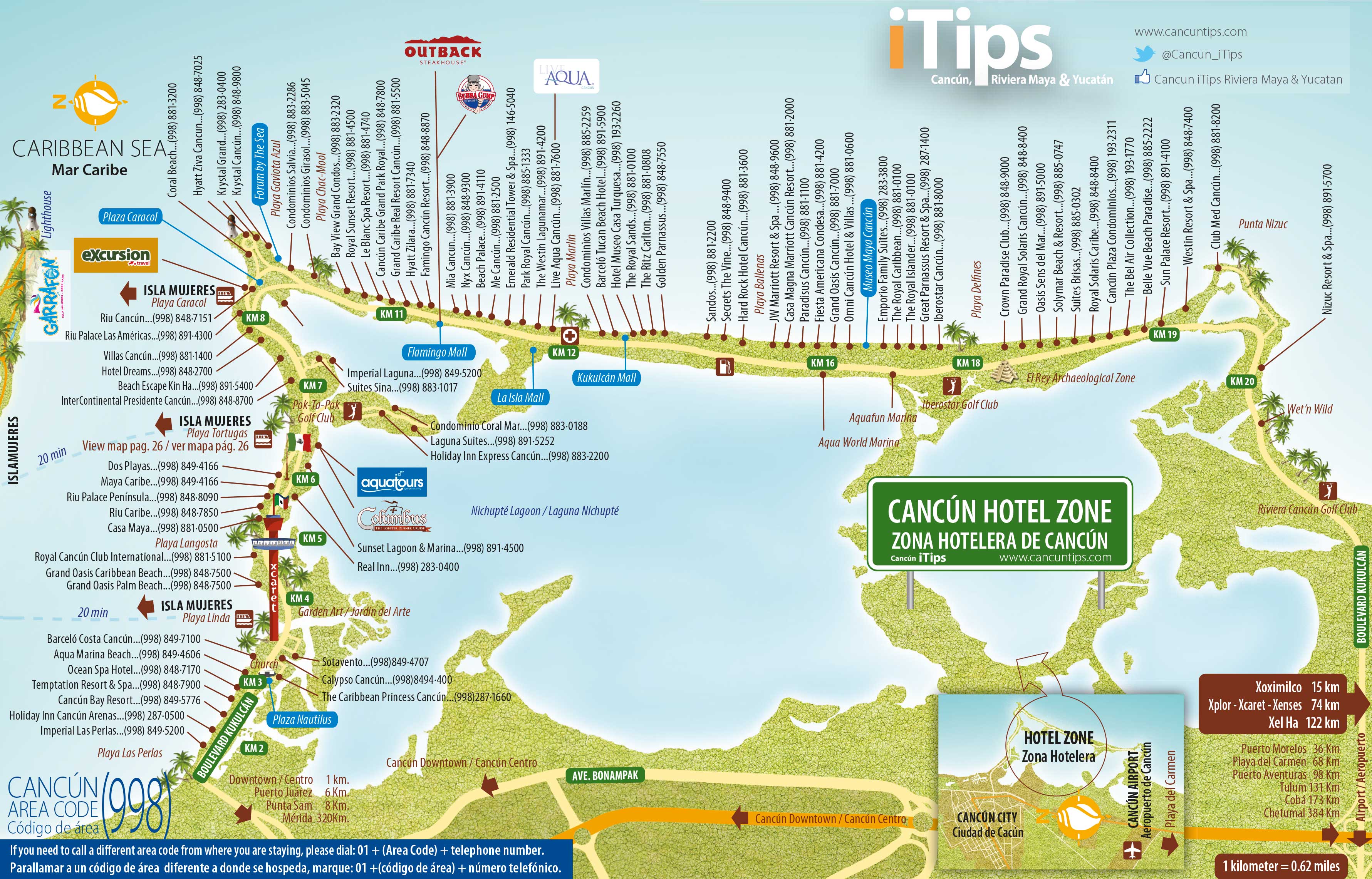
The Cancun Hotel Zone is more than just a collection of hotels; it’s a carefully planned destination designed for leisure and entertainment. Shaped like a ‘7’, it separates the Nichupté Lagoon from the Caribbean Sea, offering breathtaking views on both sides. Its strategic location provides easy access to ancient Mayan ruins, natural wonders, and a plethora of activities.
Let’s break down the Hotel Zone by its general areas, starting from the northern tip and moving southwards.
Km 0-4: The Beginning of the Strip & Downtown Access
This section is closest to downtown Cancun and the ferry terminal to Isla Mujeres. You’ll find a mix of older and newer resorts, as well as access points to the mainland. It’s a bustling area with good transportation links.
Km 4-8: Punta Cancun & The Party Center
This is arguably the most famous part of the Hotel Zone, particularly for its vibrant nightlife. It’s home to the largest nightclubs, including Coco Bongo, The City, and Mandala. During the day, this area offers beautiful beaches and a concentration of popular restaurants and bars.
Km 8-12: The Heart of the Zone & Shopping Hubs
As you move further down Kukulcan Boulevard, you’ll encounter a concentration of major shopping malls like Plaza La Isla and Plaza Kukulcan. This area also features a wide array of resorts, from all-inclusive giants to boutique hotels, and plenty of dining options.
Km 12-17: The Serene South & Luxury Resorts
This stretch of the Hotel Zone tends to be a bit quieter and is characterized by more luxurious, sprawling resorts and pristine, less crowded beaches. It offers a more relaxed atmosphere while still being conveniently located.
Km 17-22: The End of the Strip & Natural Beauty
The southern end of the Hotel Zone offers stunning natural landscapes, including the entrance to the Mayan ruins of El Rey and the San Miguelito archaeological site (part of the Maya Museum of Cancun). You’ll also find the Cancun Underwater Museum (MUSA) access points and more secluded beach areas here.
- El Mirador (Km 9): A popular viewpoint offering panoramic vistas of the Caribbean Sea and the Hotel Zone coastline.
- Plaza La Isla (Km 13.5): An open-air shopping mall built over a lagoon, featuring a wide range of international and local brands, restaurants, and entertainment.
- Kukulcan Plaza (Km 13): Another significant shopping center, often linked with La Isla, offering luxury boutiques and dining.
- Forum Beach (Km 9.5): Adjacent to Plaza Forum and the entertainment district, known for its lively atmosphere and water sports.
- Playa Delfines (Km 17.5): Famous for its iconic ‘CANCUN’ sign, this public beach offers incredible views and is a popular spot for photos and surfing.
- El Rey Archaeological Zone (Km 18): An ancient Mayan ruin site located directly within the Hotel Zone, offering a glimpse into the region’s history.
- Maya Museum of Cancun (Km 16.5): Houses a significant collection of Mayan artifacts and provides context to the archaeological sites in the area.
- Nichupté Lagoon: The vast lagoon bordering the western side of the Hotel Zone, offering opportunities for water sports like jet skiing, kayaking, and boat tours.
Transportation in the Hotel Zone
Getting around the Hotel Zone is remarkably easy and affordable. The primary mode of transport is the public bus system.
Public Buses (R-1 and R-2): These buses run 24/7 along Boulevard Kukulcan, connecting the entire Hotel Zone from downtown Cancun to its southern tip. They are frequent, air-conditioned, and inexpensive. The R-1 bus generally covers the main Hotel Zone route, while the R-2 may have slightly different stops or routes, often servicing specific areas or popular attractions. Look for buses displaying ‘Hoteles’ or the specific destination you need.
Taxis: Taxis are readily available throughout the Hotel Zone. However, they can be significantly more expensive than the buses. It’s advisable to agree on the fare before starting your journey, as they don’t typically use meters.
Rental Cars: While convenient for exploring beyond the Hotel Zone, renting a car for navigating just the strip might be unnecessary due to the excellent bus service. Parking can also be challenging and costly at popular spots.
Walking and Biking: While possible for short distances, the Hotel Zone is quite long. Some resorts offer bike rentals, and there are designated paths in certain areas, but walking the entire length is impractical.
Understanding the ‘7’ Shape
The distinctive ‘7’ shape of the Hotel Zone is crucial. The longer, southern leg runs roughly parallel to the coast, while the northern leg curves back towards the mainland. This means that depending on your location, the ‘sunrise’ and ‘sunset’ views can differ dramatically. Beaches facing east generally offer spectacular sunrises over the Caribbean, while the lagoon side offers calmer waters and sunset views.
- For Nightlife & Entertainment: Stay between Km 4 and Km 9.5 (Punta Cancun/Party Center).
- For Shopping & Diverse Dining: Look between Km 9 and Km 14 (Central Hotel Zone/Malls).
- For Relaxation & Pristine Beaches: Consider Km 14 to Km 22 (Southern Hotel Zone).
- For Proximity to Isla Mujeres Ferry: Stay closer to Km 0-4.
- For Budget-Conscious Travelers: While hotels vary, some of the older establishments or those slightly off the main strip in the northern section might offer better value.
Beyond the Hotel Zone: Day Trip Accessibility
A significant advantage of staying in the Hotel Zone is its accessibility to major attractions outside the strip. The bus system provides a convenient and affordable way to reach many of these destinations.
Chichen Itza: While a full-day trip, tours often pick up directly from Hotel Zone hotels. Alternatively, you can take a bus to the ADO terminal in downtown Cancun and catch a direct bus.
Tulum: Similar to Chichen Itza, numerous tour operators service Tulum from the Hotel Zone. Bus travel is also an option via the downtown ADO terminal.
Cenotes: Many cenotes are located between Cancun and Tulum. Day tours are highly recommended for ease of access and safety.
Isla Mujeres: The ferry terminal at Km 4 (Playa Tortugas) and Km 5 (Playa Caracol) offers regular departures to this beautiful island paradise.
Cozumel: While further away, you can take a bus or taxi to the ferry terminal in Playa del Carmen for access to Cozumel.
Xcaret, Xel-Há, and other Eco-Parks: These popular theme parks are typically accessible via tour buses departing from the Hotel Zone.
- Use Kilometer Markers: Always note the kilometer markers when giving directions or planning your route. They are your primary reference points.
- Download Offline Maps: While Wi-Fi is common, having an offline map app (like Google Maps with downloaded areas) can be a lifesaver.
- Ask Hotel Staff: Concierge and front desk staff are invaluable resources for directions and transportation advice.
- Embrace the Bus: Seriously, the R-1 and R-2 buses are your best friends for affordable and efficient travel within the Hotel Zone.
- Stay Aware: Like any tourist destination, be mindful of your surroundings, especially in crowded areas or at night.
The Cancun Hotel Zone is a vibrant and diverse destination. By understanding its layout, key landmarks, and transportation options, you can confidently plan your itinerary and make the most of your stay. Whether you’re seeking thrilling nightlife, serene beaches, historical exploration, or culinary adventures, the map of the Hotel Zone is your key to unlocking the magic of the Mexican Caribbean.
Remember, the ‘map’ is less about a single printed document and more about understanding the flow of Boulevard Kukulcan, the significance of the kilometer markers, and the location of key attractions relative to each other. This knowledge empowers you to navigate paradise with ease and confidence, ensuring a truly unforgettable vacation.