- The rise and fall of city-states like Athens, Sparta, and Corinth.
- The impact of geography on trade routes and military campaigns.
- The spread of Greek culture and influence throughout the Mediterranean.
- The interconnectedness of the Greek world despite its fragmented political structure.
Key Regions and City-States of Ancient Greece
Ancient Greece wasn’t a unified nation but a collection of independent city-states, each with its own government, army, and culture. Understanding these regions is vital to comprehending the dynamics of the time.
Attica: The Heart of Athens
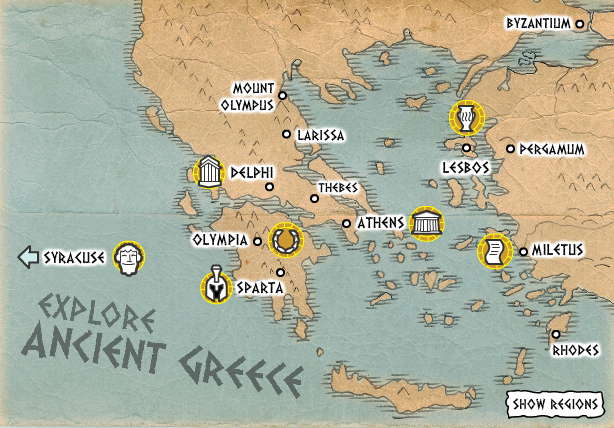
Attica, the southeastern peninsula of Greece, was home to Athens, the birthplace of democracy and a center of art, philosophy, and learning. The map of Attica highlights the strategic importance of the Athenian port of Piraeus, which facilitated trade and naval power. The region’s geography, with its surrounding mountains, provided natural defenses.
Peloponnese: The Spartan Stronghold
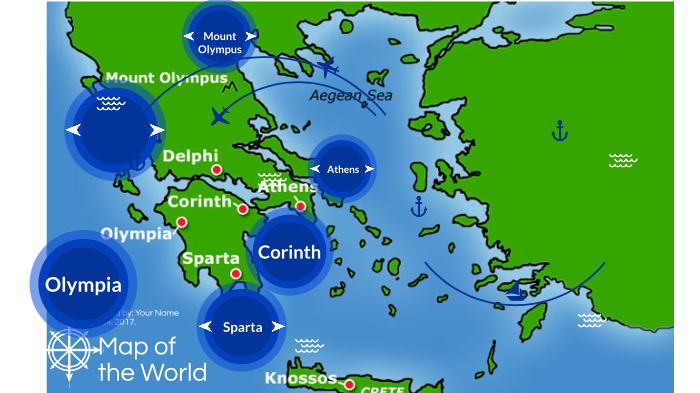
The Peloponnese, a peninsula connected to the mainland by the Isthmus of Corinth, was dominated by Sparta, a militaristic city-state known for its disciplined warriors. The map reveals the rugged terrain of Laconia, the region surrounding Sparta, which contributed to its isolation and unique culture. Other important cities in the Peloponnese included Corinth, Argos, and Olympia, the site of the ancient Olympic Games.
Macedonia: The Northern Kingdom
Located north of Thessaly, Macedonia played an increasingly important role in later Greek history. Initially considered somewhat peripheral to the core Greek city-states, Macedonia rose to prominence under Philip II and his son, Alexander the Great. The map shows the strategic location of Pella, the Macedonian capital, and its access to resources and trade routes.
Thessaly: Fertile Plains and Mythical Lands
Thessaly, a region in northern Greece, was known for its fertile plains and rich agricultural production. According to Greek mythology, Thessaly was the home of the Centaurs and played a significant role in various myths and legends. The map highlights the importance of cities like Larissa and Pharsalus.
Ionia: The Eastern Coast
Ionia, located on the western coast of Asia Minor (modern-day Turkey), was a region of Greek settlements that played a crucial role in the development of Greek philosophy and science. Cities like Miletus and Ephesus were centers of intellectual activity and trade. The map illustrates the proximity of Ionia to other major civilizations in the Near East.
Geographical Features Shaping Ancient Greece
The geography of Ancient Greece profoundly influenced its history and culture. The mountainous terrain, numerous islands, and extensive coastline shaped the development of city-states, trade routes, and naval power.
The Aegean Sea: A Highway of Trade and Culture
The Aegean Sea, dotted with islands, served as a vital link between the Greek mainland and the eastern Mediterranean. The map reveals the importance of islands like Crete, Rhodes, and Delos, which served as trading posts and cultural centers. The Aegean Sea facilitated the spread of Greek culture and influence throughout the region.
Mountains and Valleys: Isolating City-States
The mountainous terrain of Greece created natural barriers between city-states, contributing to their independence and often leading to conflicts. The map highlights the mountain ranges that separated regions like Attica and Boeotia, influencing their political and cultural development.
Coastline and Harbors: Facilitating Maritime Power
The extensive coastline of Greece, with its numerous harbors and bays, fostered the development of maritime power. The map shows the strategic importance of ports like Piraeus (Athens), Corinth, and others, which enabled trade, naval dominance, and colonization.
Delving Deeper: Key Locations on the Map
To truly understand Ancient Greece, it’s essential to examine some specific locations on the map and their historical significance.
Athens: The Birthplace of Democracy
Athens, located in Attica, was the center of Greek culture, philosophy, and democracy. The map shows the Acropolis, the Parthenon, and the Agora, all iconic landmarks that represent the city’s rich history and intellectual achievements. Athens’s naval power and commercial activities made it a dominant force in the ancient world.
Sparta: The Militaristic Power
Sparta, located in the Peloponnese, was a city-state known for its military prowess and austere lifestyle. The map reveals the rugged terrain of Laconia, which contributed to Sparta’s isolation and unique culture. Spartan society was highly disciplined, with a focus on military training and obedience.
Olympia: The Site of the Ancient Games
Olympia, located in the Peloponnese, was the site of the ancient Olympic Games, a Panhellenic festival that brought together athletes from all over the Greek world. The map shows the location of the stadium, temples, and other structures associated with the games, which were held every four years in honor of Zeus.
Delphi: The Oracle of Apollo
Delphi, located on the slopes of Mount Parnassus, was the site of the Oracle of Apollo, one of the most important religious centers in ancient Greece. People from all over the Greek world came to Delphi to seek advice from the Oracle on matters of politics, war, and personal affairs.
Knossos: The Minoan Palace
While technically pre-Greek, Knossos, located on the island of Crete, was the center of Minoan civilization, which heavily influenced early Greek culture. The map shows the location of the Palace of Knossos, a complex structure with intricate frescoes and advanced engineering, reflecting the Minoans’ sophisticated society.
The Legacy of Ancient Greece: A Lasting Impact
The influence of Ancient Greece extends far beyond its geographical boundaries and historical period. Its contributions to philosophy, democracy, art, literature, and science continue to shape our world today.
- Philosophy: Greek philosophers like Socrates, Plato, and Aristotle laid the foundation for Western philosophical thought.
- Democracy: The Athenian experiment with democracy, while limited, established principles of civic participation and rule of law.
- Art and Architecture: Greek art and architecture, with its emphasis on harmony, balance, and human form, has inspired artists and architects for centuries.
- Literature: Greek epics like the Iliad and the Odyssey, as well as tragedies and comedies, continue to be read and performed worldwide.
- Science and Mathematics: Greek mathematicians like Pythagoras and Euclid made fundamental contributions to geometry and number theory.
Conclusion: A Journey Through Ancient Greece
Exploring a labeled map of Ancient Greece is more than just a geographical exercise; it’s a journey through time, allowing us to understand the complex interactions between city-states, the impact of geography on culture and politics, and the enduring legacy of this remarkable civilization. By studying the map, we can appreciate the interconnectedness of the Greek world and its profound influence on the development of Western civilization. From the bustling port of Piraeus to the rugged terrain of Laconia, each location on the map tells a story of innovation, conflict, and cultural exchange.
Understanding the ancient greece map labeled allows us to visualize the world of Socrates, Plato, Aristotle, Alexander the Great and so many more historical figures.
In conclusion, studying a labeled map of Ancient Greece is a valuable tool for understanding the history, culture, and geography of this influential civilization. It allows us to visualize the relationships between city-states, appreciate the impact of geography on trade and military campaigns, and recognize the enduring legacy of ancient Greek thought and culture.
- Explore online resources and interactive maps of Ancient Greece.
- Read primary sources from ancient Greek historians like Herodotus and Thucydides.
- Visit museums with collections of ancient Greek artifacts.
- Consider taking a course on ancient Greek history or culture.