Understanding the Color Code: What Are Red and Blue States?
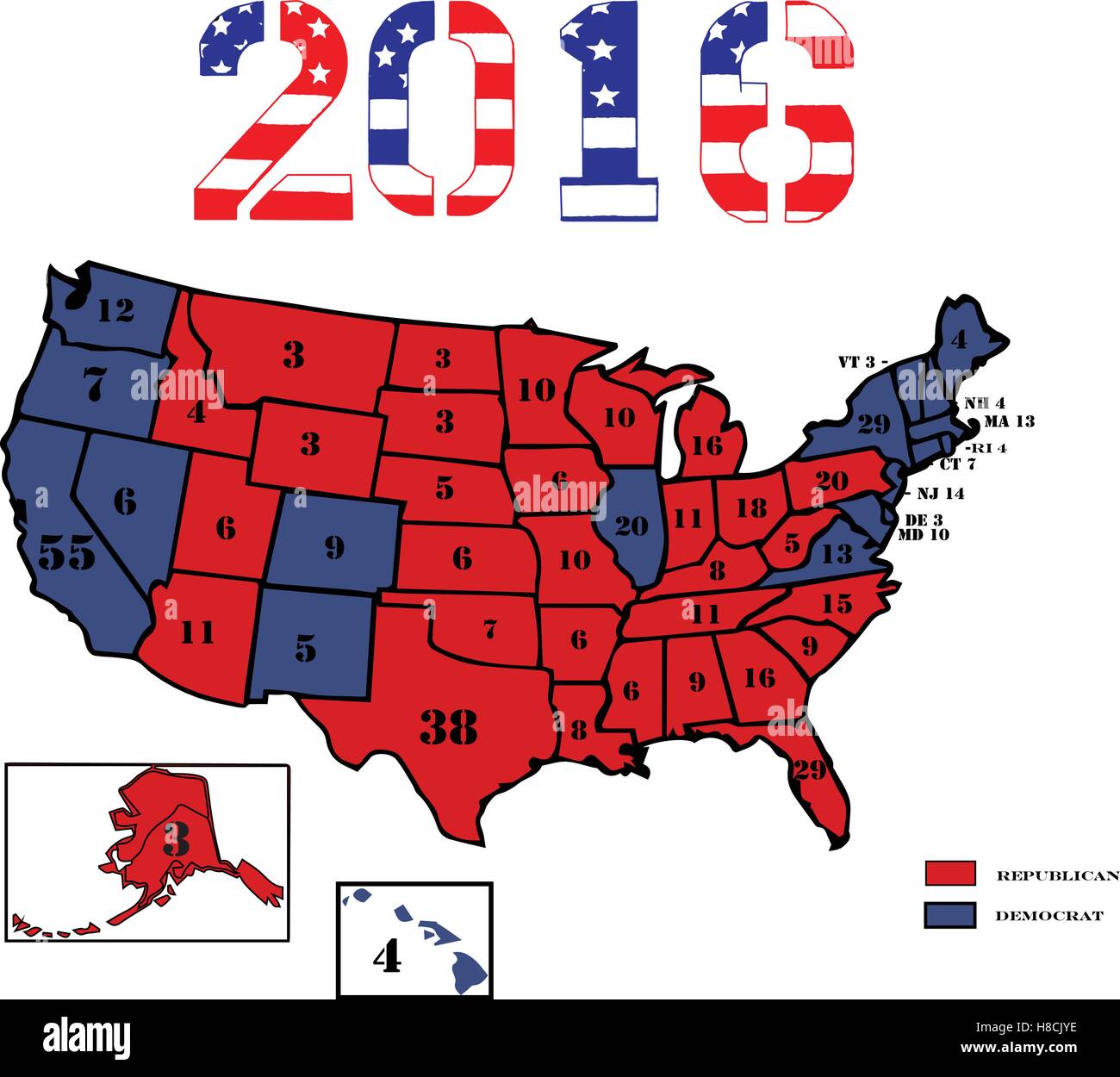
The terms "red state" and "blue state" have become ubiquitous in political discourse, but their origins are surprisingly recent. The color scheme was not standardized until the 2000 presidential election, when major news outlets used red for states won by Republican George W. Bush and blue for those won by Democrat Al Gore. The convention stuck, and today it’s the universal standard for political cartography.
A red state is one that consistently and reliably votes for the Republican Party in presidential and statewide elections. These states are often considered conservative strongholds.
A blue state, conversely, is one that reliably supports the Democratic Party in major elections. These are typically viewed as liberal or progressive bastions.
However, the American political landscape is far from a simple binary. Between the solid red and solid blue lies the most critical territory in any national election: the swing states.
The Decisive Battlegrounds: Purple States
Also known as battleground states, purple states are those where the electorate is closely divided between Democrats and Republicans. They do not have a consistent pattern of voting for one party over the other, making them highly competitive in presidential elections. Candidates invest immense resources—time, money, and advertising—into these states because their Electoral College votes are essential for building a winning coalition. The outcome of a presidential race often hinges on the results from just a handful of these purple states.
The Current Political Map: A State-by-State Overview
While the map can shift from one election cycle to the next, a general pattern has held for several decades. States can be broadly categorized based on their recent voting history.
The Republican Heartland: Solid Red States
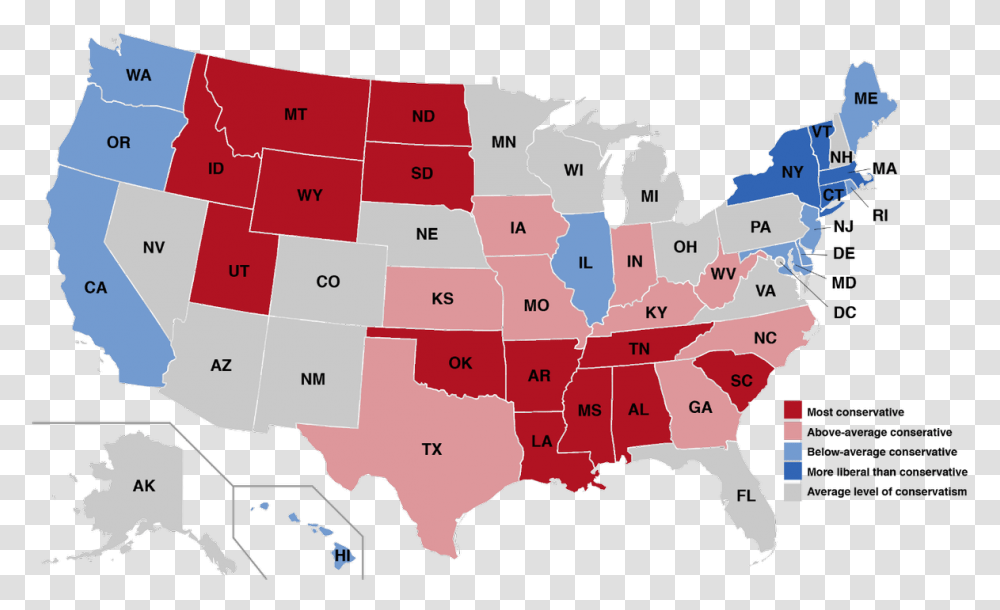
The Republican Party’s strength is most concentrated in the South, the Great Plains, and the Mountain West. These states share several common characteristics, including large rural populations, economies often tied to agriculture or energy, and a socially conservative populace.
- Wyoming
- Idaho
- Utah
- North Dakota & South Dakota
- Nebraska (except for its 2nd congressional district)
- Kansas
- Oklahoma
- Arkansas
- Louisiana
- Mississippi
- Alabama
- Tennessee
- Kentucky
- West Virginia
These states form the bedrock of the Republican electoral strategy, providing a reliable base of electoral votes in every presidential election.
The Democratic Coasts: Solid Blue States
The Democratic Party’s power base is primarily located on the West Coast and in the Northeast, with another significant stronghold in the Great Lakes region. These states are characterized by large, diverse, urban populations, and their economies are often driven by technology, finance, education, and international trade.
- California
- Oregon
- Washington
- Illinois
- New York
- Vermont
- Massachusetts
- Rhode Island
- Connecticut
- New Jersey
- Delaware
- Maryland
- Hawaii
These states, particularly populous ones like California and New York, provide a massive electoral vote advantage for Democratic presidential candidates from the outset.
The All-Important Swing States
- Pennsylvania: A classic swing state with a stark urban/rural divide between Philadelphia/Pittsburgh and the rest of the state.
- Michigan: A diverse state with a strong union history, it has become highly competitive in recent years.
- Wisconsin: Known for its incredibly narrow election margins, it’s a perennial battleground.
- Arizona: A traditionally red state that has trended purple due to a growing Latino population and influx of new residents.
- Georgia: Another former Republican stronghold that is now fiercely competitive, driven by demographic changes in the Atlanta metropolitan area.
- Nevada: A state with a highly transient population and powerful labor unions, making it consistently competitive.
- North Carolina: A state experiencing rapid population growth, creating a clash between its conservative roots and its booming, more liberal urban centers.
Factors That Define a State’s Political Leanings
A state’s position on the political map is not random. It is the result of a complex interplay of demographic, economic, and cultural forces.
The Urban-Rural Divide
Perhaps the single most significant factor in modern American politics is the divide between urban and rural areas. Densely populated cities almost universally vote Democratic, while rural and exurban areas are overwhelmingly Republican. The suburbs are often the battleground where these two forces collide, frequently deciding statewide elections. This is why a county-level map often appears much redder than a state-level map—Republicans dominate in land area, while Democrats are concentrated in population centers.
Demographic Shifts
A state’s demographic makeup is a powerful predictor of its political alignment. Factors such as age, race, ethnicity, and education level all correlate with voting patterns. For example, states with younger, more racially diverse, and more college-educated populations tend to lean Democratic. The political transformation of states like Arizona and Georgia is a direct result of these ongoing demographic shifts.
Economic Drivers and Industry
A state’s economy also plays a crucial role. States heavily reliant on traditional industries like coal mining (West Virginia) or oil and gas (Wyoming, North Dakota) tend to favor the Republican party’s platform of deregulation. Conversely, states with economies centered on technology, higher education, and international finance (California, Massachusetts) often align with the Democratic party.
Historical and Cultural Legacy
History casts a long shadow over politics. The political realignment of the South from a solidly Democratic region (pre-Civil Rights era) to a Republican stronghold is one of the most significant stories in modern political history. Cultural values, religious affiliation, and regional identity continue to shape how communities and entire states vote.
Beyond Red and Blue: A More Nuanced View
It is crucial to remember that no state is a monolith. Labeling California as simply "blue" ignores the millions of Republican voters in its Central Valley and rural counties. Similarly, calling Texas "red" overlooks the deep blue urban centers of Houston, Dallas, Austin, and San Antonio. The red/blue state map is a useful tool for understanding national elections, but it simplifies a much more complex reality on the ground.
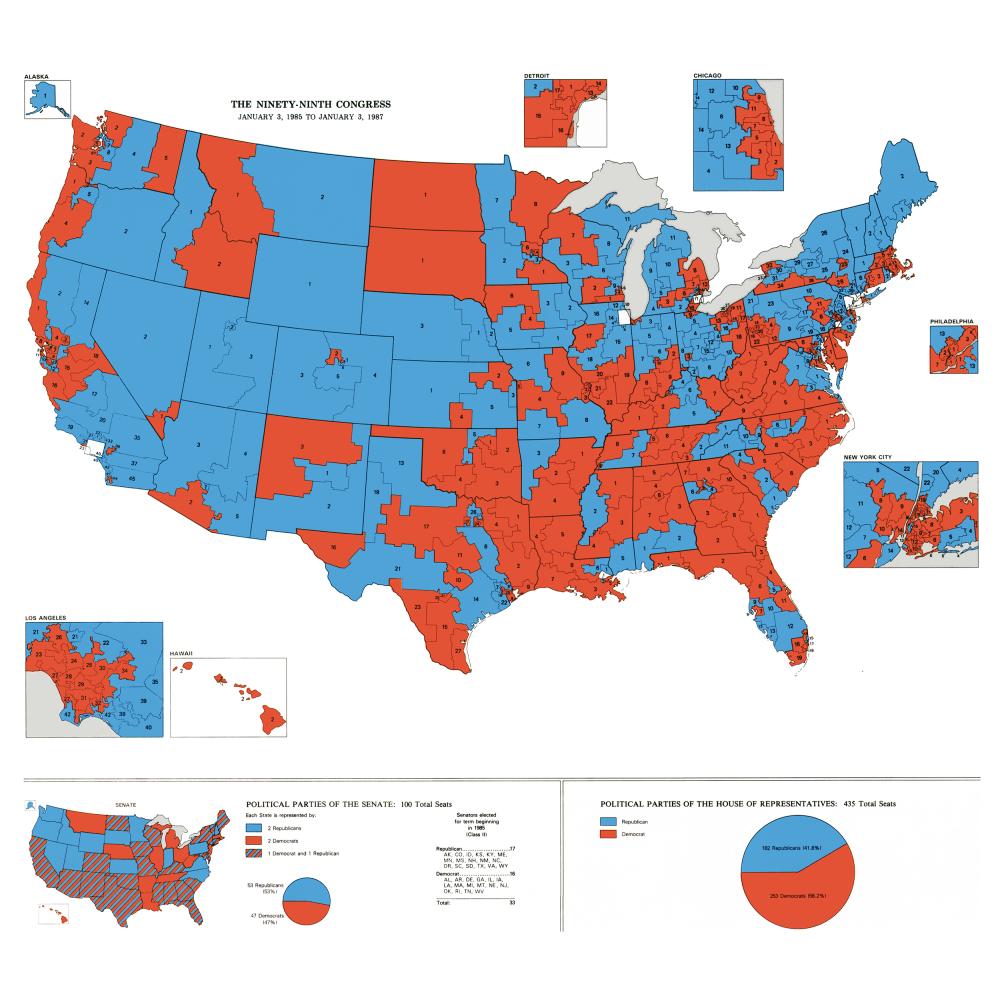
To gain a more accurate understanding, experts often analyze data at the county or congressional district level. Furthermore, cartograms—maps that resize states based on population rather than land area—offer a more representative visual of where political power truly lies, preventing the illusion that vast, sparsely populated red states hold more electoral sway than they actually do.
Frequently Asked Questions (FAQ)
What determines if a state is red or blue?
A state is generally categorized based on its voting patterns in recent presidential elections. A state that has voted for the same party in the last four to five presidential cycles is considered ‘solid,’ while one that has flipped between parties is a ‘swing state.’
Is Texas turning into a swing state?
This is a major topic of discussion. While Texas has been a reliable red state for decades, its rapidly growing and diversifying urban centers are making elections more competitive. Democrats have made significant gains, but Republicans still maintain an advantage in statewide races. It is best described as a red state that is trending purple.
Is Florida still a swing state?
For years, Florida was the quintessential swing state, famous for its razor-thin election margins. However, in recent cycles, Republicans have built a consistent and growing advantage in statewide elections, leading many analysts to reclassify it as a lean-to-solid red state.
Why does the electoral map look so red by land area?
This is because Republican voters are geographically dispersed across vast rural and suburban areas, which cover more land. Democratic voters are highly concentrated in smaller, densely populated urban areas. This creates a visual distortion; a map weighted by population would show a much more balanced distribution of red and blue.
Conclusion: A Dynamic and Ever-Changing Map
The Republican and Democratic states map is more than just a collection of colors; it is a snapshot of a nation in constant flux. The political alignments of today are not set in stone. They are shaped by the powerful currents of demographic change, economic shifts, and cultural evolution. Understanding the forces that create red, blue, and purple states is essential for comprehending the dynamics of American democracy. As the country continues to evolve, so too will this map, revealing new battlegrounds and new political realities in the elections to come.