Situated at the crossroads of Africa and Asia, Egypt and Israel command a unique position that has shaped global trade, conflicts, and religious narratives for thousands of years. From ancient empires to modern peace treaties, their proximity has always been a focal point of international interest.
To truly grasp the complexities of the region, one must first appreciate the distinct geographical profiles of both countries, as well as the shared natural features that define their interaction. This comprehensive guide aims to illuminate these aspects, offering a detailed exploration of their map.
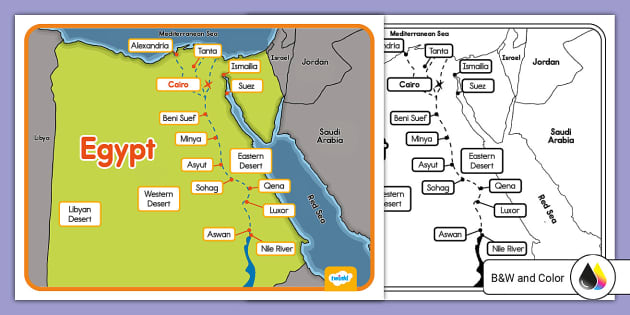
Egypt, the land of pharaohs and the Nile, is geographically the larger of the two nations. It occupies the northeastern corner of Africa, with its vast territory extending into Asia via the Sinai Peninsula. This strategic peninsula acts as a natural bridge, connecting the African continent to the Arabian Peninsula and the wider Middle East. Egypt’s landscape is predominantly arid, dominated by the Sahara Desert, yet life flourishes along the fertile banks of the Nile River.
The Nile River is Egypt’s lifeblood, flowing from south to north, creating a verdant ribbon across an otherwise barren land. The Nile Delta, where the river fans out into the Mediterranean Sea, is one of the most densely populated and agriculturally productive regions in the world. Major Egyptian cities like Cairo, the sprawling capital, and Alexandria, a historic port city, are nestled along the Nile or its delta.
East of the Nile, Egypt’s territory includes the Eastern Desert, which stretches to the Red Sea coast. This coastal strip is renowned for its vibrant coral reefs and burgeoning tourism industry, particularly around resorts like Sharm El Sheikh and Hurghada. The Western Desert, part of the larger Libyan Desert, covers a vast expanse west of the Nile, characterized by oases and ancient caravan routes.
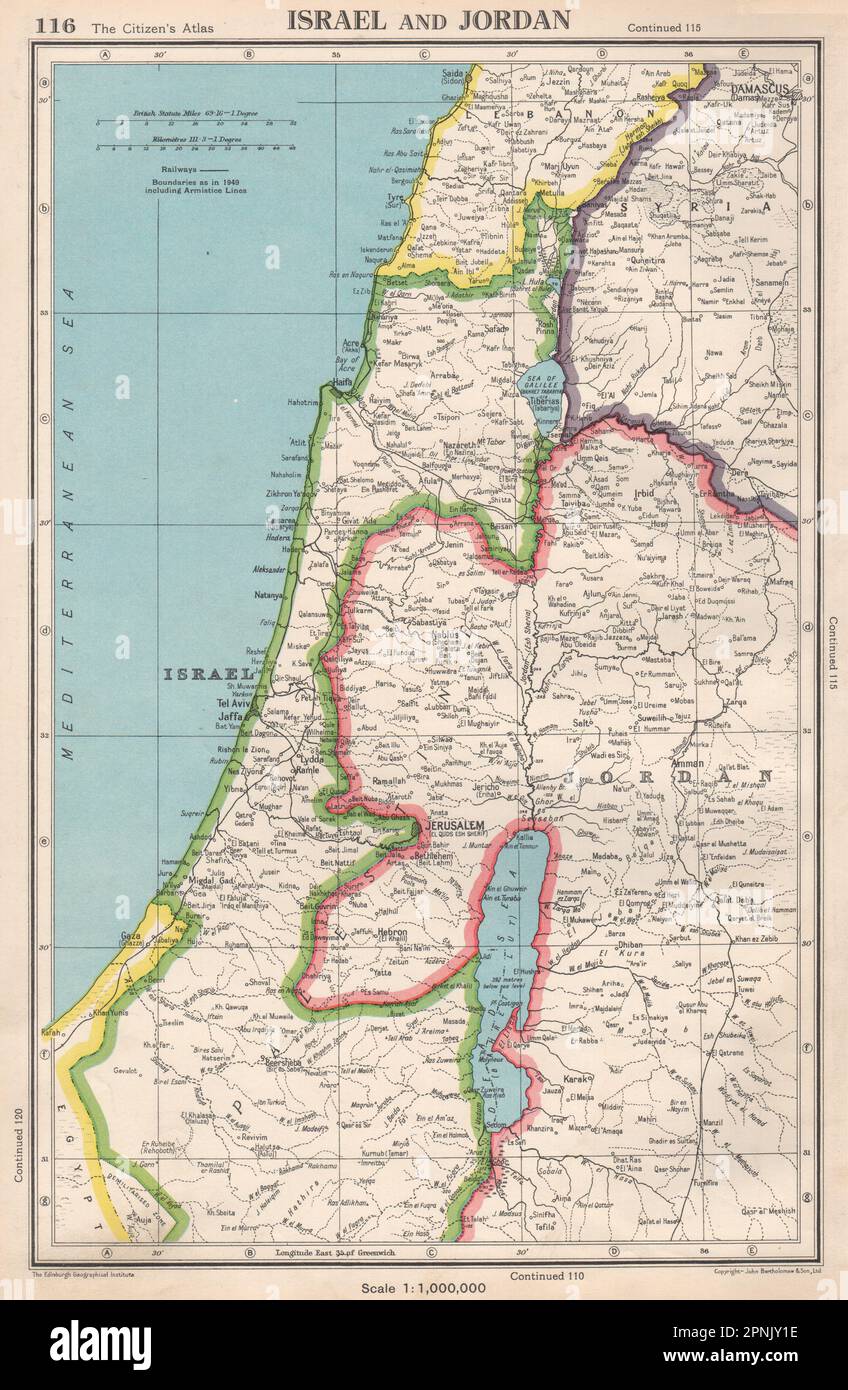
Israel, by contrast, is a much smaller nation geographically, situated along the eastern shore of the Mediterranean Sea. It is part of the Levant region, a historical and geographical term referring to a large area in the Eastern Mediterranean. Despite its size, Israel boasts a remarkable diversity of landscapes, from fertile coastal plains to rugged mountains and expansive deserts.
The Coastal Plain, running along the Mediterranean, is Israel’s most densely populated and economically vibrant region, home to major cities like Tel Aviv, a bustling metropolis and economic hub. Inland, the country rises into the Central Hills, which include the Galilee, Samaria, and Judean Hills, where Jerusalem, Israel’s capital and a city of immense religious significance, is located.
To the east, Israel’s geography plunges into the unique geological formation of the Jordan Rift Valley, which includes the Sea of Galilee (Lake Kinneret) and the Dead Sea, the lowest point on Earth. Further south, the Negev Desert covers more than half of Israel’s land area, characterized by arid landscapes, unique geological formations, and sparse population.
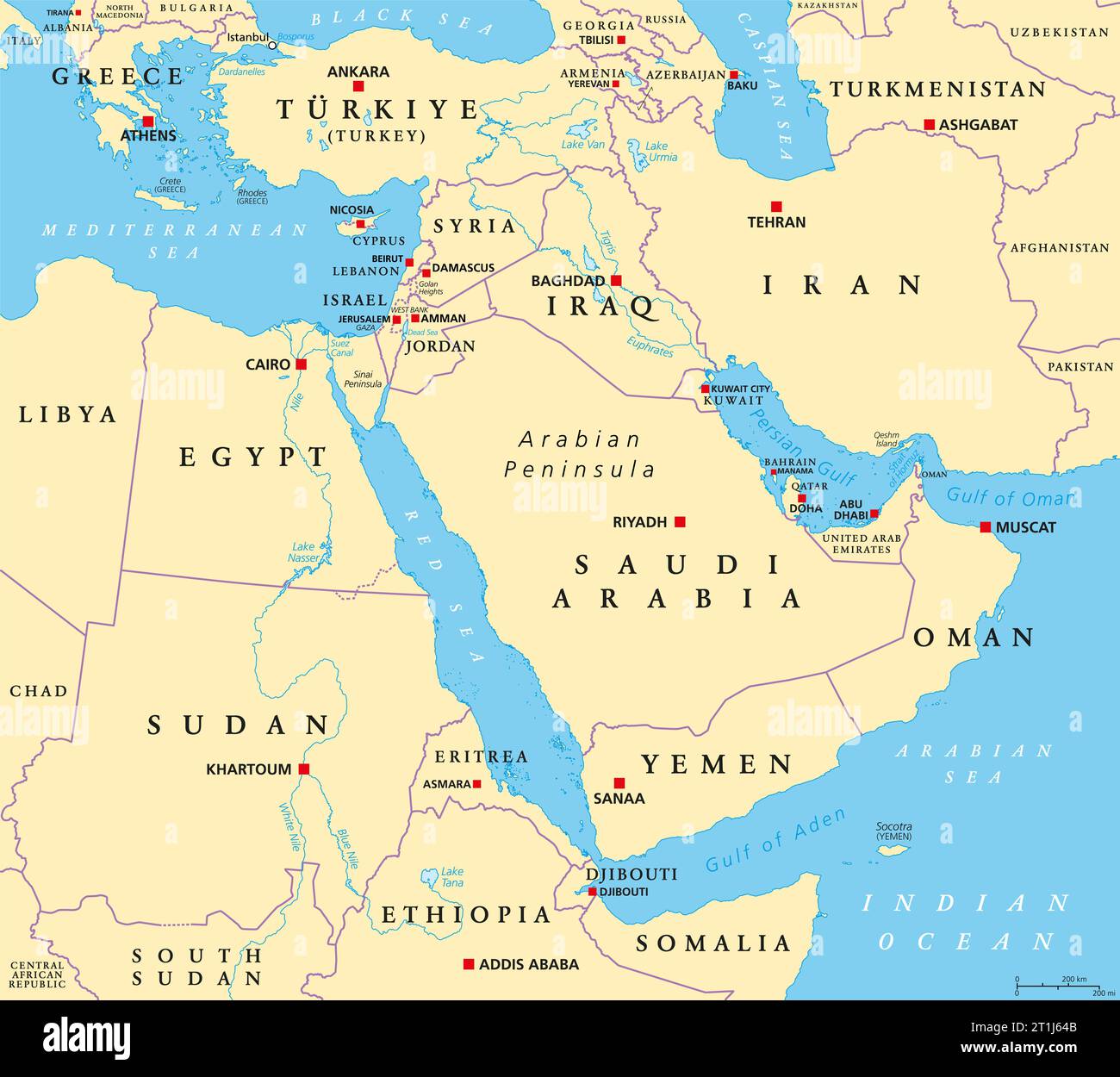
The shared border between Egypt and Israel is approximately 200 kilometers (124 miles) long, primarily traversing the desolate northern Sinai Peninsula and the Negev Desert. This border is a testament to a complex history, marked by conflict and, ultimately, peace. The 1979 Egypt-Israel Peace Treaty, famously brokered at Camp David, led to Israel’s withdrawal from the Sinai Peninsula, which it had occupied since the 1967 Six-Day War, and established the current international border.
Understanding the significance of the Sinai Peninsula is crucial. This triangular landmass, entirely within Egypt’s sovereign territory, serves as the only land bridge between Africa and Asia. Its strategic importance has been recognized for millennia, acting as a corridor for armies, traders, and pilgrims. Today, it is also a vital area for tourism, particularly along its Red Sea coast, and a region with ongoing security challenges.
The Red Sea is another critical geographical feature shared by the two nations, albeit indirectly. While Egypt’s eastern border is defined by the Red Sea, Israel has a small but strategically vital outlet to the Red Sea via the Gulf of Aqaba (also known as the Gulf of Eilat). This gulf provides both countries with access to international shipping lanes and supports thriving port cities (Eilat in Israel, Taba and Nuweiba in Egypt) that are crucial for trade and tourism.
The Mediterranean Sea forms the northern border of Israel and the northern coast of Egypt. This shared maritime space has always been a conduit for trade, cultural exchange, and strategic naval activity. Both nations rely on the Mediterranean for shipping, fishing, and as a natural boundary.
The Gaza Strip, a Palestinian territory, is located along the Mediterranean coast, bordering Egypt to the southwest and Israel to the east and north. Its proximity to Egypt’s Sinai Peninsula has made the Rafah border crossing a critical, albeit often restricted, humanitarian and commercial gateway for Gaza’s population.
Historically, the map of Egypt and Israel is replete with biblical and ancient history. The story of the Exodus, the journey of the Israelites from ancient Egypt to the Land of Canaan, traces a path across the Sinai Peninsula. Numerous sites mentioned in biblical texts are located within or near the modern borders of these two states, making the region a focal point for religious pilgrimage and archaeological research.
From the ancient Egyptian empire’s influence reaching into Canaan, to the Roman and Ottoman empires that controlled both territories at different times, the lands now known as Egypt and Israel have shared a long and intertwined past. The geographical contours of the region have often dictated the flow of history, shaping trade routes, military campaigns, and cultural diffusion.
In the modern era, the Egypt-Israel Peace Treaty stands as a landmark achievement, transforming a volatile border into one of the most stable in the Middle East. This diplomatic success has allowed for limited but significant economic cooperation, particularly in areas like natural gas, and has fostered a degree of regional stability.
Security along the border remains a paramount concern for both nations, especially in the context of regional instability and the presence of militant groups in parts of the Sinai. Joint efforts and intelligence sharing are often undertaken to ensure border integrity and counter terrorism, highlighting the practical implications of their shared geography.
Environmental concerns also connect these two arid nations. Both face significant challenges related to water scarcity, desertification, and the sustainable management of shared resources. The delicate ecosystems of the Red Sea and the pressures on coastal areas due to development and climate change are issues that transcend national borders.
For tourists, the map of Egypt and Israel offers a journey through diverse landscapes and rich cultural heritage. Visitors can explore ancient pyramids and temples in Egypt, then cross into Israel to visit holy sites in Jerusalem, float in the Dead Sea, or hike in the Negev Desert. The ease of travel between the two countries, though subject to political conditions, has opened avenues for cultural exchange and understanding.
The port city of Eilat in Israel, and Taba in Egypt, located at the northern tip of the Gulf of Aqaba, exemplify the cross-border interaction. These resort towns are popular destinations for diving and relaxation, showcasing the potential for shared economic benefit derived from their unique geographical positioning.
Looking at the map, one can appreciate how the geology and hydrology of the region have shaped human settlement patterns. The fertile Nile Valley and the Israeli Coastal Plain are cradles of civilization, while the vast deserts have acted as both barriers and conduits for movement, fostering unique adaptations and cultures.
The intricate network of roads and infrastructure connecting major population centers within each country also reflects their internal geographical challenges and priorities. For instance, Egypt’s focus on the Nile corridor and coastal development contrasts with Israel’s efforts to develop the Negev Desert, driven by strategic and demographic imperatives.
Understanding the precise location of key cities, such as Cairo in Egypt, and Jerusalem or Tel Aviv in Israel, helps to contextualize current events and historical narratives. These urban centers are not just dots on a map; they are vibrant hubs of culture, economy, and political power, each with its unique relationship to the surrounding geography.
In conclusion, the map of Egypt and Israel is far more than a simple depiction of boundaries. It is a living document that tells a story of ancient civilizations, strategic waterways, shared deserts, and a complex modern relationship. From the life-giving Nile to the strategic Sinai, from the Mediterranean shores to the Red Sea, the geography of these two nations dictates much of their history, present challenges, and future opportunities.
Their proximity at the nexus of continents ensures that developments in one inevitably affect the other, making a deep understanding of their geographical context indispensable for anyone seeking to comprehend the dynamics of the Middle East. The peace that exists between them, against a backdrop of such historical and geographical intensity, serves as a powerful reminder of diplomacy’s potential.
Ultimately, the map reveals a region of immense strategic value, rich in natural resources and cultural heritage, where every topographical feature has played a role in shaping human destiny. It’s a map that continues to evolve, reflecting ongoing geopolitical shifts and the enduring human connection to the land.
For those interested in regional stability, international relations, or simply a deeper appreciation of world geography, the map of Egypt and Israel remains a compelling subject of study.
Delving into the details of their shared and distinct geographical features offers invaluable insights into the historical conflicts and contemporary cooperation that define this pivotal part of the world.
It underscores how geography isn’t just about physical features, but about the human stories, political decisions, and economic realities that unfold upon it.