Understanding the Hawaiian Hotspot
At the core of Hawaii’s story is the Hawaiian hotspot, a plume of molten rock rising from deep within the Earth’s mantle. As the Pacific Plate drifts northwestward over this fixed plume, the magma punches through the crust, creating volcanoes that eventually breach the ocean’s surface to form islands. This process explains why the islands are arranged in an age-progressive chain.
The oldest major islands, like Kauaʻi and Oʻahu, are to the northwest and are no longer over the hotspot. Their volcanoes are extinct and have been significantly eroded over millions of years. In contrast, the Big Island of Hawaiʻi, sitting directly atop the hotspot, is the youngest and most volcanically active island in the chain. Even now, a new island, the submarine volcano Lōʻihi, is forming southeast of the Big Island, continuing this epic cycle of creation.
Mapping the Volcanoes of the Main Hawaiian Islands
Each Hawaiian island is composed of one or more volcanoes, each with its own unique history, status, and character. Let’s journey through the archipelago, from the youngest island to the oldest, to map these geological titans.
The Big Island (Hawaiʻi): A Volcanic Wonderland
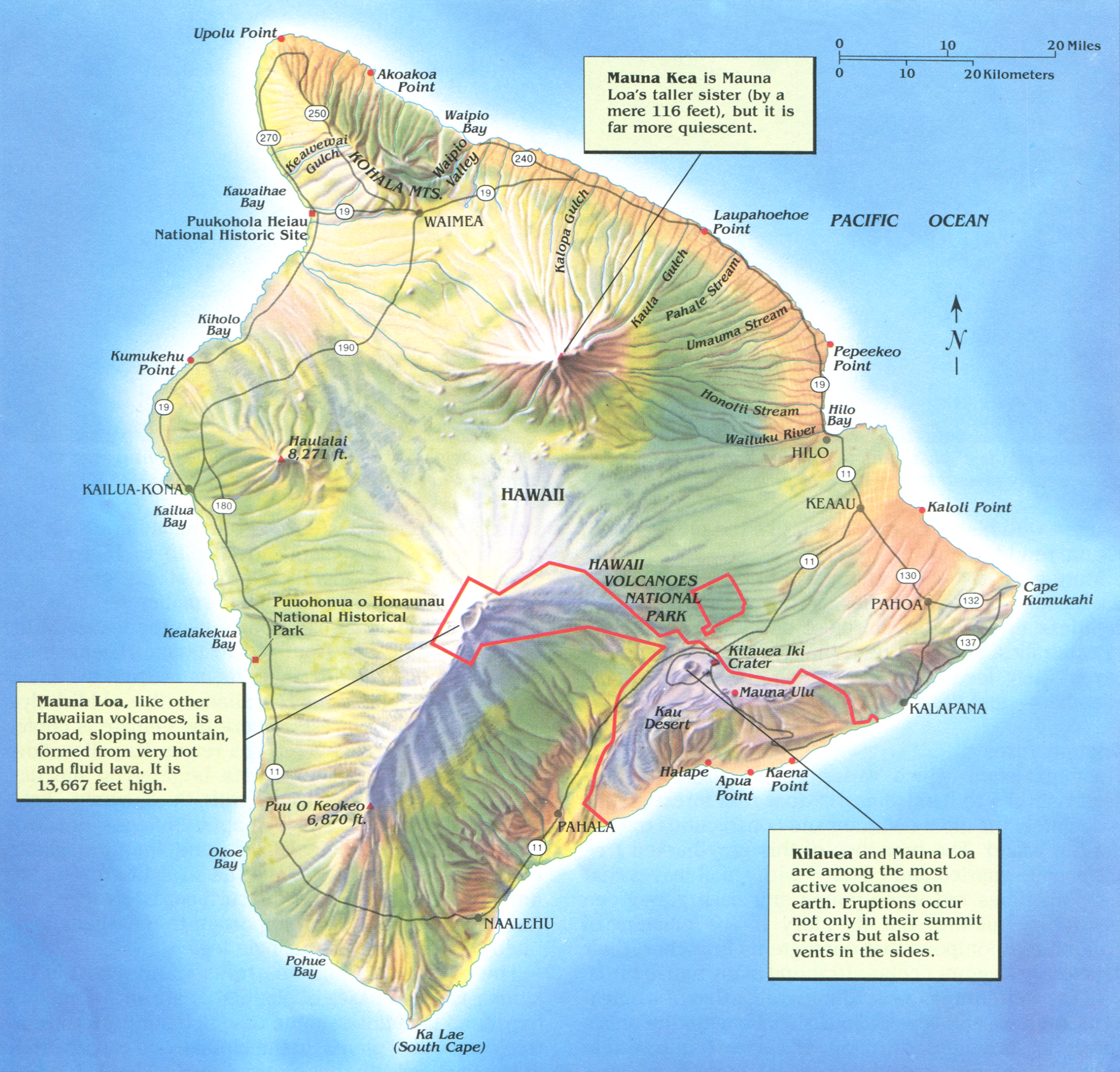
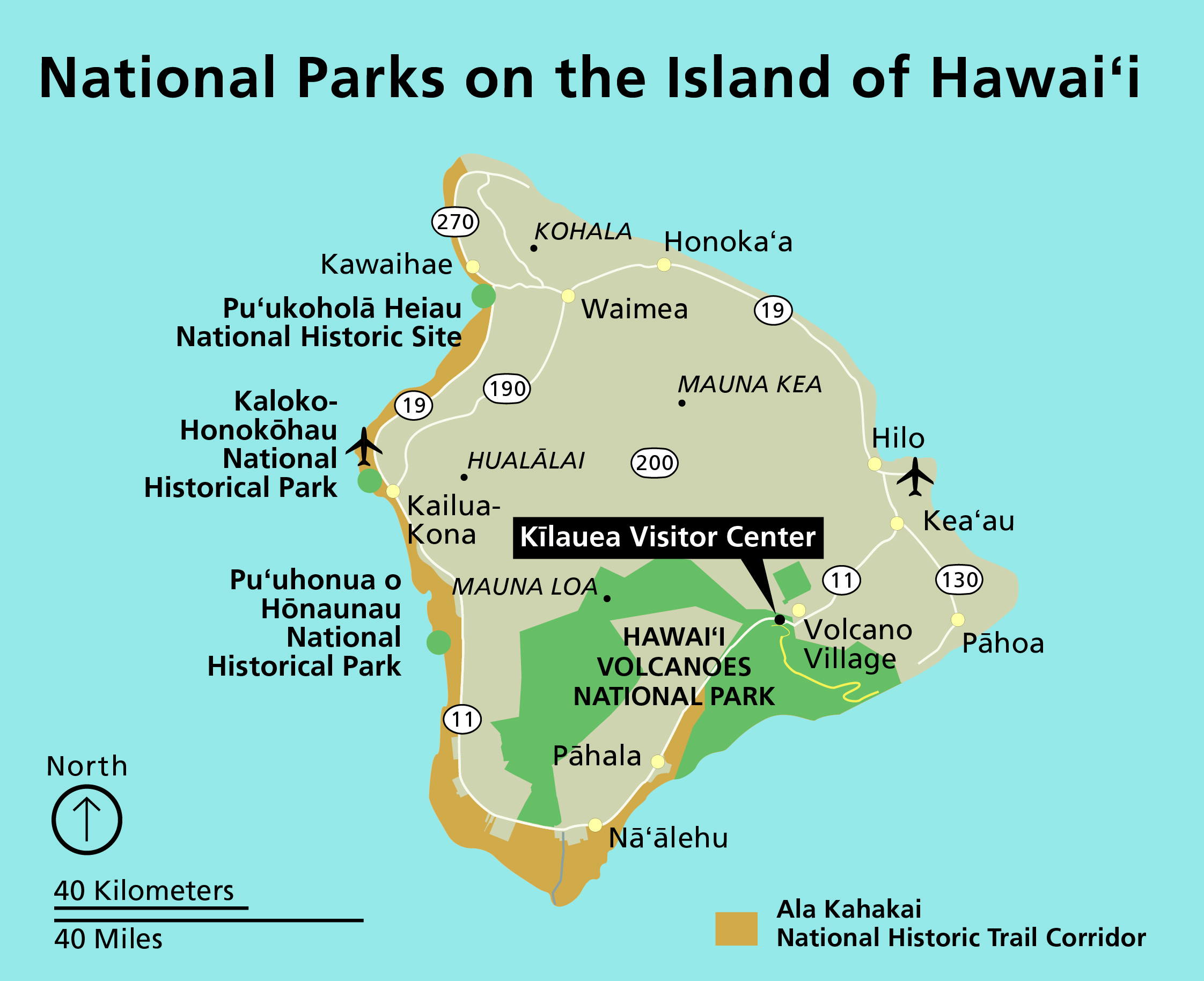
The Big Island is the epicenter of volcanic activity in Hawaii, comprising five primary shield volcanoes that have merged to form the largest island in the state.
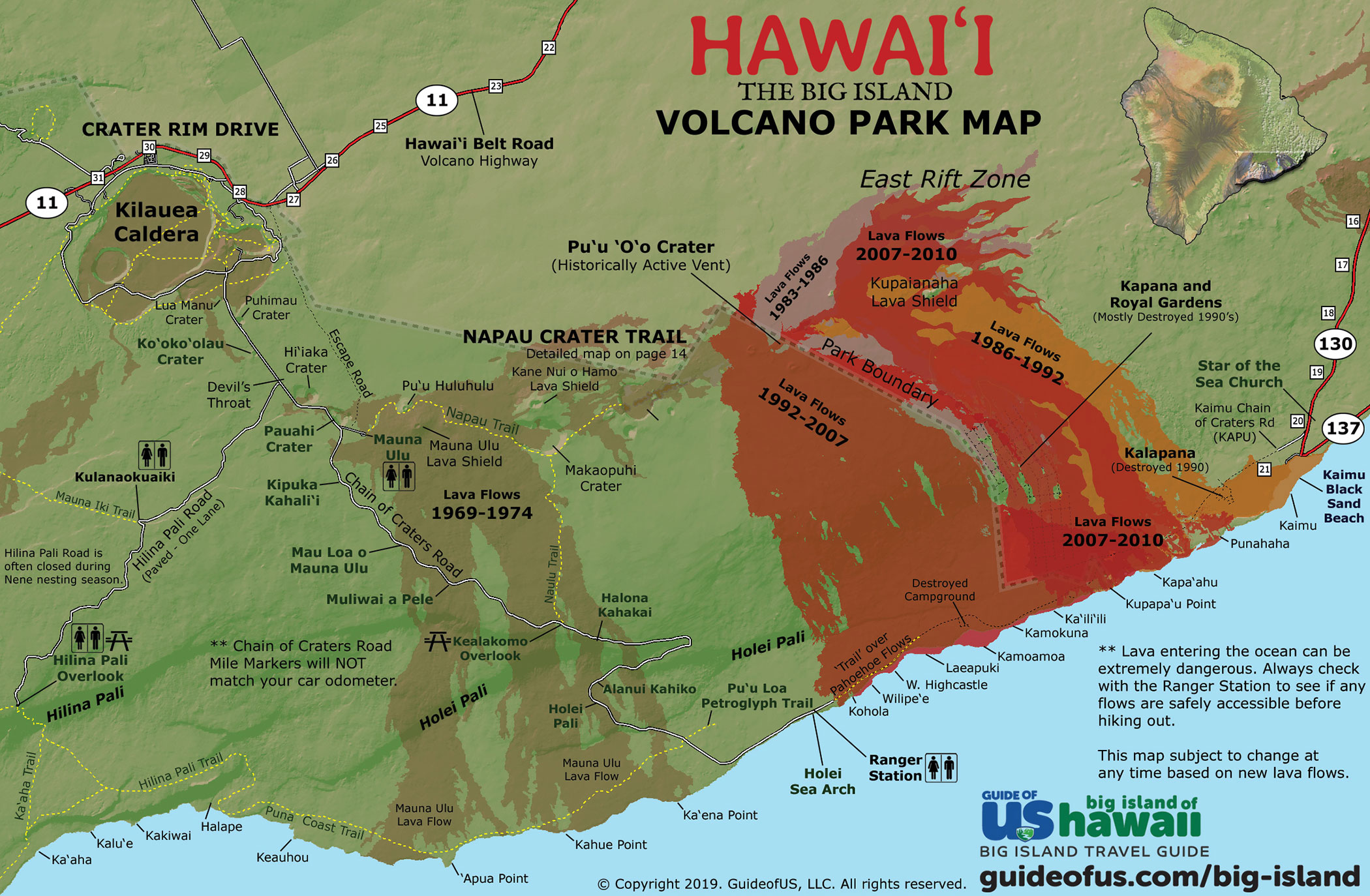
Kīlauea: Often cited as one of the most active volcanoes on Earth, Kīlauea is a dynamic and powerful force. Located on the southeastern flank of Mauna Loa, it is the youngest terrestrial volcano in Hawaii. Its recent history includes the dramatic 2018 lower Puna eruption, which reshaped the landscape, and various summit eruptions within Halemaʻumaʻu crater. It is the centerpiece of Hawaiʻi Volcanoes National Park.
Mauna Loa: The ‘Long Mountain’ is the largest active volcano on the planet in terms of volume and area. Its colossal, gently sloping flanks dominate the southern half of the island. After a 38-year slumber, Mauna Loa erupted spectacularly in late 2022, reminding the world of its immense power. Its sheer size is a testament to the productivity of the Hawaiian hotspot.
Mauna Kea: The ‘White Mountain’ is the tallest mountain in the world when measured from its submarine base to its summit, soaring over 33,000 feet. Now considered dormant, Mauna Kea last erupted several thousand years ago. Its high, dry, and stable summit provides the perfect location for some of the world’s most advanced astronomical observatories.
Hualālai: Overlooking the popular tourist destination of Kailua-Kona, Hualālai is the third most active volcano on the Big Island. Though its last eruption was in 1801, it is expected to erupt again in the future. Its slopes are home to lush coffee farms and native forests.
Kohala: The oldest volcano on the Big Island, Kohala is located at the northern tip. It is extinct and has experienced significant erosion, which has carved deep, dramatic valleys and sea cliffs along its northeastern flank.
Maui: The Valley Isle’s Volcanic Legacy
Maui is formed by two distinct volcanoes that have merged, creating the iconic isthmus that gives it the nickname ‘The Valley Isle’.
Haleakalā: This massive shield volcano forms the eastern 75% of Maui. Its name means ‘House of the Sun,’ and watching the sunrise from its summit is a world-renowned experience. The volcano is considered dormant, having last erupted several hundred years ago. Its summit crater is a vast, otherworldly landscape protected within Haleakalā National Park.
West Maui Mountains (Mauna Kahalawai): The older, heavily eroded remnant of the volcano that forms the western part of the island. Its summit caldera has eroded into the stunning ʻĪao Valley. The deeply carved ridges and valleys are a testament to the millions of years of wind and rain that have sculpted its form.
Oʻahu: Remnants of Ancient Giants
The most populous island, Oʻahu, was also born from two shield volcanoes. Though long extinct, their remnants define the island’s geography.
Waiʻanae Range: Forming the western side of the island, the Waiʻanae volcano is the older and taller of the two. Its dry, leeward slopes contrast sharply with the lusher eastern side of Oʻahu.
Koʻolau Range: This is the younger volcano that forms the eastern portion of Oʻahu. A massive landslide long ago caused the entire eastern half of the volcano to collapse into the ocean, leaving behind the stunning, sheer cliffs (pali) that run down the windward coast. Well-known landmarks like Diamond Head (Lēʻahi), Koko Head, and Punchbowl Crater are not the primary volcanoes but are products of a much later, secondary phase of volcanic activity known as rejuvenation.
Kauaʻi: The Garden Isle’s Eroded Past
As one of the oldest of the main Hawaiian Islands, Kauaʻi’s volcanic origins have been dramatically reshaped by time and the elements. The island was formed primarily by a single large shield volcano. Over millions of years, erosion has done its work, creating some of Hawaii’s most spectacular scenery, including the breathtaking Waimea Canyon, often called the ‘Grand Canyon of the Pacific,’ and the iconic cliffs of the Nāpali Coast.
Active, Dormant, or Extinct? Understanding Volcano Status
Geologists classify volcanoes to help understand their potential for future activity. These categories are crucial for risk assessment and public safety.
- Active: A volcano that has erupted in recent history and is likely to erupt again. In Hawaii, this includes Kīlauea and Mauna Loa. Hualālai is also considered active, though its eruptions are far less frequent.
- Dormant: A ‘sleeping’ volcano that has not erupted for a long time but is expected to erupt again in the future. Haleakalā and Mauna Kea fall into this category.
- Extinct: A volcano that is not expected to ever erupt again. It has been cut off from its magma supply as the tectonic plate has moved it away from the hotspot. The volcanoes of Oʻahu and Kauaʻi, as well as Kohala on the Big Island, are extinct.
It’s important to remember that these classifications can change. Volcanoes can remain dormant for thousands of years before reawakening, making continuous monitoring by scientists at the Hawaiian Volcano Observatory (HVO) essential.
How to Safely View Hawaiian Volcanoes
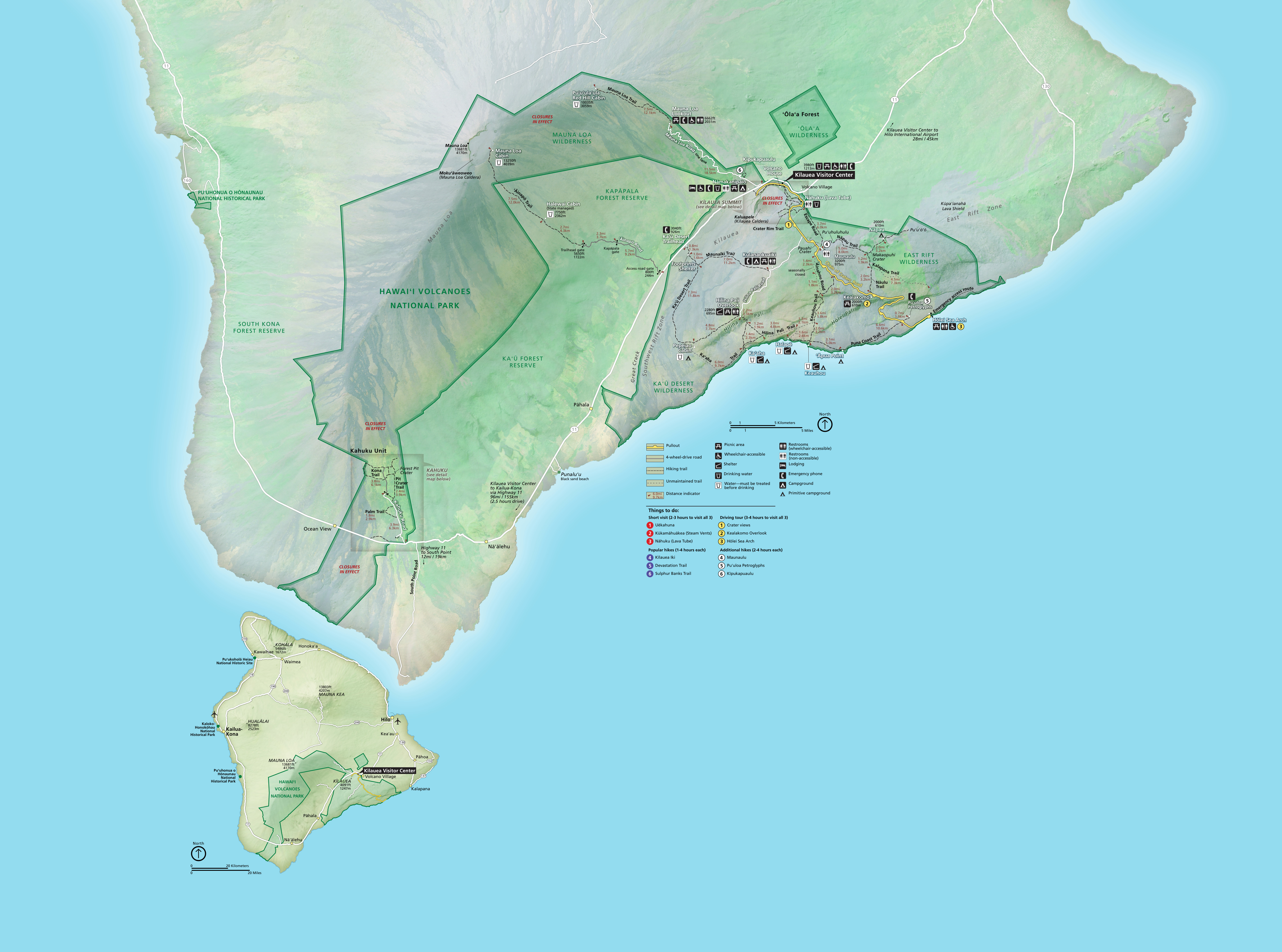
Witnessing Hawaii’s volcanic landscapes is a highlight for many visitors. The best and safest place to do so is within Hawaiʻi Volcanoes National Park on the Big Island. The park offers designated viewing areas, hiking trails, and the scenic Crater Rim Drive.
- Check the official Hawaiʻi Volcanoes National Park and USGS Hawaiian Volcano Observatory websites for the latest eruption updates, closures, and safety advisories before you go.
- Stay on marked trails and respect all barriers. Volcanic landscapes can be unstable and dangerous.
- Be prepared for changing weather conditions, especially at high altitudes like the summits of Mauna Kea and Haleakalā.
- Never enter closed areas. Volcanic fumes (vog) can be hazardous to your health.
For a different perspective, consider professionally guided tours, such as helicopter tours that provide an aerial view of eruption sites or boat tours that (when conditions are safe) can offer a view of lava meeting the sea.
Visualizing the Map: An Interactive Perspective
Imagine a digital map of the Hawaiian Islands. The Big Island would glow with red markers for its active volcanoes, Kīlauea and Mauna Loa. Yellow markers would indicate the dormant status of Hualālai on the Big Island and Haleakalā on Maui. The remaining volcanoes, from Kohala northward through Oʻahu and Kauaʻi, would be marked in a cool grey, signifying their extinct status. This visual representation clearly tells the geologic story of the islands—a trail of fire that has cooled and weathered with time and distance from the hotspot.
Frequently Asked Questions (FAQ)
Which Hawaiian volcano is currently erupting?
Volcanic activity changes frequently. Kīlauea is the most consistently active volcano. To get the most current information, always check the USGS Hawaiian Volcano Observatory website, which provides daily updates.
How many active volcanoes are in Hawaii?
There are three volcanoes classified as active on the Big Island: Kīlauea, Mauna Loa, and Hualālai. Additionally, the submarine volcano Lōʻihi is also active. Haleakalā on Maui is technically classified as dormant but is sometimes referred to as active by different sources due to its recent eruptive history in geologic terms.
Can you visit the volcanoes in Hawaii?
Yes, absolutely. Hawaiʻi Volcanoes National Park on the Big Island and Haleakalā National Park on Maui are specifically designed for visitors to safely explore these incredible volcanic environments.
What is the largest volcano in Hawaii?
Mauna Loa is the largest active volcano in the world by volume, covering more than half of the Big Island. Mauna Kea, a dormant volcano, is the tallest mountain in Hawaii and the world when measured from its base on the ocean floor.
Conclusion: The Living Landscapes of Hawaii
The volcanoes of Hawaii are more than just geological features; they are the creators of the land itself and are deeply woven into Hawaiian culture and history. From the ever-active Kīlauea to the ancient, eroded cliffs of the Nāpali Coast, a map of Hawaiian volcanoes tells a dynamic story of creation, destruction, and rebirth. Understanding these fiery mountains provides a deeper appreciation for the powerful forces that continue to shape this remarkable island paradise.
Exploring these landscapes, whether in person or through a map, is a journey into the very heart of our living planet, a powerful reminder of the constant and beautiful process of geologic change.