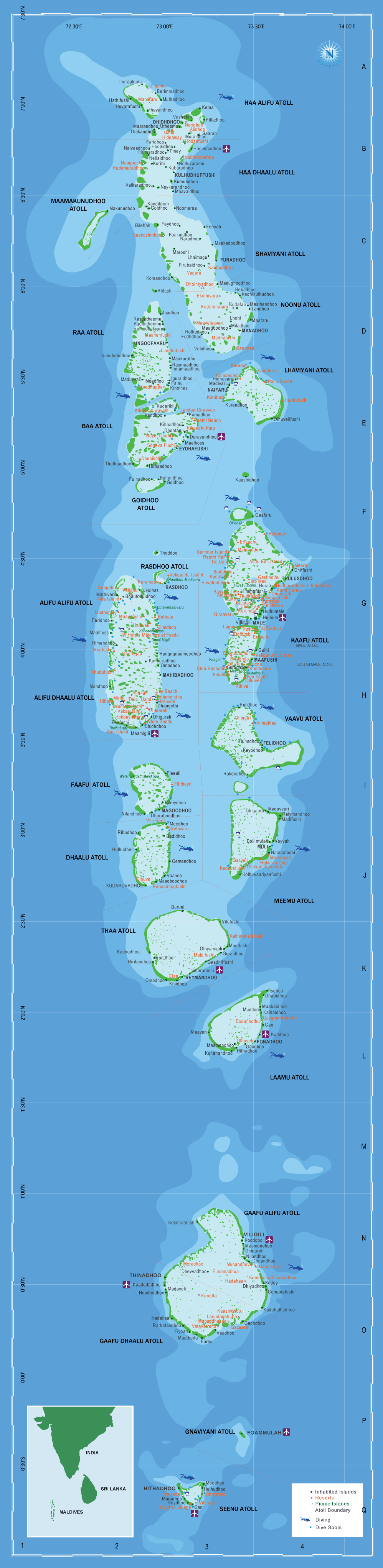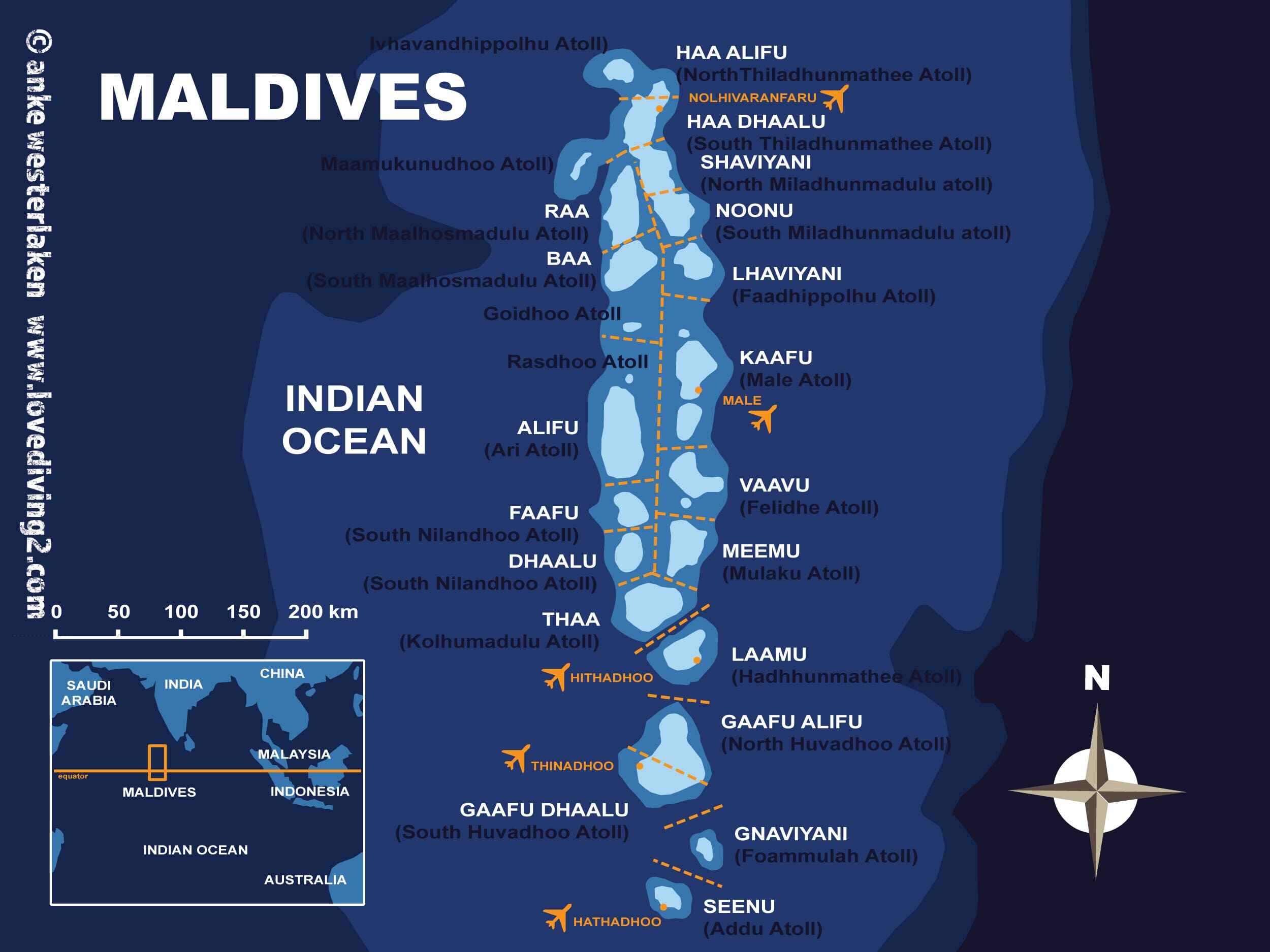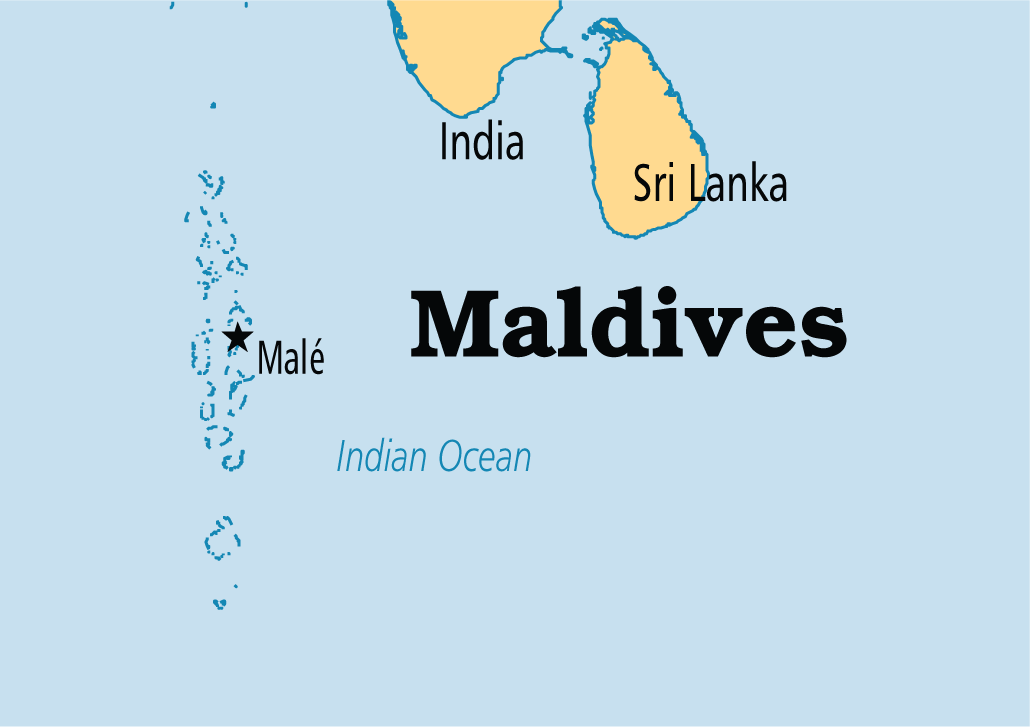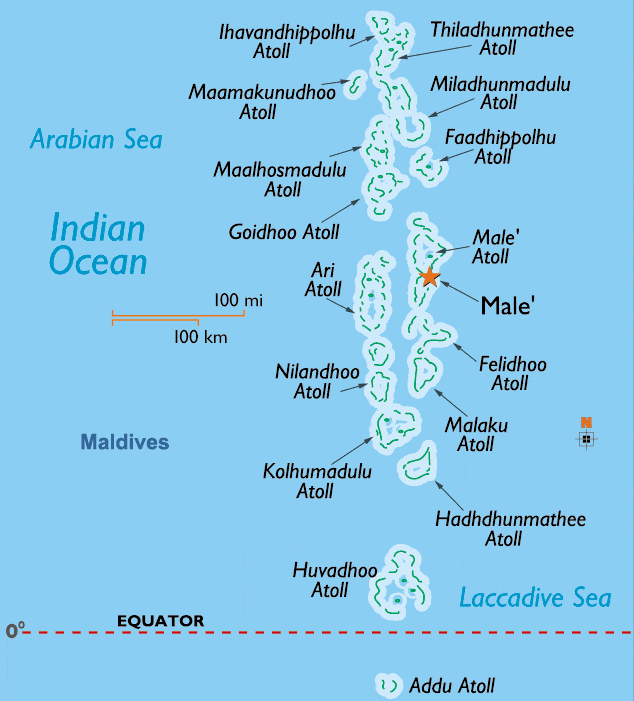
The Maldives is located in the Indian Ocean, specifically southwest of India and Sri Lanka. This strategic location has contributed to its historical significance as a trading hub and continues to influence its cultural diversity and economic prosperity. Knowing its position is the first step in understanding the unique environment that shapes the Maldives.
The Maldives is an archipelago, meaning it’s composed of a chain of islands. In this case, it consists of approximately 1,190 coral islands, grouped into a double chain of 26 atolls. These atolls are ring-shaped coral reefs, each encompassing numerous islands and a central lagoon. This unique geological formation is a key characteristic of the Maldives.
To pinpoint the Maldives on a map, you’ll find it roughly 750 kilometers (466 miles) southwest of Sri Lanka. Its coordinates are approximately 3.2028° N, 73.2207° E. This puts the Maldives near the equator, contributing to its consistently warm and sunny climate.
The Maldives’ proximity to the equator results in a tropical climate, characterized by warm temperatures and high humidity year-round. The country experiences two distinct monsoon seasons: the southwest monsoon (May to October) and the northeast monsoon (November to April).
The southwest monsoon brings more rainfall and higher winds, while the northeast monsoon offers calmer seas and less precipitation, making it the peak tourist season. Understanding these seasonal variations is crucial for planning your visit to the Maldives.
The Maldives is not just a collection of islands; it’s a nation with its own government, culture, and history. The capital city, Malé, is located on a separate island and serves as the country’s economic and political center.
Malé, the capital, is a bustling hub of activity, contrasting with the tranquility found on many of the resort islands. It offers a glimpse into the local culture and lifestyle of the Maldivian people.
The Maldives is known for its stunning natural beauty, including pristine white-sand beaches, crystal-clear turquoise waters, and vibrant coral reefs. These features make it a haven for snorkelers, divers, and anyone seeking a relaxing escape.
The underwater world of the Maldives is as captivating as its surface. The coral reefs teem with marine life, including colorful fish, manta rays, whale sharks, and various other species. This biodiversity is a major draw for tourists and a vital part of the Maldivian ecosystem.
The Maldives’ economy is heavily reliant on tourism. Luxurious resorts, water sports, and diving excursions cater to a global clientele seeking an unforgettable vacation experience. The industry provides employment and contributes significantly to the country’s GDP.
Beyond tourism, fishing plays a crucial role in the Maldivian economy and culture. The local population relies on fishing for both sustenance and income, and it’s an integral part of their heritage.
The Maldives’ location in the Indian Ocean has historically made it a strategic point for trade and maritime activities. Its position along major shipping routes has influenced its cultural exchanges and economic development.
The country’s history is rich with influences from various cultures, including those from India, Sri Lanka, and the Middle East. This cultural fusion is evident in its cuisine, architecture, and traditions.
The official language of the Maldives is Dhivehi, but English is widely spoken, especially in tourist areas. This linguistic versatility makes it easy for visitors from around the world to communicate and enjoy their stay.
The Maldives’ unique geography and climate make it particularly vulnerable to climate change and rising sea levels. The government is actively involved in efforts to address these challenges and protect the nation’s future.
The highest point in the Maldives is only about 2.4 meters (7.9 feet) above sea level, making it one of the lowest-lying countries in the world. This height vulnerability underscores the importance of climate action for the Maldives.
The Maldives is a popular destination for honeymooners, families, and solo travelers alike. Its diverse range of resorts and activities caters to various preferences and budgets.
Water sports are a major draw, including scuba diving, snorkeling, windsurfing, and jet skiing. The crystal-clear waters provide excellent visibility and opportunities for underwater exploration.
The Maldives is also a destination for relaxation and wellness. Many resorts offer spa treatments, yoga classes, and other services designed to promote relaxation and well-being.
The Maldives is relatively easy to reach, with direct flights available from various international destinations. Velana International Airport (MLE), located near Malé, is the main gateway to the country.
Upon arrival, you can transfer to your resort by speedboat, seaplane, or domestic flight, depending on the location. These transfers add to the overall experience and offer stunning views of the islands.
The best time to visit the Maldives is during the dry season (November to April), when the weather is sunny and the seas are calm. However, the shoulder seasons (May and October) can also offer pleasant conditions and fewer crowds.
When planning your trip, consider factors such as your budget, interests, and desired level of privacy. Researching different resorts and islands will help you find the perfect destination for your dream vacation.
Respecting local customs and traditions is essential when visiting the Maldives. While the resorts are generally relaxed, it’s important to dress modestly when visiting local islands and to be mindful of local culture.
The Maldives is a predominantly Muslim country. Alcohol is generally only available at resorts, and it’s important to respect local laws and customs regarding alcohol consumption.
Sustainable tourism is increasingly important in the Maldives. Supporting eco-friendly resorts and activities helps to protect the fragile environment and preserve the natural beauty of the islands.
Consider the environmental impact of your travel choices, such as reducing plastic waste and conserving water. Small changes can make a big difference in preserving the Maldives for future generations.
The government and local organizations are actively involved in conservation efforts, including coral reef restoration, marine life protection, and waste management. These initiatives are crucial for the long-term sustainability of the Maldives.
The Maldives’ unique location, climate, and culture make it a truly special destination. Its pristine beaches, crystal-clear waters, and luxurious resorts offer an unforgettable experience.
The Maldives’ allure extends beyond its physical beauty. Its commitment to preserving its natural environment and embracing sustainable tourism practices makes it a model for responsible travel.
In conclusion, the Maldives is located in the Indian Ocean, southwest of India and Sri Lanka. This location contributes to its unique geography, climate, and cultural identity. Its breathtaking beauty, luxurious resorts, and commitment to sustainability make it a top travel destination.
Whether you’re seeking adventure, relaxation, or cultural immersion, the Maldives has something to offer. Its pristine beaches, vibrant coral reefs, and warm hospitality will create memories that last a lifetime.
Planning your trip to the Maldives is the first step toward experiencing this tropical paradise. Researching different resorts, understanding the best time to visit, and respecting local customs will ensure a memorable and enriching experience.
By understanding the Maldives’ location and its unique characteristics, you can fully appreciate the beauty and significance of this remarkable archipelago. It’s a destination that continues to captivate travelers from around the globe.
The Maldives is a testament to the power of nature and the importance of preserving our planet’s most precious environments. Its beauty and charm will continue to draw visitors for years to come.