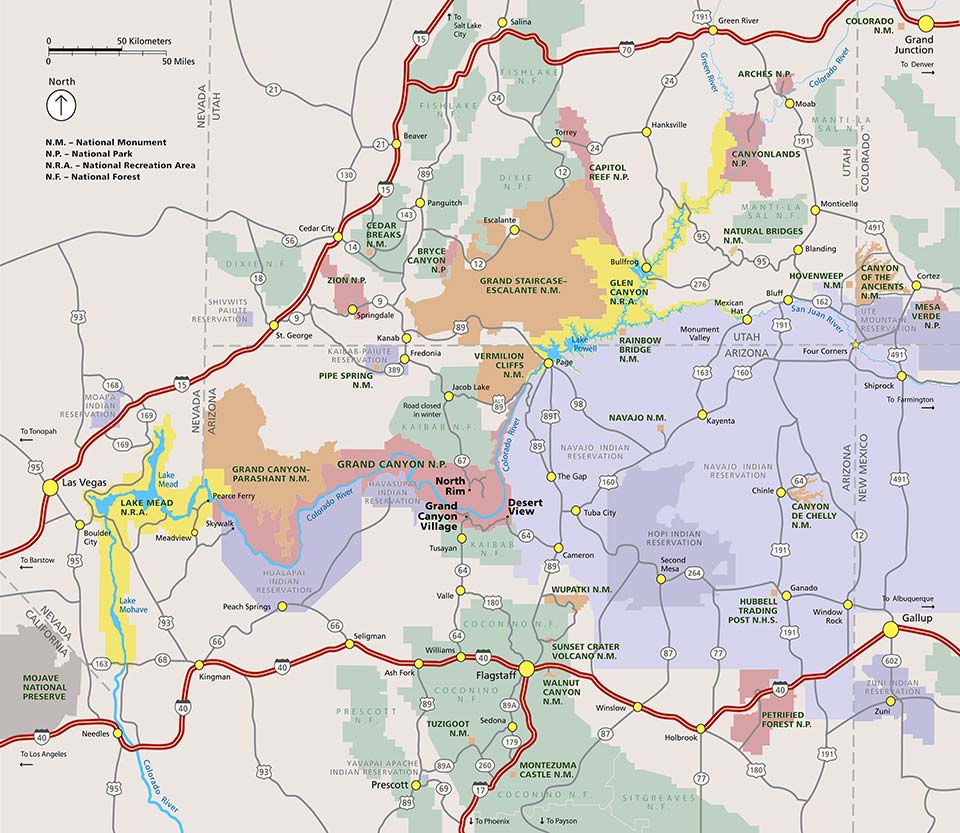
Often depicted broadly across maps of the American Southwest, the Grand Canyon is unequivocally situated within the state of Arizona. Specifically, it dominates the landscape of north-central Arizona, primarily spanning parts of Coconino and Mohave counties. This prime placement within the state makes it an accessible, albeit expansive, destination from various Arizonan cities and even neighboring states.
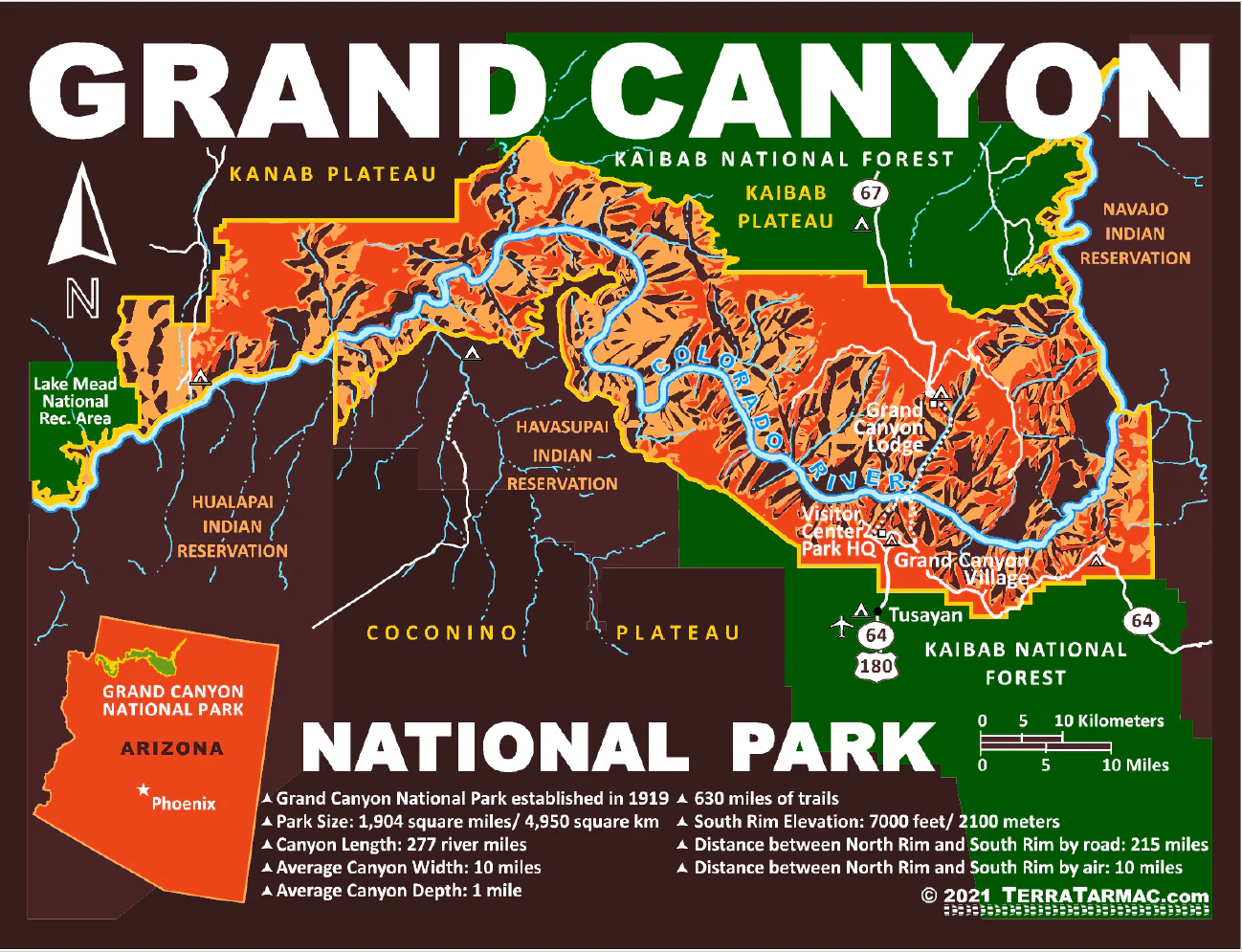
To truly appreciate the Grand Canyon’s presence on the Arizona map, one must grasp its sheer dimensions. The canyon is approximately 277 river miles (446 km) long, up to 18 miles (29 km) wide, and a mile (1.6 km) deep. This colossal trench is far more than a mere landmark; it is a geographic feature so prominent that it can even be discerned from space, a testament to its unparalleled scale within the Colorado Plateau.
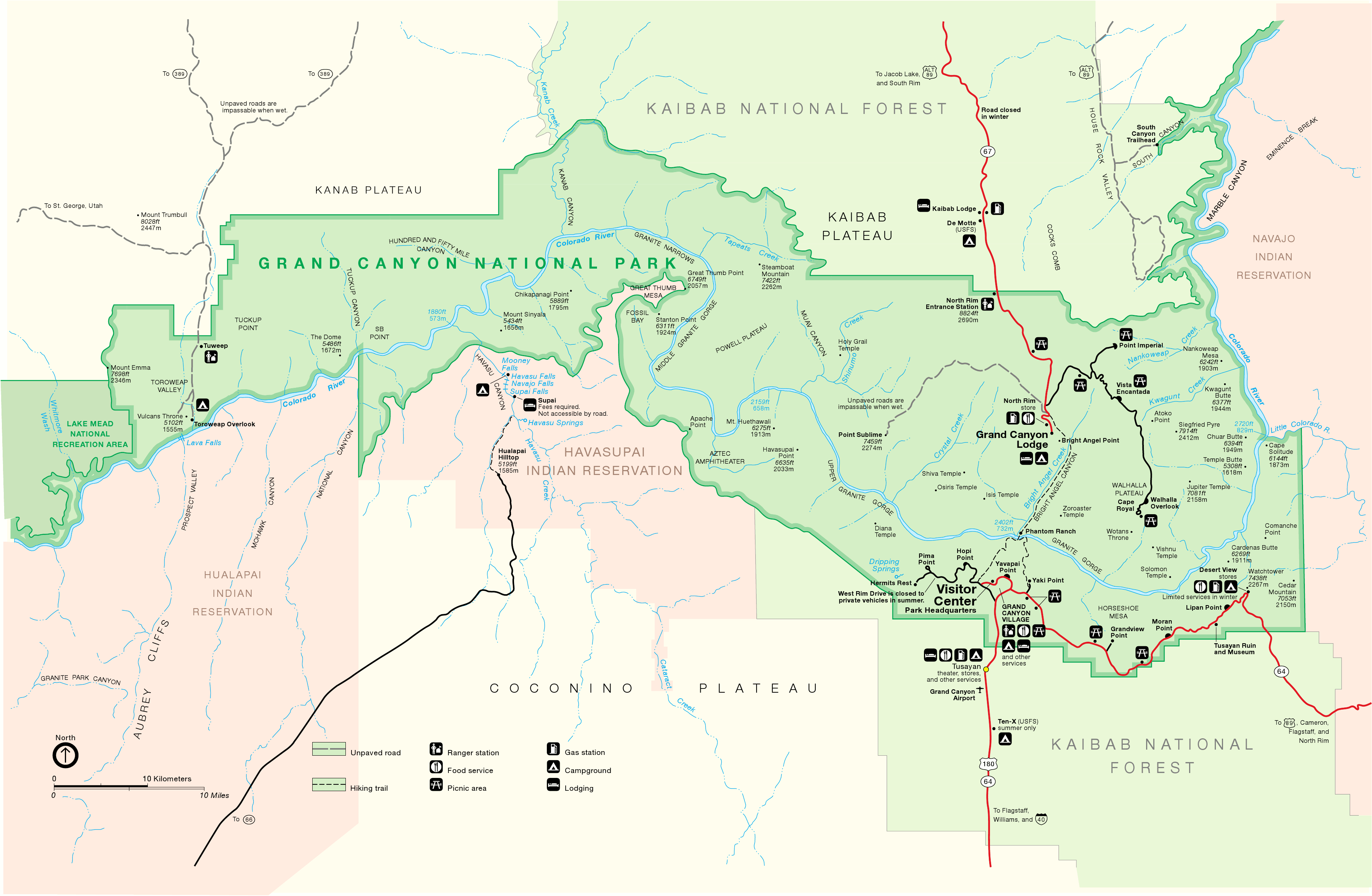
When looking at a map, you’ll notice the Grand Canyon National Park boundary encompasses a vast area, but the most frequently visited sections are divided into distinct ‘rims.’ These rims offer different perspectives, accessibility, and visitor experiences, each with its own unique charm and challenges.
The South Rim: The Quintessential Grand Canyon Experience
The South Rim is by far the most popular and accessible section of the Grand Canyon, attracting roughly 90% of all visitors. It is located in the southern part of the national park, easily identifiable on an Arizona map south of the canyon’s main gorge. Its year-round accessibility, extensive infrastructure, and numerous viewpoints make it the ideal choice for first-time visitors.
Key locations on the South Rim include Grand Canyon Village, a hub for lodging, dining, and visitor services. Iconic viewpoints like Mather Point, Yavapai Point, and Hopi Point are all easily accessible via scenic drives or the park’s efficient shuttle bus system. State Route 64 (AZ-64) provides the primary access to the South Rim, connecting from both Williams (via I-40) and Flagstaff.
The North Rim: A Cooler, More Secluded Perspective
Contrastingly, the North Rim offers a more remote and serene experience. Located directly across the canyon from the South Rim, it sits at a higher elevation (over 8,000 feet or 2,400 meters), resulting in cooler temperatures and often more lush vegetation. On an Arizona map, you’ll find it approximately 220 road miles (354 km) from the South Rim, despite being only 10 air miles (16 km) away.
Access to the North Rim is seasonal, typically open from mid-May to mid-October, due to heavy winter snows. It is reached via U.S. Route 89A and State Route 67 (AZ-67) from Jacob Lake. While it boasts fewer services than the South Rim, its dramatic views from places like Point Imperial and Cape Royal are equally, if not more, stunning to many visitors seeking solitude.
The West Rim: The Hualapai Experience and the Skywalk
Moving westward on the Arizona map, you’ll encounter the Grand Canyon West, a separate tourist destination managed by the Hualapai Tribe. While not part of the national park, it offers a distinct experience, notably featuring the Grand Canyon Skywalk – a horseshoe-shaped glass bridge extending over the canyon rim. It’s geographically closer to Las Vegas, Nevada, making it a popular day trip option for visitors from that region.
The West Rim is located about 2.5 hours by car from Las Vegas and can be found on maps north of Kingman, Arizona. Access roads like Pierce Ferry Road lead to this area, which offers cultural experiences, helicopter tours, and unique viewpoints such as Eagle Point and Guano Point.
The East Rim: A Transition Zone
While not officially designated as a separate ‘rim’ in the same vein as the South or North, the easternmost section of the Grand Canyon National Park, accessible via Desert View Drive (part of AZ-64 on the South Rim), is sometimes referred to as the East Rim. This area provides stunning views of the Little Colorado River Gorge and the Painted Desert, marking a transition in the canyon’s landscape as it stretches further east on the Arizona map.
Key Cities and Towns Near the Grand Canyon on a Map
- Flagstaff: A larger city located about 1.5 hours southeast of the South Rim, offering a wide range of accommodations, dining, and services. It’s a popular base for exploring northern Arizona.
- Williams: Situated directly west of Flagstaff on I-40, Williams is approximately an hour’s drive from the South Rim entrance. It’s famous as the ‘Gateway to the Grand Canyon’ and the southern terminus of the Grand Canyon Railway.
- Tusayan: The closest town to the South Rim entrance, just a few miles south of the park gate. Tusayan offers lodging, restaurants, and a few essential services, making it convenient for early morning or late evening park visits.
- Page: Located northeast of the Grand Canyon, about 2.5 hours from the South Rim and 3 hours from the North Rim. Page is known for nearby attractions like Antelope Canyon and Horseshoe Bend, often combined with a Grand Canyon trip.
- Las Vegas, Nevada: While in a different state, Las Vegas is a significant hub for visitors to the Grand Canyon, especially for those heading to the West Rim (about 2.5 hours drive) or undertaking longer day trips to the South Rim (about 4.5 hours drive).
Navigating the Grand Canyon: Roads and Access Points
On an Arizona map, you’ll see primary roads leading to the Grand Canyon. From the south, US-180 and AZ-64 converge near Williams and Flagstaff, guiding visitors to the South Rim. For the North Rim, US-89 and then AZ-67 are the main arteries. It’s important to note that within the national park itself, especially on the South Rim, private vehicle access is restricted in certain areas during peak seasons, with a free shuttle bus system providing convenient transportation to popular viewpoints.
The Grand Canyon’s Geological Story: A Map Through Time
Beyond its current geographical placement, the Grand Canyon tells a profound geological story visible on its rock layers. Each layer represents a chapter in Earth’s history, exposed by the erosive power of the Colorado River. This ‘map through time’ reveals billions of years of geological processes, from ancient Precambrian basement rocks to more recent Cenozoic formations. Understanding this context enriches the experience of seeing the canyon on any map.
Planning Your Visit: Essential Map-Reading Tips
When planning your Grand Canyon adventure, always consult detailed maps. These will help you understand distances between viewpoints, locate visitor centers, identify trailheads, and plan your driving routes. Remember that distances within the park can be deceptive, and travel times can be longer than anticipated due to winding roads and shuttle schedules.
Consider the time of year for your visit. The South Rim is open year-round, but winter conditions can affect road access and trail conditions. The North Rim is strictly seasonal. Checking current road conditions and weather forecasts is crucial, especially for areas marked as higher elevation or more remote on your Arizona map.
Common Questions About the Grand Canyon’s Location: Answered
- What part of Arizona is the Grand Canyon in? It’s located in north-central Arizona, primarily within Coconino and Mohave counties.
- What cities are near the Grand Canyon on a map? Flagstaff, Williams, and Tusayan are key gateway cities for the South Rim. Page is nearby for the eastern regions.
- Is the Grand Canyon visible from space? Yes, its immense scale makes it a prominent feature visible from orbit.
- How far is Grand Canyon from Phoenix? The South Rim is approximately a 3.5 to 4-hour drive (about 230 miles) from Phoenix.
- How far is Grand Canyon from Las Vegas? The South Rim is about a 4.5-hour drive (280 miles). The West Rim is closer, around 2.5 hours (120 miles).
- What state is the Grand Canyon in? The Grand Canyon is entirely within the state of Arizona, USA.
- Which rim is best for first-timers? The South Rim is generally recommended for first-timers due to its accessibility, abundant facilities, and numerous iconic viewpoints.
The Grand Canyon’s Ecological Significance
Beyond its geographical coordinates, the Grand Canyon represents a unique ecological zone. Its varied elevations and microclimates support diverse plant and animal life, making it a critical area for biodiversity research and conservation. The National Park Service actively works to preserve this delicate ecosystem, ensuring its continued health for future generations.
In conclusion, the Grand Canyon is not just a point on an Arizona map; it is a sprawling, multi-faceted natural wonder deeply embedded within the state’s geography. From the bustling South Rim to the tranquil North Rim and the culturally rich West Rim, each section offers a distinct way to experience its grandeur. Understanding its placement relative to major cities, access routes, and the surrounding landscape is paramount to planning an enriching and unforgettable journey to this iconic landmark.
Whether you’re using a physical map or a digital one, the Grand Canyon’s presence on the Arizona map serves as a beacon for adventure, discovery, and profound appreciation for the natural world. Prepare your route, immerse yourself in its history, and let the majesty of the Grand Canyon reveal itself.