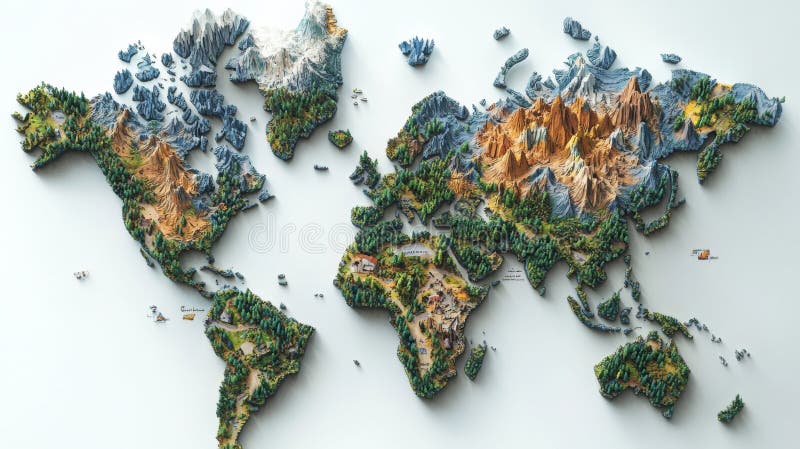
The Earth’s surface is a constantly shifting tapestry, and mountain ranges are some of its most dramatic expressions. Formed primarily through tectonic plate collisions, volcanic activity, and erosional processes over vast geological timescales, these elevated terrains are far more than just piles of rock. They are complex ecosystems, sources of freshwater, and often hold deep cultural and spiritual significance for the people who inhabit their slopes and valleys.
The Ring of Fire: A Volcanic Spectacle
One of the most dynamic geological regions on Earth is the Pacific Ring of Fire, a horseshoe-shaped zone characterized by frequent earthquakes and volcanic eruptions. Along this zone lie some of the world’s most active and iconic mountain ranges, born from the subduction of oceanic plates beneath continental plates. The immense pressure and heat generated at these boundaries fuel volcanic activity, creating towering stratovolcanoes and rugged, often youthful, mountain chains.
The Andes: The Longest Continental Mountain Range
Stretching along the western coast of South America, the Andes Mountains are the longest continental mountain range in the world, spanning approximately 7,000 kilometers (4,300 miles). This colossal chain boasts the highest peaks outside of Asia, including Mount Aconcagua, which stands at 6,961 meters (22,838 feet). The Andes are a result of the Nazca Plate subducting beneath the South American Plate, leading to extensive volcanic activity and uplift.
The Andes are incredibly diverse, encompassing arid deserts in the north, tropical cloud forests in the central regions, and glaciated peaks in the south. They are home to a remarkable array of flora and fauna, including the Andean condor, llamas, and alpacas. Furthermore, the Andes have been the heartland of ancient civilizations, most notably the Inca Empire, whose legacy is still evident in their terraced agriculture and architectural marvels.
The Rocky Mountains: North America’s Backbone
In North America, the Rocky Mountains form a vast system extending from British Columbia and Alberta in Canada down to New Mexico in the United States, covering over 4,800 kilometers (3,000 miles). These mountains are primarily the result of the Laramide orogeny, a period of intense mountain-building activity that occurred between 80 and 55 million years ago. Unlike the Andes, the Rockies are characterized by their broad, uplifted plateaus and jagged peaks, often sculpted by glacial erosion.
The Rockies are renowned for their stunning natural beauty, featuring pristine alpine lakes, dense coniferous forests, and abundant wildlife such as grizzly bears, elk, and bighorn sheep. National parks like Yellowstone, Banff, and Glacier are testament to the ecological and scenic importance of this mountain range, attracting millions of visitors annually for hiking, skiing, and wildlife viewing.
The Alpine-Himalayan Belt: Asia’s Towering Giants
The Alpine-Himalayan Belt is a vast mountain system that stretches across Eurasia, from the Atlantic Ocean in the west to the Pacific Ocean in the east. This immense belt is a product of the collision between the African, Arabian, and Indian plates with the Eurasian Plate. This ongoing collision has resulted in some of the highest and most geologically active mountain ranges on Earth.
The Himalayas: The Roof of the World
The Himalayas, located in Asia, are perhaps the most famous mountain range globally, home to the planet’s highest peaks, including Mount Everest. Formed by the collision of the Indian Plate with the Eurasian Plate, this range is still actively rising. The sheer scale and grandeur of the Himalayas have profound cultural and spiritual significance for billions of people, influencing religions like Buddhism and Hinduism.
Beyond Everest, the Himalayas include numerous other peaks over 8,000 meters, such as K2, Kangchenjunga, and Lhotse. The complex topography supports a wide range of ecosystems, from subtropical forests at the foothills to arid alpine deserts at extreme altitudes. The glaciers within the Himalayas are crucial sources of freshwater for major Asian rivers, including the Ganges, Indus, and Brahmaputra, making their preservation vital for regional water security.
The Alps: Europe’s Iconic Peaks
Forming the natural spine of Europe, the Alps are a series of mountain ranges stretching approximately 1,200 kilometers (750 miles) across eight countries, from France and Switzerland to Austria and Slovenia. These mountains, while not as high as the Himalayas, are equally iconic, known for their dramatic, snow-capped peaks, deep valleys, and picturesque villages. The formation of the Alps is primarily attributed to the collision of the African and Eurasian plates.
The Alps are a vital hub for tourism, offering world-class skiing, mountaineering, and hiking opportunities. They are also critical for European hydrology, acting as a major water tower that feeds numerous rivers, including the Rhine, Rhone, and Po. The biodiversity of the Alps is remarkable, with unique flora and fauna adapted to its challenging alpine environment.
Other Notable Mountain Systems Around the Globe
While the Andes, Rockies, Himalayas, and Alps often dominate discussions, the world is adorned with many other significant mountain ranges, each with its own unique geological history and ecological value.
The Ural Mountains: The Ancient Boundary
The Ural Mountains, located in Russia, are one of the oldest mountain ranges on Earth, separating Europe from Asia. They are the eroded remnants of a much larger mountain system formed during the late Paleozoic era. While their peaks are relatively low and rounded due to millions of years of erosion, they are rich in mineral resources, playing a crucial role in Russia’s industrial economy.
The Atlas Mountains: North Africa’s Majestic Barrier
The Atlas Mountains form a vast mountain system in Northwest Africa, stretching across Morocco, Algeria, and Tunisia. These mountains are the result of the collision between the African and Eurasian plates, similar to the formation of the Alps. The Atlas Mountains act as a climatic barrier, influencing the Mediterranean climate and creating arid regions to the south.
The Great Dividing Range: Australia’s Eastern Spine
In Australia, the Great Dividing Range is the longest mountain range in the country and the third longest on Earth. It runs along the eastern coast, influencing the continent’s climate and river systems. While not as high as other major ranges, it is geologically significant and harbors unique Australian biodiversity.
The Ethiopian Highlands: The Roof of Africa
Often referred to as the ‘Roof of Africa’, the Ethiopian Highlands are a rugged mass of mountains and plateaus in Ethiopia. This region is part of the Great Rift Valley system and is characterized by dramatic escarpments, deep canyons, and volcanic peaks. It is a critical area for biodiversity and has been inhabited since ancient times, playing a role in the development of early human civilizations.
The Importance of Mountain Ranges
- Water Towers: Mountain glaciers and snowpack act as natural reservoirs, storing vast amounts of freshwater. This water is released gradually through meltwater, feeding rivers that supply drinking water, irrigation for agriculture, and power for hydroelectric dams to downstream communities and ecosystems.
- Biodiversity Hotspots: The varied altitudes, microclimates, and geological formations within mountain ranges create diverse habitats. This supports an extraordinary array of plant and animal species, many of which are endemic, meaning they are found nowhere else on Earth.
- Climate Regulation: Mountain ranges influence regional and global weather patterns. They can act as barriers to air masses, affecting precipitation distribution, and play a role in atmospheric circulation.
- Natural Resources: Mountains are rich in mineral deposits, timber, and other natural resources that have been vital for human development and economies.
- Cultural and Spiritual Significance: Throughout history, mountains have been revered as sacred places, homes to deities, and sources of inspiration for art, literature, and philosophy. They are integral to the cultural identity of many societies.
- Recreation and Tourism: The stunning landscapes and challenging terrains of mountain ranges offer unparalleled opportunities for outdoor recreation, including hiking, climbing, skiing, and wildlife observation, driving significant tourism economies.
Challenges Facing Mountain Environments
Despite their importance, mountain ecosystems are increasingly vulnerable. Climate change poses a significant threat, leading to accelerated glacial melt, altered precipitation patterns, and shifts in vegetation zones. Deforestation, unsustainable tourism, and mining can also lead to habitat loss, soil erosion, and water pollution.
Conservation efforts are crucial to protect these invaluable natural assets. Sustainable land management practices, the establishment of protected areas, and international cooperation are vital to ensuring the long-term health of mountain ranges and the services they provide.
Conclusion: A World Defined by Peaks
From the towering Himalayas to the ancient Urals, the world’s mountain ranges are magnificent testaments to the Earth’s geological power and biological resilience. They are not merely geographical features but dynamic systems that sustain life, shape cultures, and provide essential resources. Understanding the map of these mountain ranges allows us to appreciate the interconnectedness of our planet’s natural systems and the critical need for their preservation for future generations.