The year 1500 sits squarely within the Renaissance, a period of renewed interest in classical learning and artistic innovation. This intellectual and cultural rebirth had a significant impact on European society, influencing everything from art and literature to politics and exploration. Understanding the context of the Renaissance is crucial to interpreting the maps and historical events of this time.
Why study maps of Europe in 1500? Maps are not just geographical representations; they are historical documents that reflect the knowledge, beliefs, and ambitions of their creators. By studying maps from this period, we can gain a deeper understanding of how Europeans perceived their world and their place within it. These maps reveal trade networks, territorial claims, and the relative importance of different regions.
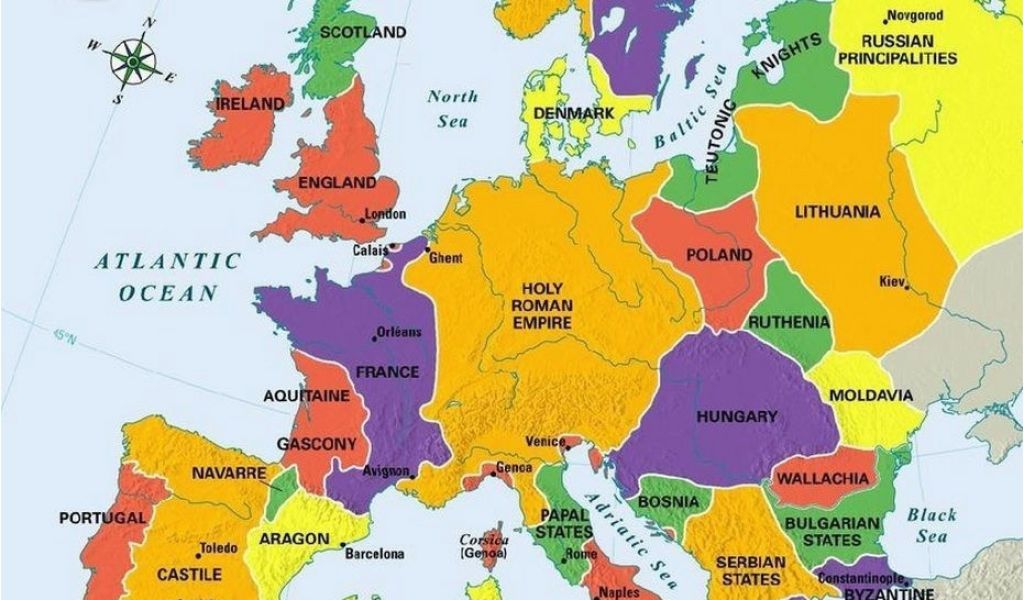
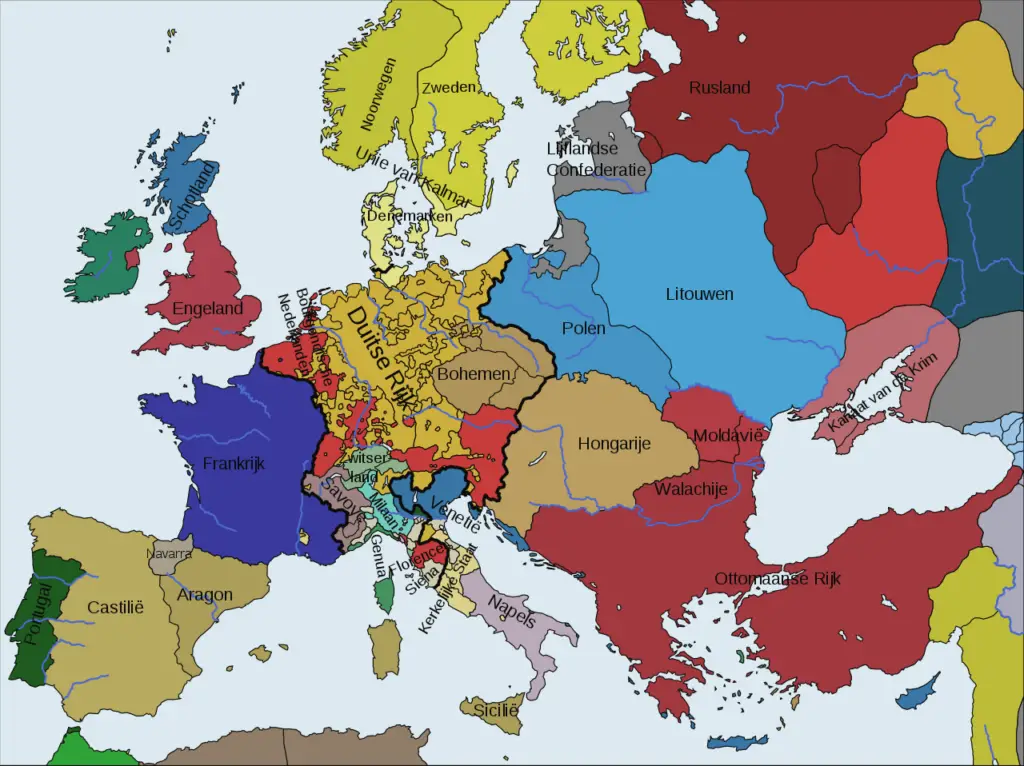
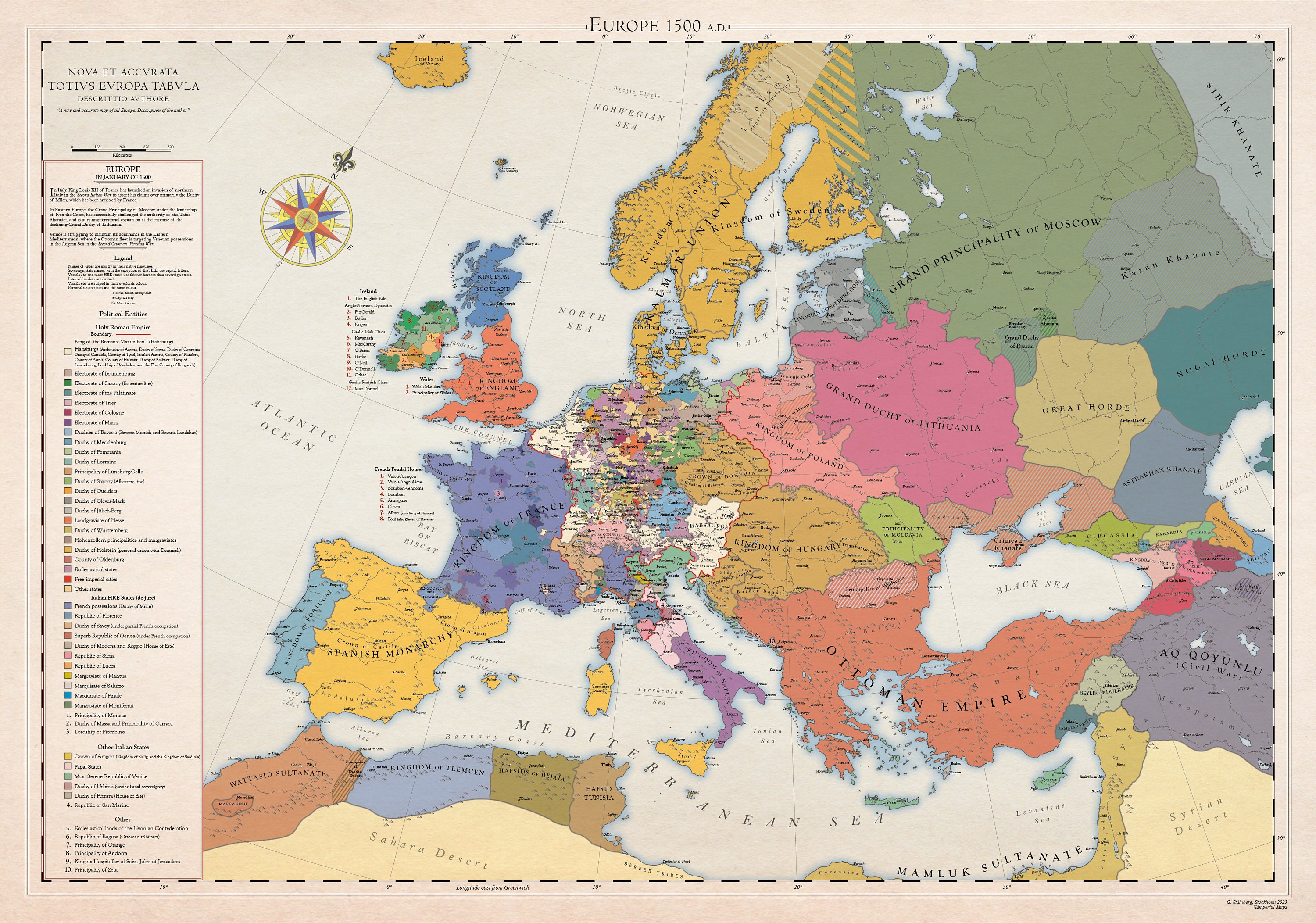
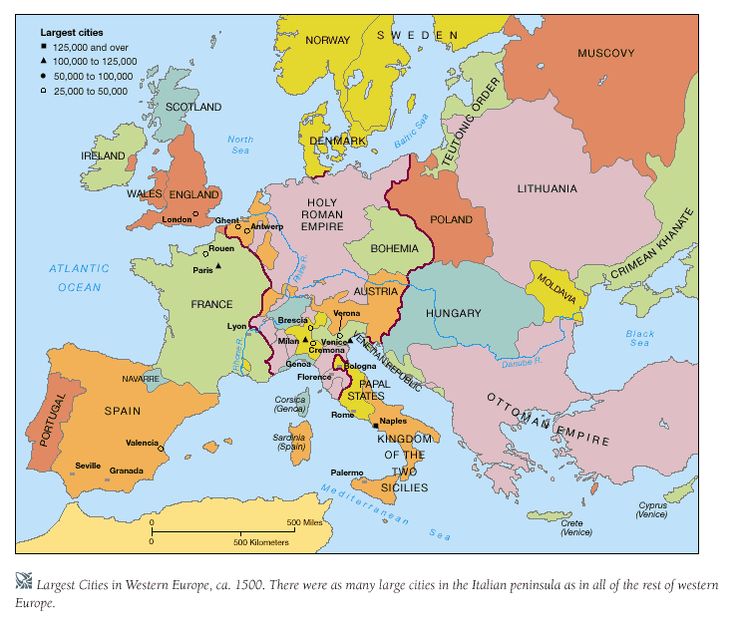
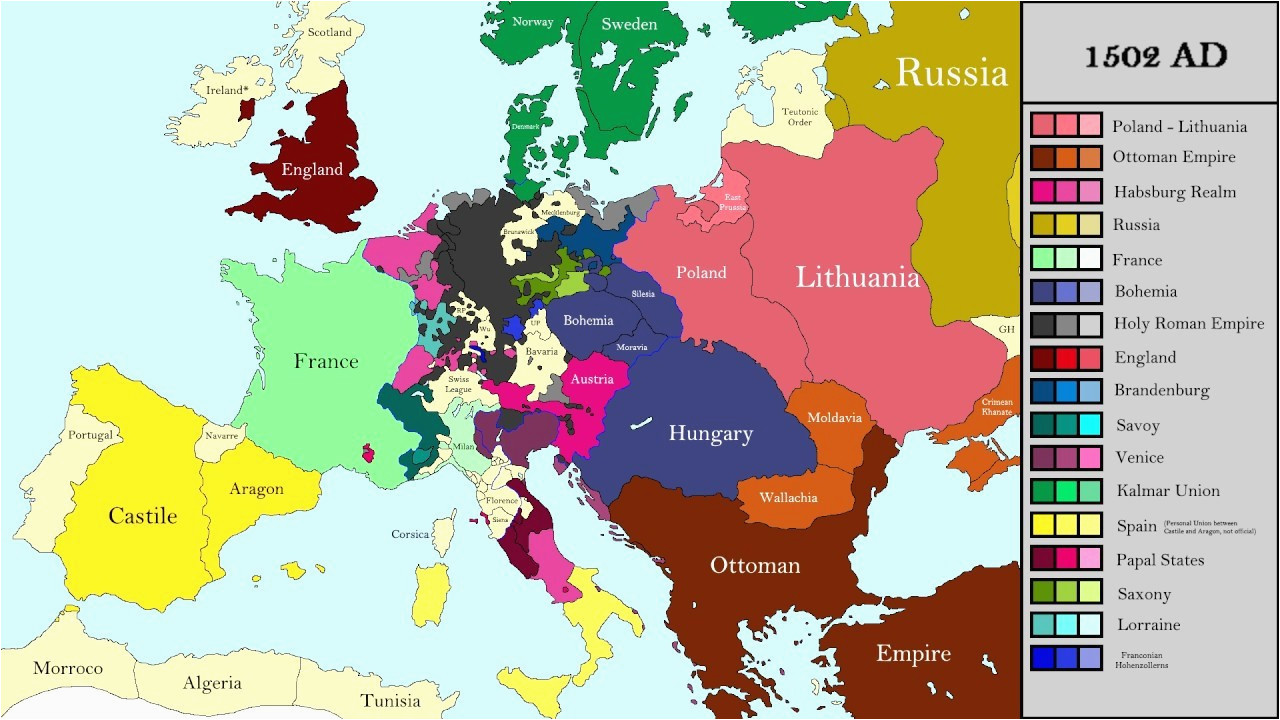
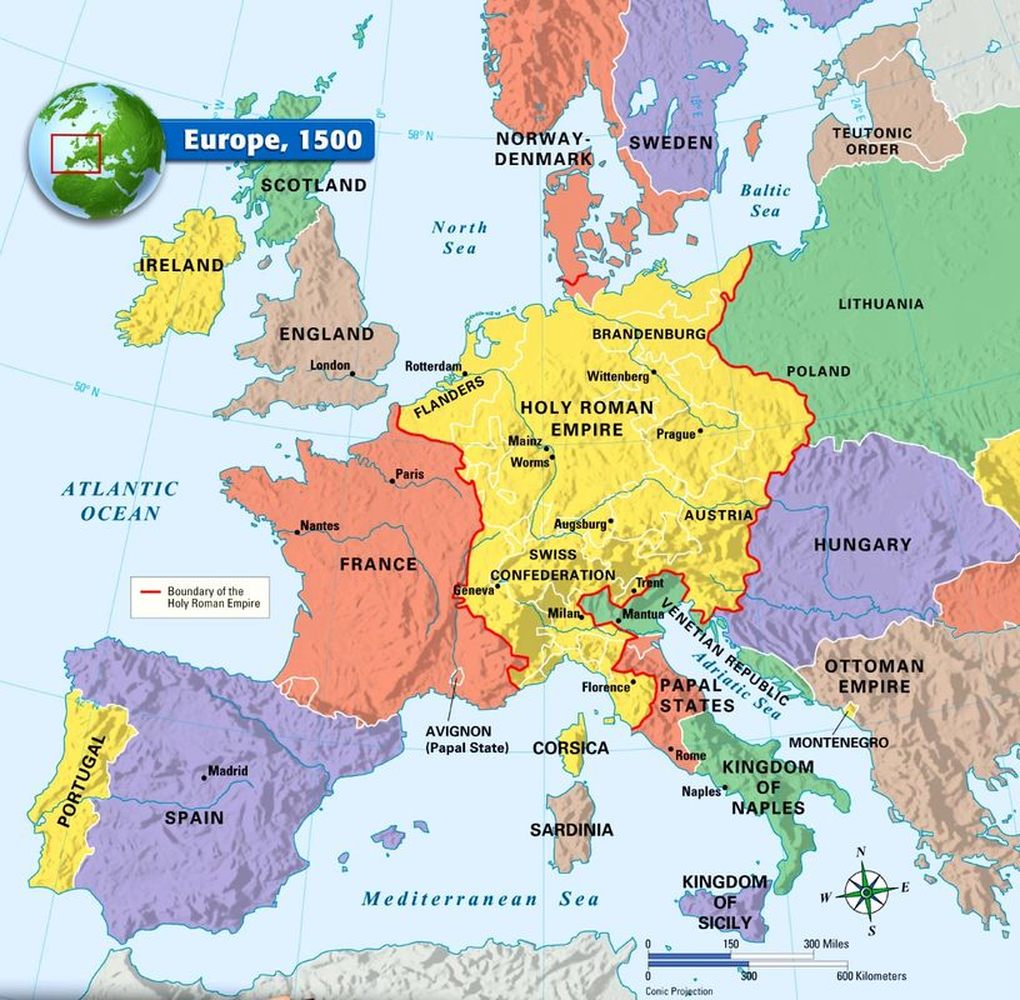
What were the major political entities in Europe in 1500? The political map of Europe in 1500 was a complex patchwork of kingdoms, principalities, and city-states. Some of the most significant entities included the Kingdom of France, the Holy Roman Empire, the Kingdom of Spain (newly unified), the Kingdom of England, and the Papal States. Each of these powers vied for influence and control, leading to frequent conflicts and shifting alliances.
The Holy Roman Empire, though vast, was a decentralized entity composed of numerous smaller states. The Emperor, elected by powerful princes, held limited direct power, and the individual states enjoyed considerable autonomy. This decentralized structure contributed to both the Empire’s resilience and its internal conflicts.
The Kingdom of France, under rulers like Louis XII, was consolidating its power and expanding its territory. France was a major player in European politics, often at odds with the Holy Roman Empire and the Kingdom of England.
The Iberian Peninsula saw the unification of Spain under Ferdinand and Isabella. This newly unified kingdom was poised to become a major global power, fueled by its explorations and colonization in the Americas.
England, under the Tudor dynasty, was emerging from the Wars of the Roses and beginning to assert its influence on the European stage. Its focus was primarily on consolidating power within the British Isles, but it was also increasingly involved in continental affairs.
Italy was divided into numerous city-states, including Venice, Florence, Milan, and Naples. These city-states were centers of trade and culture, but also vulnerable to external threats and internal rivalries.
The Ottoman Empire posed a significant threat to Eastern Europe. Having conquered Constantinople in 1453, the Ottomans continued to expand their influence, threatening the Habsburg lands and the Mediterranean trade routes.
How did trade routes shape Europe in 1500? Trade was a vital component of the European economy in 1500. Major trade routes connected Europe to the East, bringing spices, silks, and other luxury goods. The control of these trade routes was a source of wealth and power, leading to competition and conflict between different states.
The Mediterranean Sea was a crucial artery for trade, connecting Europe to the Middle East and North Africa. Venice and Genoa were major maritime powers that controlled much of this trade.
The Hanseatic League, a network of trading cities in Northern Europe, dominated trade in the Baltic Sea. This league facilitated the exchange of goods between Eastern and Western Europe.
Land routes also played a significant role, connecting different regions of Europe and facilitating the movement of goods and people. The Silk Road, though diminished in importance, still played a role in connecting Europe to Asia.
What were the major cultural centers in Europe in 1500? The Renaissance had a profound impact on European culture, leading to the flourishing of art, literature, and science. Certain cities emerged as major cultural centers, attracting artists, scholars, and patrons.
Florence was the birthplace of the Renaissance and remained a major center of artistic and intellectual activity. The Medici family, powerful patrons of the arts, supported artists like Michelangelo and Leonardo da Vinci.
Rome, as the seat of the Papacy, was also a major cultural center. The Popes commissioned numerous works of art and architecture, transforming the city into a showcase of Renaissance splendor.
Venice, a wealthy maritime republic, was known for its distinctive artistic style and its vibrant cultural life. Venetian artists like Titian and Tintoretto made significant contributions to Renaissance art.
Paris, the capital of France, was a center of learning and intellectual debate. The University of Paris was one of the leading universities in Europe, attracting scholars from across the continent.
What role did religion play in Europe in 1500? Religion was an integral part of European life in 1500. The Catholic Church was the dominant religious institution, wielding immense power and influence. However, the seeds of religious reform were already being sown, setting the stage for the Protestant Reformation.
The Papacy, based in Rome, was the head of the Catholic Church. The Pope was considered the spiritual leader of Christendom and held considerable political power.
The Church played a significant role in education, providing schools and universities that trained future leaders. It also controlled vast amounts of land and wealth.
However, the Church was also facing criticism for corruption and abuses of power. These criticisms would eventually lead to the Protestant Reformation, which would fundamentally alter the religious landscape of Europe.
How did exploration impact Europe in 1500? The late 15th and early 16th centuries were a time of intense exploration, driven by the desire for new trade routes and access to wealth. European explorers ventured across the oceans, discovering new lands and establishing contact with other cultures.
Christopher Columbus’s voyages to the Americas had a profound impact on Europe. The discovery of the New World opened up new opportunities for trade, colonization, and the exploitation of resources.
Vasco da Gama’s voyage to India established a sea route to the East, bypassing the traditional land routes controlled by the Ottoman Empire. This opened up new avenues for trade and led to the rise of Portugal as a major maritime power.
These explorations had far-reaching consequences for Europe, leading to the rise of global empires, the exchange of goods and ideas, and the transformation of European society.
In conclusion, Europe in 1500 was a continent in transition. Maps from this period provide valuable insights into the political landscape, trade routes, cultural centers, religious dynamics, and the impact of exploration. By studying these maps and the historical context in which they were created, we can gain a deeper understanding of this pivotal era in European history. The Renaissance, the rise of powerful nation-states, the expansion of trade, and the beginnings of global exploration all contributed to shaping the Europe we know today. Understanding Europe in 1500 is crucial for comprehending the subsequent centuries of European history and its impact on the world.
What were the key takeaways from Europe in 1500?
- The Renaissance was in full swing, impacting art, culture, and politics.
- Powerful nation-states like France, Spain, and England were consolidating their power.
- Trade routes, both by land and sea, were vital to the European economy.
- Religion played a central role in society, but the seeds of reform were being sown.
- Exploration was transforming Europe’s relationship with the rest of the world.
Studying maps of this era provides a tangible way to visualize these complex interactions and understand the forces shaping the continent.