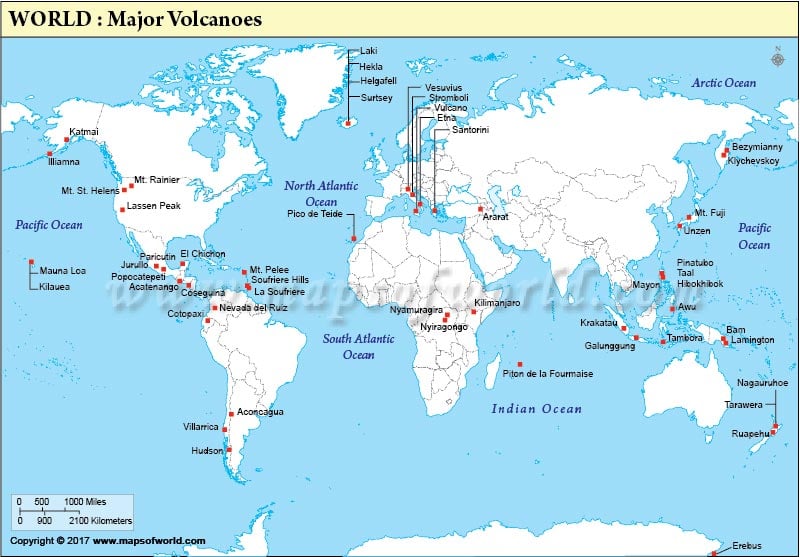
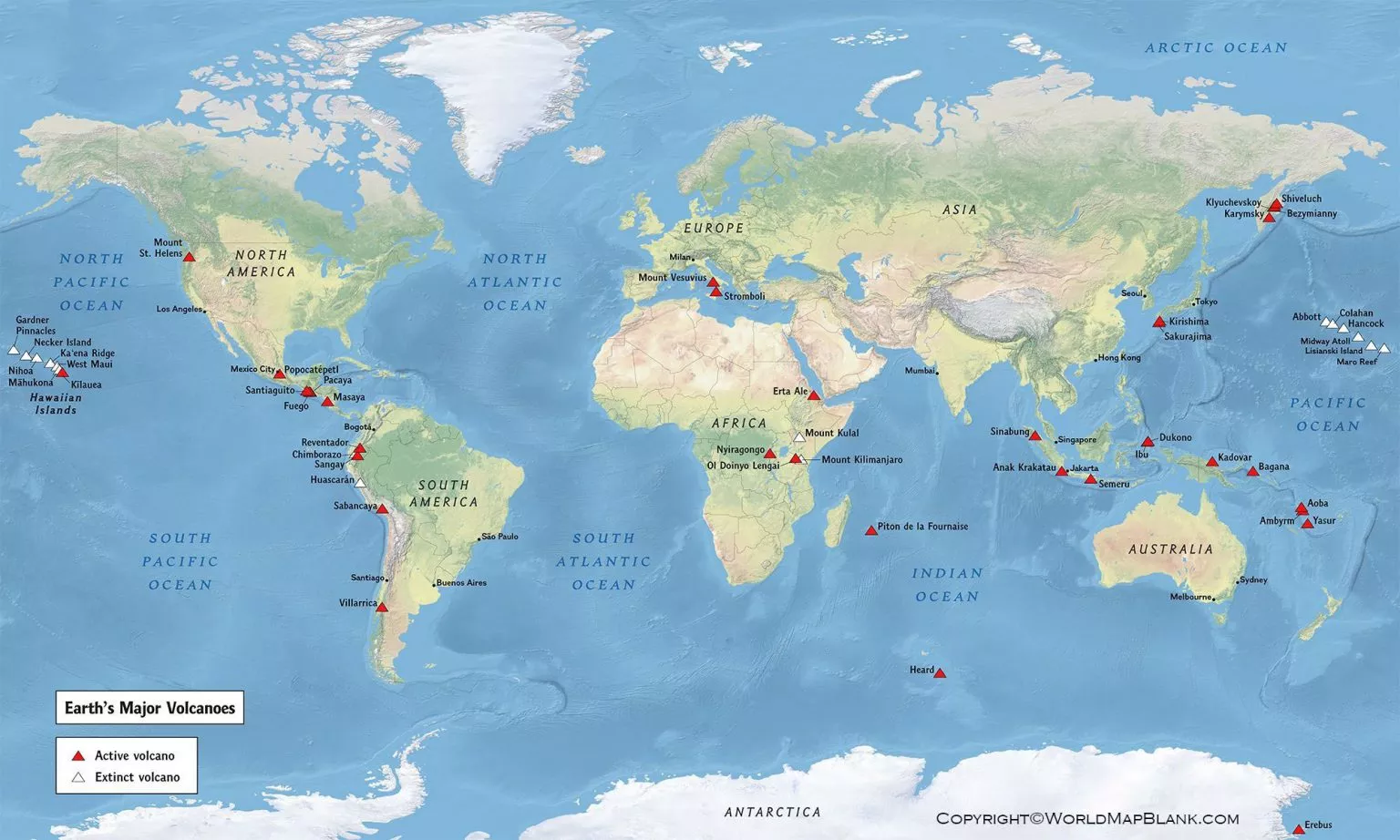
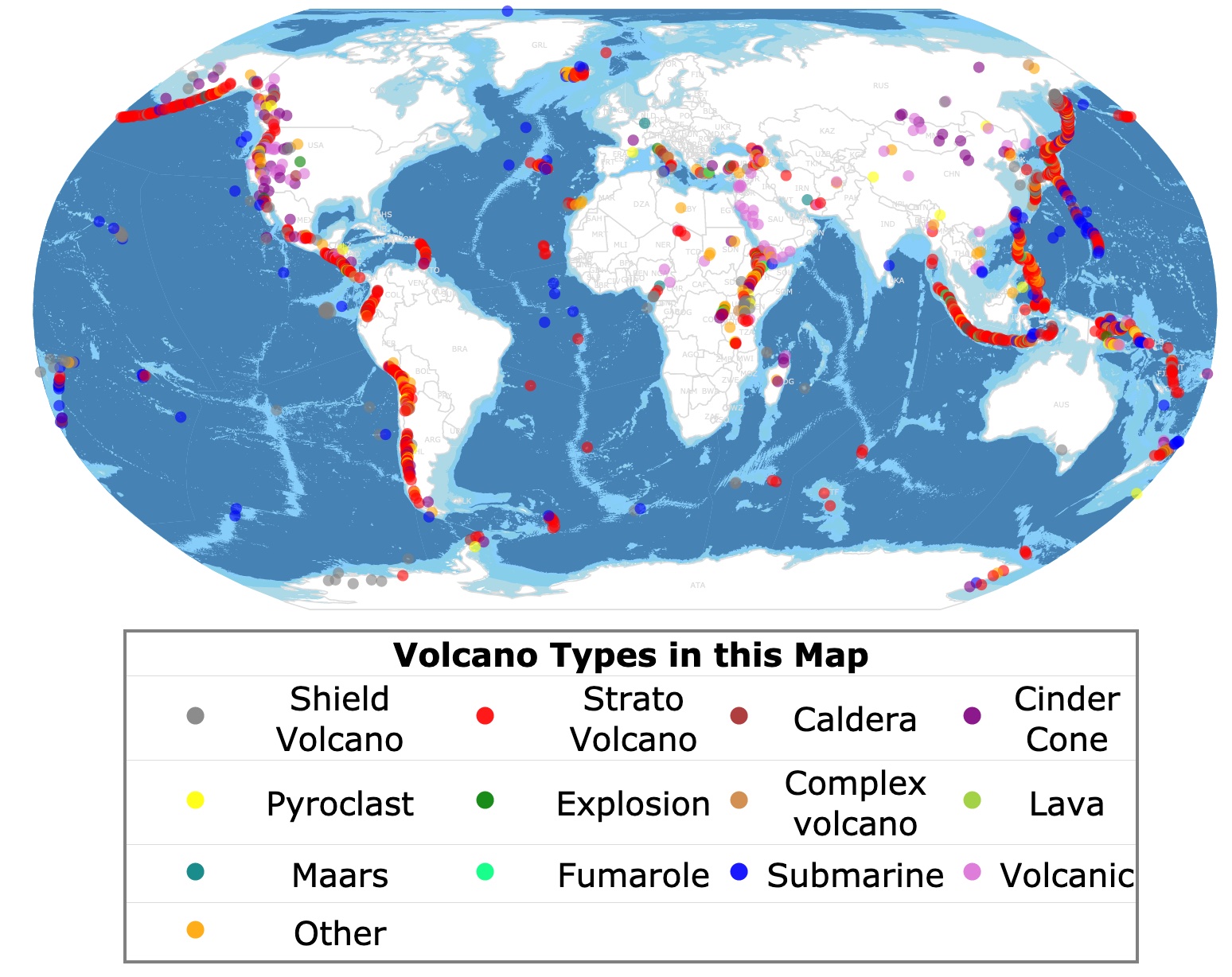
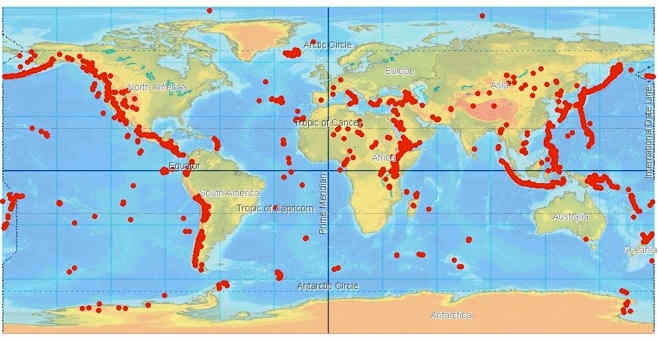
The world map reveals a fascinating distribution of volcanoes, not scattered randomly, but clustered in specific regions. These clusters are primarily linked to plate tectonics, the driving force behind volcanic activity. The Earth’s crust is divided into several large plates that constantly move and interact. Where these plates converge, diverge, or slide past each other, volcanic activity is highly likely.
Beyond the Ring of Fire, other significant volcanic regions exist. The Mid-Atlantic Ridge is a long chain of underwater volcanoes formed where the North American and Eurasian plates are diverging. Iceland, situated on the Mid-Atlantic Ridge, is a prime example of volcanic activity resulting from this divergence. The East African Rift Valley is another area of active volcanism, where the African plate is splitting apart.
Volcanoes are classified based on their activity levels: active, dormant, and extinct. Active volcanoes are currently erupting or have erupted recently. Dormant volcanoes are not currently erupting but have erupted in the past and are likely to erupt again. Extinct volcanoes have not erupted in recorded history and are unlikely to erupt again.
Volcanic eruptions are categorized by their eruption style and the type of material ejected. These eruptions can range from gentle effusive eruptions, where lava flows relatively smoothly, to violent explosive eruptions, which eject ash, gas, and rock fragments high into the atmosphere. The type of eruption is largely determined by the composition of the magma.
The impact of volcanoes extends far beyond their immediate surroundings. Volcanic eruptions can release large amounts of gases, including sulfur dioxide and carbon dioxide, which can affect the Earth’s climate. Ash clouds from eruptions can disrupt air travel and pose significant hazards to aircraft. Volcanic eruptions also contribute to the formation of fertile soils, supporting agriculture in volcanic regions.
Volcanoes provide valuable insights into the Earth’s internal processes. By studying volcanic activity, geologists can better understand plate tectonics, magma formation, and the dynamics of the Earth’s mantle. Volcanic eruptions also serve as a reminder of the planet’s dynamic nature and the forces that continue to shape it.
The study of volcanoes, known as volcanology, is a multidisciplinary field. Volcanologists use a variety of techniques to monitor and study volcanoes, including seismic monitoring, gas analysis, and remote sensing. They work to understand eruption mechanisms, assess volcanic hazards, and develop strategies for mitigating the impact of eruptions.
Volcanoes are not just found on land; they also exist beneath the ocean’s surface. These underwater volcanoes, often associated with mid-ocean ridges, contribute significantly to the Earth’s geological activity. Hydrothermal vents, also known as black smokers, are often found near underwater volcanoes, supporting unique ecosystems.
Volcanoes are fascinating for their diverse landscapes and the natural beauty they create. Volcanic eruptions can lead to the formation of iconic landforms, such as volcanic cones, calderas, and lava plateaus. The unique geological features of volcanic regions attract tourists and researchers alike.
Volcanoes have played a significant role in human history and culture. Volcanic eruptions have caused devastating natural disasters, impacting civilizations and altering migration patterns. Volcanoes also feature prominently in mythology and folklore, often portrayed as powerful forces of nature.
The study of volcanoes is essential for hazard assessment and disaster preparedness. By monitoring volcanic activity, scientists can provide early warnings and help communities prepare for potential eruptions. The ability to forecast eruptions and understand the associated risks is crucial for protecting lives and property.
Volcanoes and their eruptions have a significant impact on the environment. Volcanic eruptions release gases and particles into the atmosphere, affecting air quality and climate. The presence of volcanoes also influences the composition of the soil and water in surrounding areas.
Volcanoes are important for the formation of certain mineral deposits. The heat and pressure associated with volcanic activity can concentrate valuable minerals. Volcanic activity can also create geothermal resources, which can be used to generate clean energy.
Monitoring volcanoes involves the use of various technologies and methods. Seismographs detect ground movements, allowing scientists to monitor seismic activity associated with eruptions. Gas sensors measure the release of volcanic gases, providing insights into the activity of the volcano.
Volcanic Hazards: Understanding the potential hazards associated with volcanoes is crucial for risk management. These hazards include lava flows, pyroclastic flows, ashfall, lahars (mudflows), and volcanic gases. Each hazard poses different risks to human populations and infrastructure.
Volcanoes and Climate Change: Volcanic eruptions can influence climate patterns. Large eruptions can release significant amounts of sulfur dioxide, which can reflect sunlight and cause temporary global cooling. However, volcanoes also release carbon dioxide, a greenhouse gas that contributes to long-term warming.
Volcanoes and Plate Tectonics: The relationship between volcanoes and plate tectonics is fundamental. Most volcanoes are located at plate boundaries, where the Earth’s tectonic plates interact. Understanding plate boundaries is essential for predicting volcanic activity and assessing volcanic hazards.
Famous Volcanoes: There are many famous volcanoes around the world. These include Mount Vesuvius in Italy, which famously destroyed Pompeii; Mount Fuji in Japan, an iconic symbol of the country; and Kilauea in Hawaii, known for its frequent eruptions.
Volcanic Eruptions: Volcanic eruptions are complex events driven by the movement of magma. The type of eruption depends on the composition of the magma, the amount of gas present, and the geological setting. There are several different types of eruptions, including Strombolian, Vulcanian, Plinian, and Hawaiian.
Volcanoes and Earthquakes: Volcanoes and earthquakes are often related, as both are caused by tectonic activity. Earthquakes can sometimes trigger volcanic eruptions, and volcanic eruptions can produce earthquakes. Monitoring seismic activity is therefore essential for understanding volcanic hazards.
Volcanoes and Tourism: Volcanoes attract tourists from all over the world. Many volcanoes offer stunning views and opportunities for adventure. However, it’s important to be aware of the potential hazards and to follow safety guidelines when visiting volcanic areas.
Volcanoes and Renewable Energy: Volcanoes can be a source of renewable energy. Geothermal energy, which is generated from the heat inside the Earth, can be used to generate electricity. Volcanic areas are often rich in geothermal resources.
Volcanoes and the Future: Volcanoes will continue to shape the Earth’s landscape and influence its climate. Continued research and monitoring are essential for understanding volcanic processes and mitigating the risks associated with volcanic eruptions.
Volcanic Ash: Volcanic ash is a significant hazard during and after eruptions. It can damage aircraft, contaminate water supplies, and cause respiratory problems. It’s important to have an understanding of the potential hazards associated with volcanic ash.
Volcanoes and the Ocean: Volcanoes are not only found on land, but also under the ocean. These underwater volcanoes often form at mid-ocean ridges and can have a significant impact on marine ecosystems.