:max_bytes(150000):strip_icc()/worldseismap-56a368c65f9b58b7d0d1d07a.png "Earthquakes Worldwide: Understanding the Global Map and Seismic Activity")
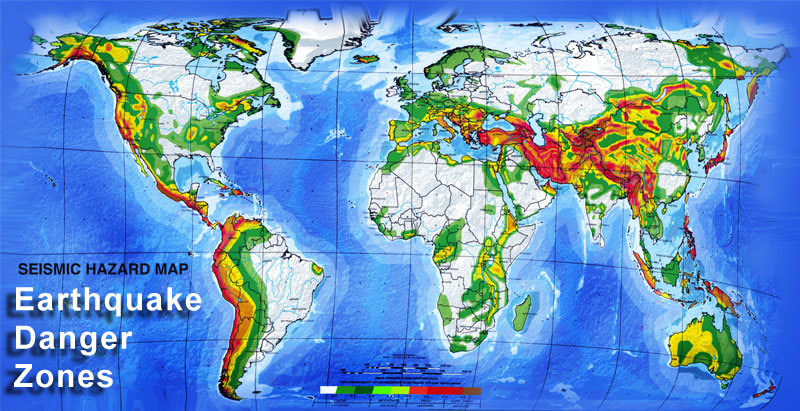
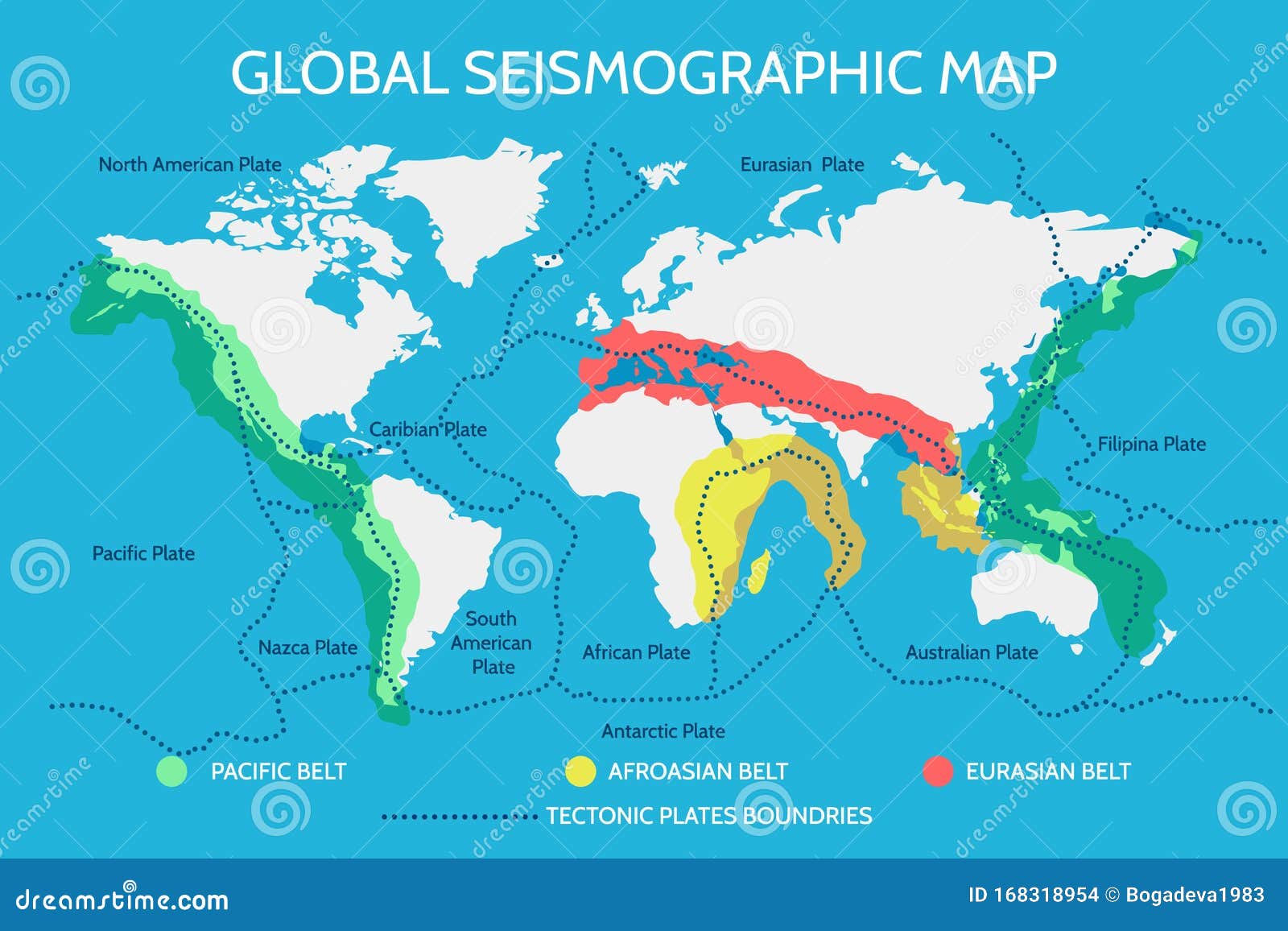
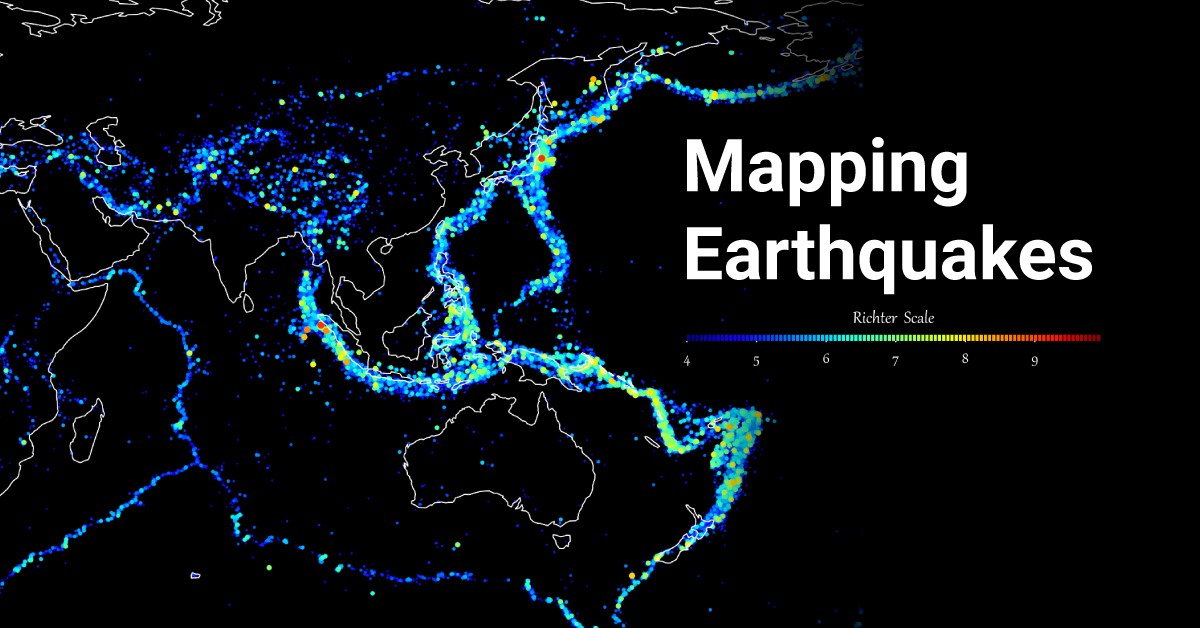
The world map of earthquakes isn’t a random scattering of points; it reveals a clear pattern. Most earthquakes occur along the boundaries of tectonic plates. These massive slabs of the Earth’s lithosphere are constantly moving, interacting, and colliding. It’s the movement and interaction of these plates that generate the stress that eventually leads to earthquakes.
The Alpine-Himalayan belt is another significant seismic zone, extending from the Mediterranean Sea, through Asia, and into the Himalayas. This region is a result of the collision between the Eurasian and Indo-Australian plates, resulting in the formation of the Himalayas and frequent earthquakes.
Understanding the distribution of earthquakes on a global map allows scientists to better predict potential risks, develop early warning systems, and inform building codes to improve safety in earthquake-prone areas.
Seismology is the study of earthquakes and the propagation of seismic waves. Seismologists use specialized instruments called seismographs to detect and record these waves. The data collected from seismographs worldwide is used to create earthquake maps and analyze the characteristics of seismic events.
Seismic waves are energy waves that travel through the Earth. There are two main types: P-waves (primary waves) and S-waves (secondary waves). P-waves are faster and can travel through solids, liquids, and gases, while S-waves are slower and can only travel through solids. The difference in arrival times of P-waves and S-waves at seismograph stations is used to determine the distance to an earthquake’s epicenter.
The epicenter is the point on the Earth’s surface directly above the focus (hypocenter) where the earthquake originates. Determining the epicenter is crucial for assessing the impact of an earthquake and providing timely information to emergency responders.
The Richter scale is a logarithmic scale used to measure the magnitude of an earthquake. Each whole number increase on the Richter scale represents a tenfold increase in the amplitude of the seismic waves and approximately 31.6 times more energy released.
The Moment Magnitude Scale (MMS) is a more accurate measure of earthquake size, especially for larger events. It considers the area of the fault rupture and the amount of slip, providing a more comprehensive understanding of the energy released.
Earthquakes are primarily caused by the movement of tectonic plates. However, other factors can contribute, including volcanic activity, human-induced activities (like fracking), and the release of stress along fault lines.
Tectonic plate boundaries are where the majority of earthquakes occur. These boundaries can be convergent (where plates collide), divergent (where plates move apart), or transform (where plates slide past each other). Each type of boundary has its own characteristic earthquake patterns.
Volcanic eruptions can also trigger earthquakes, as magma movement and pressure changes within the Earth can cause seismic activity. These earthquakes are often smaller in magnitude than those caused by tectonic plate movement.
Human activities, such as wastewater disposal from fracking and the construction of large reservoirs, have been linked to an increased risk of induced seismicity in some areas. These activities can alter the stress on existing fault lines, triggering earthquakes.
Early warning systems are designed to provide seconds to minutes of warning before the arrival of strong ground shaking. These systems use data from seismographs to detect the initial P-waves and send alerts to vulnerable populations.
Early warning systems can be used to automatically shut down critical infrastructure, such as gas lines and trains, and provide advance notice to individuals, allowing them to take protective action.
Building codes play a crucial role in mitigating the impact of earthquakes. Structures built in earthquake-prone areas must be designed to withstand ground shaking. This involves using specific materials, construction techniques, and design standards.
Retrofitting existing buildings is also essential. Strengthening older structures can significantly reduce the risk of collapse during an earthquake. This may involve adding shear walls, bracing, or other structural improvements.
Earthquake preparedness involves a combination of individual actions and community-wide initiatives. Individuals should have a plan, including knowing where to take shelter, having an emergency kit, and participating in drills.
Communities can improve preparedness by developing emergency response plans, conducting public awareness campaigns, and investing in infrastructure improvements to reduce vulnerability.
The impact of earthquakes extends beyond immediate destruction. They can trigger tsunamis, landslides, and aftershocks, causing widespread damage and loss of life.
Tsunamis are giant waves generated by underwater earthquakes. They can travel across oceans at high speeds and cause catastrophic flooding when they reach coastal areas.
Landslides are common consequences of earthquakes, especially in mountainous regions. Ground shaking can destabilize slopes, leading to massive landslides that can bury communities and block transportation routes.
Aftershocks are smaller earthquakes that follow a larger earthquake. They can occur for days, weeks, or even months after the main event and can cause additional damage and disruption.
Technological advancements are continuously improving our understanding of earthquakes. Sophisticated monitoring networks, advanced modeling techniques, and improved data analysis are helping scientists to better predict and prepare for these events.
GPS technology is used to monitor the movement of tectonic plates. By tracking the subtle shifts in plate positions, scientists can gain insights into the build-up of stress along fault lines.
Machine learning and artificial intelligence are being used to analyze seismic data and identify patterns that may indicate an impending earthquake. These technologies can help improve the accuracy of earthquake forecasts.
International collaboration is crucial for earthquake research and mitigation. Sharing data, expertise, and resources allows scientists and emergency responders to work together to address the global challenge of earthquakes.
Organizations like the United States Geological Survey (USGS) and the European-Mediterranean Seismological Centre (EMSC) play a vital role in monitoring earthquakes worldwide and providing information to the public.
The future of earthquake research lies in a multidisciplinary approach, combining seismology, geology, engineering, and social sciences. This integrated approach will help us to develop more effective strategies for earthquake preparedness and mitigation.
Continued investment in research, technology, and public education is essential to minimize the impact of earthquakes and protect communities around the world.
The global earthquake map is a dynamic representation of our planet’s seismic activity. By understanding the causes, effects, and patterns of earthquakes, we can better prepare for and mitigate their devastating consequences.
From the Pacific Ring of Fire to the Alpine-Himalayan belt, the distribution of earthquakes reflects the constant movement of tectonic plates. Studying seismic waves, using the Richter and Moment Magnitude Scales, and developing early warning systems are all critical steps in protecting lives and infrastructure.
Individual preparedness, robust building codes, and international collaboration are key to minimizing the impact of these powerful natural events. As technology advances, our ability to understand and respond to earthquakes will continue to improve, leading to safer communities worldwide.
In conclusion, the study of earthquakes and the global earthquake map is a vital field of scientific inquiry. By continuously learning and adapting, we can reduce the risks associated with these powerful natural events and build a more resilient world.
Remember to always stay informed about earthquake safety measures in your area and be prepared to act when necessary.