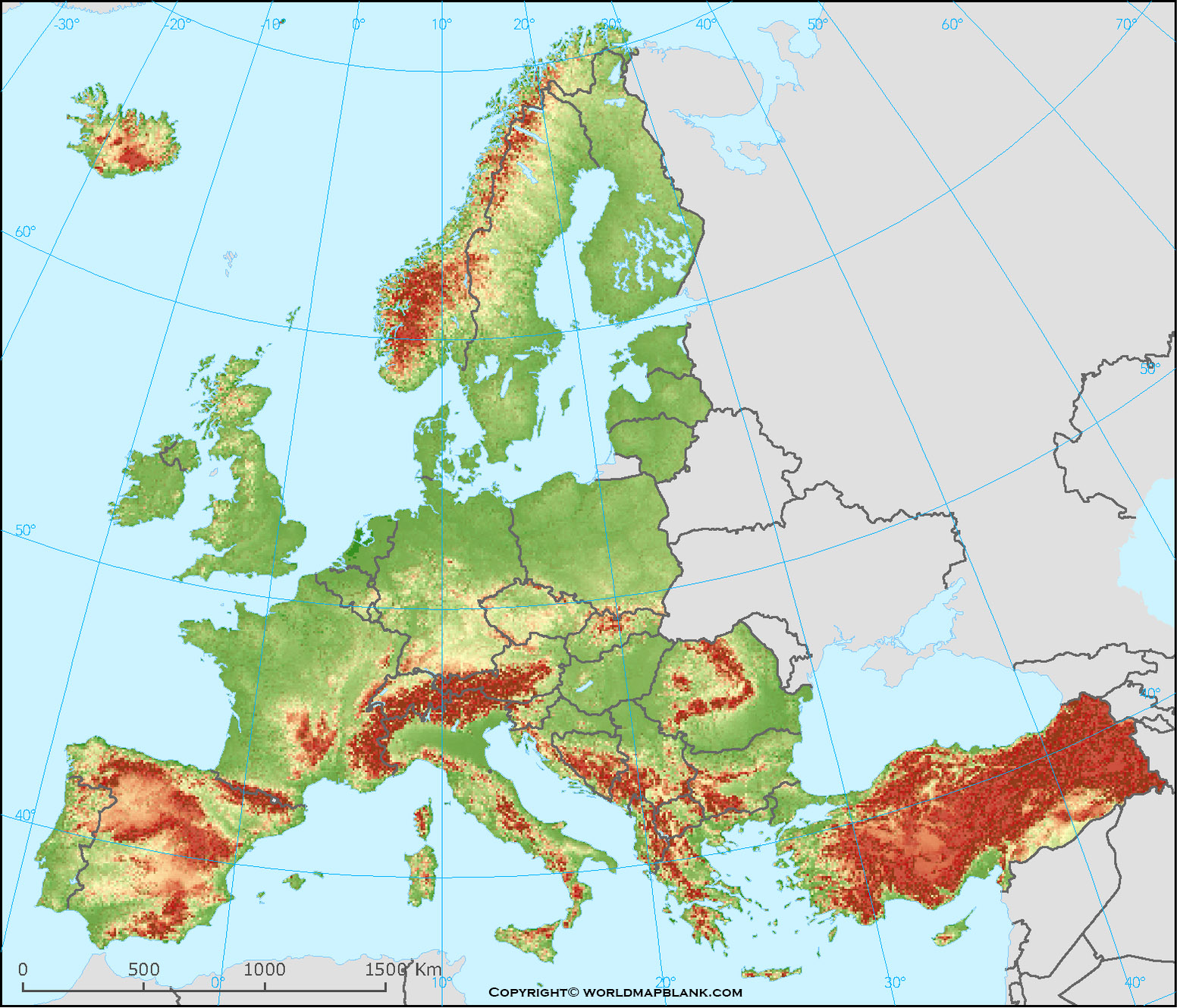
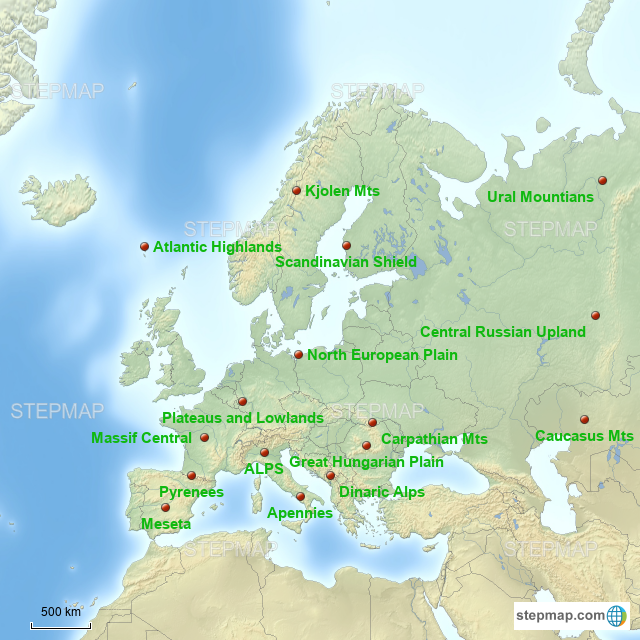
Understanding the distribution and characteristics of these mountain systems is not just an exercise in geography; it’s an insight into the very soul of Europe. They serve as natural borders, sources of vital rivers, havens for rare wildlife, and playgrounds for millions of outdoor enthusiasts. This comprehensive guide will take you on a journey across the European map, highlighting its most significant mountain ranges and their defining features.
The Majestic Alps: Europe’s Crown Jewel
Undoubtedly the most famous mountain range in Europe, the Alps stretch across eight countries: France, Switzerland, Italy, Monaco, Liechtenstein, Austria, Germany, and Slovenia. This crescent-shaped range is home to some of the continent’s highest and most iconic peaks, including Mont Blanc, standing proudly at 4,808 meters (15,774 feet) on the border of France and Italy, often considered the highest point in Western Europe.
The Alps are a classic example of fold mountains, formed by the collision of the African and Eurasian tectonic plates over tens of millions of years. This immense geological pressure created the dramatic peaks, deep valleys, and extensive glaciers that define their landscape today. The region is a biodiversity hotspot, supporting a vast array of flora and fauna adapted to its high altitudes.
Recreation in the Alps is world-class, attracting millions annually for activities such as skiing, snowboarding, hiking, mountaineering, and paragliding. Iconic destinations like Zermatt, Chamonix, and Innsbruck are synonymous with alpine adventure, offering infrastructure that caters to all levels of experience, from leisurely strolls to extreme sports.
The Rugged Pyrenees: A Natural Border
Forming a formidable natural barrier between France and Spain, the Pyrenees extend approximately 491 kilometers (305 miles) from the Bay of Biscay to the Mediterranean Sea. This range is characterized by its rugged peaks, deep valleys, and numerous cirques and lakes of glacial origin. Its highest point is Pico Aneto, reaching 3,404 meters (11,168 feet) in Spain.
The Pyrenees boast a unique ecosystem, distinct from the Alps, with significant areas of pristine wilderness. It’s home to endemic species like the Pyrenean desman and the Pyrenean brown bear. The range offers superb opportunities for hiking, with the famous GR 10 and GR 11 long-distance trails traversing its length, alongside excellent rock climbing and winter sports.
The Extensive Carpathians: Europe’s Wild Heart
Spanning across Central and Eastern Europe in an arc-like shape, the Carpathians are the third-longest mountain range in Europe, stretching approximately 1,500 kilometers (932 miles). They extend through Slovakia, Poland, Hungary, Ukraine, Romania, Serbia, and the Czech Republic. Unlike the Alps, the Carpathians are generally less glaciated and present a more gentle, forested appearance.
This range is celebrated for its vast, untouched wilderness areas, particularly in Romania, where ancient forests host Europe’s largest populations of brown bears, wolves, and lynx. The Tatra Mountains, shared by Poland and Slovakia, are the highest part of the Carpathians, with Gerlachovský štít in Slovakia reaching 2,655 meters (8,711 feet). The Carpathians are a vital ecological corridor and a significant source of cultural heritage, with many traditional villages and wooden churches.
The Ancient Scandinavian Mountains (Kjolen): Land of Fjords
Also known as the Kjolen Mountains, this range forms the backbone of the Scandinavian Peninsula, primarily running through Norway and Sweden. These are among the oldest mountain ranges in Europe, with a geological history stretching back hundreds of millions of years. While not as high as the Alps, their dramatic landscapes are defined by deep fjords carved by ancient glaciers, creating some of the world’s most spectacular coastal scenery.
The highest peak is Galdhøpiggen in Norway, at 2,469 meters (8,100 feet). The Scandinavian Mountains are crucial for their role in shaping the region’s climate and providing unique habitats for Arctic and alpine flora and fauna. Hiking, cross-country skiing, and exploring the fjords are primary activities here.
The Boundary-Defining Urals: Separating Continents
Often cited as the natural boundary between Europe and Asia, the Ural Mountains stretch for approximately 2,500 kilometers (1,550 miles) from the Arctic Ocean to the Ural River and northwestern Kazakhstan. These relatively low, ancient mountains are rich in mineral resources, including metals and precious stones, which have been exploited for centuries.
The highest peak, Mount Narodnaya, stands at 1,895 meters (6,217 feet). The Urals are important not just geographically but also historically and economically, having played a significant role in Russian industrial development. While less dramatic than younger ranges, their vastness and ecological diversity are remarkable.
Southern Europe’s Diverse Ranges
Southern Europe is home to several distinct mountain ranges, each with its unique character.
- The Apennines (Italy): Forming the spine of the Italian peninsula, the Apennines are a geologically active range, including peaks like Corno Grande (2,912 meters / 9,554 feet). They influence Italy’s climate and agriculture, and are known for their picturesque villages and national parks.
- The Dinaric Alps (Balkan Peninsula): Running parallel to the Adriatic Sea, this range stretches through Slovenia, Croatia, Bosnia and Herzegovina, Serbia, Montenegro, Kosovo, and Albania. Characterized by spectacular karst topography, numerous caves, and a rich biodiversity, its highest peak is Maja Jezercë (2,694 meters / 8,839 feet) in Albania.
- The Balkan Mountains (Stara Planina): Predominantly in Bulgaria and eastern Serbia, these mountains gave the Balkan Peninsula its name. They are rich in history and offer beautiful landscapes for hiking and exploring. Botev Peak (2,376 meters / 7,795 feet) is its highest point.
- The Sierra Nevada (Spain): Located in Andalusia, southern Spain, this range includes the Iberian Peninsula’s highest point, Mulhacén, at 3,479 meters (11,414 feet). It’s famous for being Europe’s southernmost ski resort and for its unique high-altitude ecosystems.
The Caucasus Mountains: Europe’s True Zenith
When discussing Europe’s highest peaks, the Caucasus Mountains are often central to the conversation. Straddling the border between Europe and Asia, between the Black Sea and the Caspian Sea, this range is home to Mount Elbrus, a dormant volcano in Russia, which at 5,642 meters (18,510 feet) is widely recognized as the highest mountain in Europe. Its inclusion depends on the definition of the Europe-Asia border, but geographically and geologically, it is undeniably part of the broader European continental system.
The Caucasus is a region of immense geological activity and stunning biodiversity, featuring vast glaciers, deep gorges, and unique cultural landscapes. Its rugged terrain has historically acted as a barrier, fostering distinct ethnic groups and languages.
Geological Formation and Impact
The formation of Europe’s mountains is a testament to the immense power of plate tectonics. The collision of the African, Eurasian, and Arabian plates over millions of years has uplifted vast sections of the Earth’s crust, creating the dramatic fold mountains we see today. Volcanic activity, though less widespread than in other continents, has also played a role, particularly in ranges like the Caucasus and parts of the Apennines.
Glaciation during the ice ages further sculpted these landscapes, carving out U-shaped valleys, cirques, and fjords, and leaving behind glacial lakes and moraines. This geological history continues to shape Europe’s rivers, climate patterns, and even its seismic activity.
Ecological Significance and Biodiversity Hotspots
European mountain ranges are critical biodiversity hotspots. Their varied altitudes, microclimates, and isolation have led to the evolution of numerous endemic species of plants and animals. They act as natural reservoirs, providing freshwater to surrounding lowlands, and play a vital role in regulating regional climates.
However, these delicate ecosystems face significant threats from climate change, habitat loss due to human development, and over-tourism. Conservation efforts are crucial to protect their unique flora and fauna, from the alpine ibex in the Alps to the brown bears of the Carpathians.
Cultural and Economic Importance
Beyond their natural beauty and ecological value, Europe’s mountains have profoundly influenced human culture and economy. They have served as both barriers and pathways, shaping trade routes, migrations, and political boundaries. Many mountain regions retain distinct cultural traditions, languages, and architectural styles.
Economically, mountain tourism is a major industry, driving local economies through skiing, hiking, and adventure sports. Agriculture, particularly pastoral farming and specialized crops like grapes, thrives in many mountain valleys. Furthermore, mountains are sources of hydroelectric power and valuable mineral resources.
People Also Ask: Common Questions About European Mountains
What is the highest mountain in Europe? The highest mountain in Europe is generally considered to be Mount Elbrus in the Caucasus Mountains, Russia, standing at 5,642 meters (18,510 feet). While some definitions might place Mont Blanc (Alps) as the highest entirely within Western Europe, Elbrus holds the overall continental title.
Where are the major mountain ranges in Europe? The major mountain ranges are distributed across the continent, including the Alps (Central Europe), Pyrenees (Southwest Europe), Carpathians (Central/Eastern Europe), Scandinavian Mountains (Northern Europe), Urals (Eastern Europe/Asia border), Apennines (Italy), Dinaric Alps (Balkans), and the Caucasus Mountains (Southeastern Europe/Asia border).
Which mountain range separates Europe and Asia? The Ural Mountains are traditionally considered the primary natural boundary between Europe and Asia. Additionally, the Caucasus Mountains also form a significant part of this continental divide, particularly in the south.
What are the oldest mountains in Europe? Some of the oldest mountain ranges in Europe include the Scandinavian Mountains (Kjolen) and parts of the Scottish Highlands (e.g., the Cairngorms and Northwest Highlands). These ranges show extensive signs of erosion and ancient geological processes, contrasting with the younger, more rugged Alps or Caucasus.
In conclusion, the mountains of Europe are far more than mere geographical features; they are living testaments to the Earth’s dynamic forces, cradles of biodiversity, and enduring symbols of human resilience and adventure. From the iconic peaks that draw millions of tourists to the remote wildernesses that safeguard ancient ecosystems, each range tells a unique story.
Exploring the European map through its mountains reveals a continent of unparalleled natural beauty and complexity. Whether you are an avid mountaineer, a nature enthusiast, or simply curious about the world around you, the majestic peaks of Europe offer endless inspiration and discovery. Their preservation and appreciation remain vital for future generations.