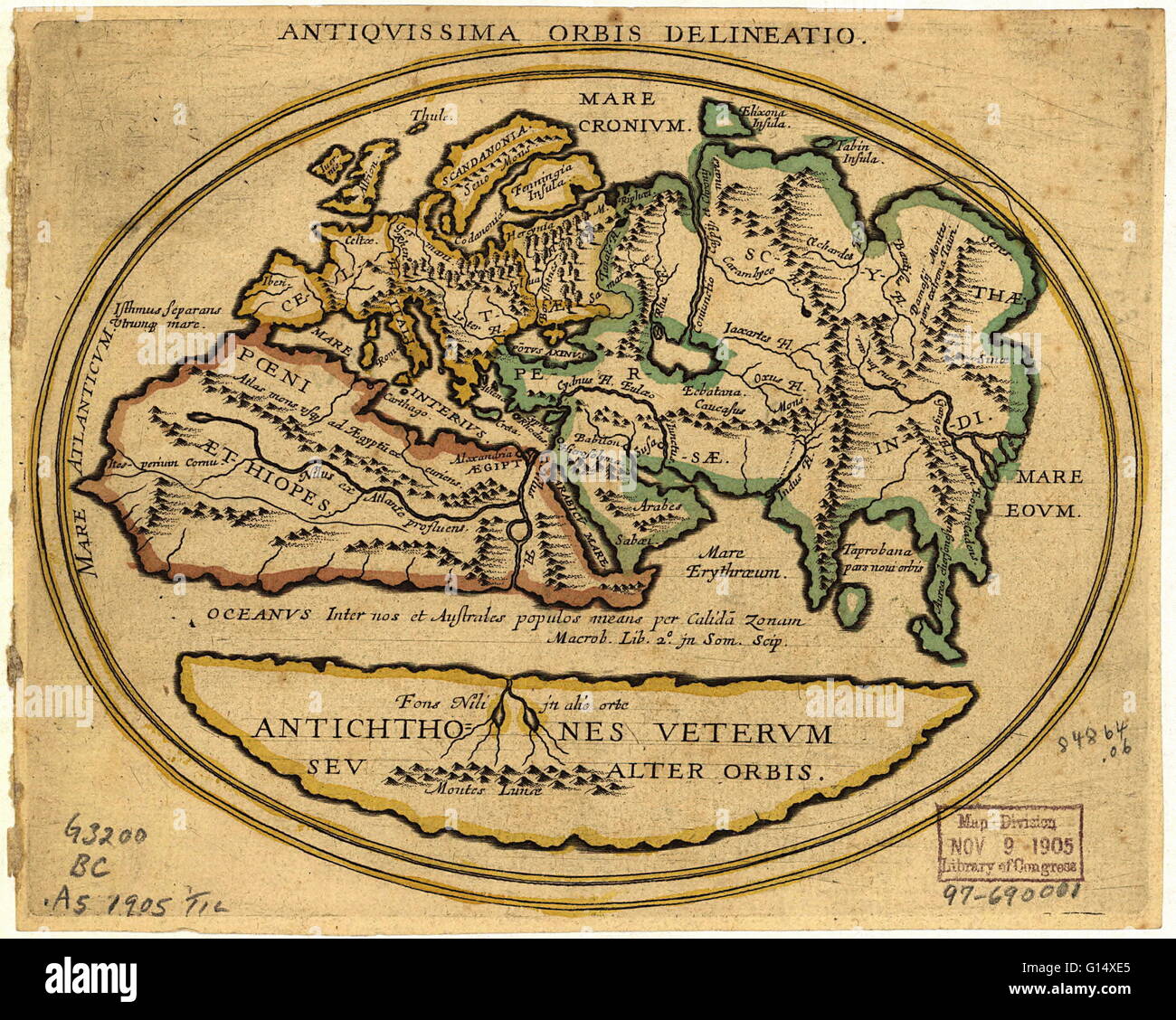
The world’s oldest map, often referred to as the ‘Babylonian Map of the World,’ is a clay tablet dating back to the 6th century BCE. This artifact, currently housed in the British Museum, offers a glimpse into Babylonian cosmology and geography. It’s a testament to the early human desire to chart and understand the world.
The Babylonian Map of the World is not just a map; it’s a representation of the Babylonian view of the cosmos. The map depicts Babylon at the center, surrounded by a circular ocean. Beyond the ocean, it shows various regions and mythical places, reflecting the Babylonian understanding of the world at the time.
The map’s creation is attributed to the Babylonians, a civilization renowned for their advancements in mathematics, astronomy, and writing. Their cartographic skills, though rudimentary by modern standards, were groundbreaking for their time. The map itself was likely used for administrative, religious, and possibly even educational purposes.
The clay tablet is a circular shape, with the city of Babylon prominently positioned in the center. Surrounding Babylon is a circular body of water, representing the ‘bitter river’ or ocean. Beyond this ocean, the map depicts various regions, some identifiable and others mythical, showcasing the Babylonian understanding of the known world.
The Babylonian Map of the World provides a wealth of information about Babylonian culture, beliefs, and their perception of the world. It reveals their cosmology, their geographical knowledge, and their worldview. It’s a valuable resource for historians and archaeologists.
The map’s significance extends beyond its historical value; it represents the beginning of cartography. It demonstrates the early human drive to understand and represent the world around them. This fundamental desire has led to the development of increasingly sophisticated mapping techniques over millennia.
The discovery of the Babylonian Map of the World has sparked numerous discussions and debates among scholars. One of the central debates revolves around the map’s interpretation. The map’s symbolism and the meaning of its various elements have been subject to different interpretations.
The map also raises questions about the accuracy of the geographical information it contains. While some regions can be identified, others are mythical or based on limited knowledge. The map’s limitations reflect the constraints of the time and the available technology.
Another interesting aspect of the map is its depiction of mythical places and creatures. These elements reflect the Babylonian belief system and their understanding of the supernatural. The map is, therefore, not just a geographical representation but also a cultural artifact.
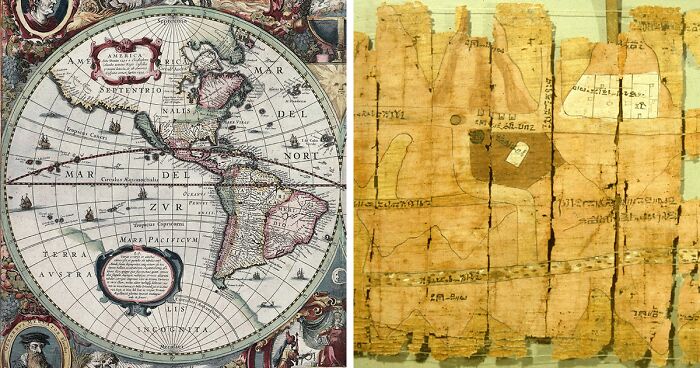
The Babylonian Map of the World is not the only ancient map discovered. There are other significant maps from antiquity, such as the Turin Papyrus Map from ancient Egypt, which provide further insights into the cartographic practices of ancient civilizations. Each map offers a unique perspective on how people understood and interacted with their environment.
The Turin Papyrus Map, dating back to the reign of Ramses IV (1160-1153 BCE), provides a detailed depiction of a gold mine and its surrounding area. It’s an excellent example of the practical application of cartography in ancient Egypt.
Ancient maps often served practical purposes, such as navigation, land management, and military planning. They were essential tools for various aspects of life in ancient societies. These early maps also reflect the technological capabilities and the level of geographical knowledge available at the time.
Analyzing ancient maps requires a multidisciplinary approach, combining historical, archaeological, and geographical knowledge. The interpretation of these maps involves understanding the cultural context in which they were created and the symbolism they employ.
The study of ancient maps provides a deeper understanding of the evolution of cartography and the development of human geographical knowledge. It highlights the ingenuity and resourcefulness of ancient civilizations in their efforts to represent and understand the world.
The process of creating a map in ancient times was a complex undertaking. It required skilled individuals with knowledge of mathematics, astronomy, and surveying. The materials used, such as clay tablets or papyrus, also influenced the mapping process.
The Babylonian Map of the World and other ancient maps represent a crucial step in the development of cartography. They laid the foundation for the sophisticated mapping techniques we use today.
The legacy of the oldest map is evident in modern cartography. It reminds us of our ancestors’ efforts to understand and represent the world. The map’s impact extends to fields such as history, archaeology, and geography.
The map’s influence can be seen in the development of map-making techniques, the evolution of map projections, and the use of maps in various fields. The map’s enduring impact on our understanding of history, geography, and human culture is undeniable.
The study of the oldest map and other ancient maps offers valuable insights into the past. It reveals the evolution of human knowledge and the development of cartographic techniques. The map continues to inspire scholars and enthusiasts alike.
The Babylonian Map of the World is a significant artifact that provides a unique view into the ancient world. It’s a reminder of the human desire to understand and represent the world around us. Its impact is still felt today.
The map is a testament to the early human quest to explore, understand, and document the world. It provides a fascinating window into the past and reveals how our ancestors perceived their surroundings. This artifact serves as a crucial link to the development of human civilization.
The Babylonian Map of the World is a product of its time. It reflects the knowledge, beliefs, and technological capabilities of the Babylonian civilization. The map’s limitations are a reflection of the challenges faced by ancient cartographers.
The map is a valuable resource for studying the history of cartography. It allows us to trace the evolution of mapping techniques and understand how human geographical knowledge has developed over time. The map is a symbol of human curiosity and ingenuity.
The map is a cultural artifact that offers insights into the Babylonian worldview. It reflects their cosmology, their geographical knowledge, and their religious beliefs. The map’s significance lies in its ability to connect us with the past.
The map represents an early attempt to organize and understand the world. It is a precursor to modern maps and provides valuable context for the evolution of cartography. The map is a testament to the enduring human fascination with the world.
The Babylonian Map of the World continues to inspire scholars and researchers. It is a reminder of the importance of preserving and studying historical artifacts. The map’s legacy is secure in the annals of history.
The map serves as a cornerstone in the history of cartography and offers a unique perspective on the world. It’s a reminder of human ingenuity and the enduring quest for knowledge. The map’s significance is undeniable.
The oldest map in the world is more than just an artifact. It’s a key to unlocking the past and understanding the evolution of human civilization. The map’s legacy will continue to inspire and inform future generations.
The map represents a milestone in cartographic history, demonstrating humanity’s early efforts to chart and understand the world. The map’s impact continues to resonate today.