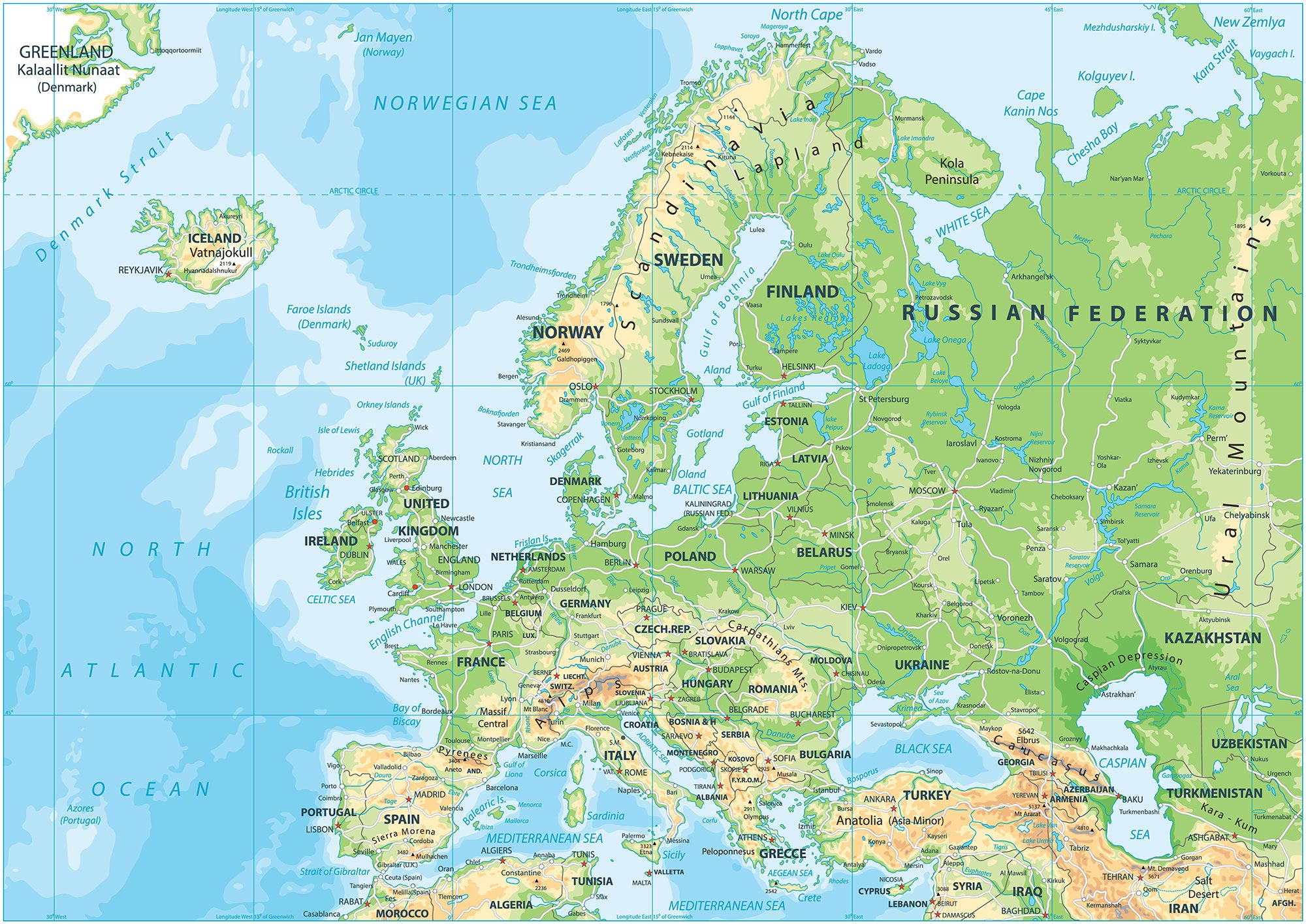
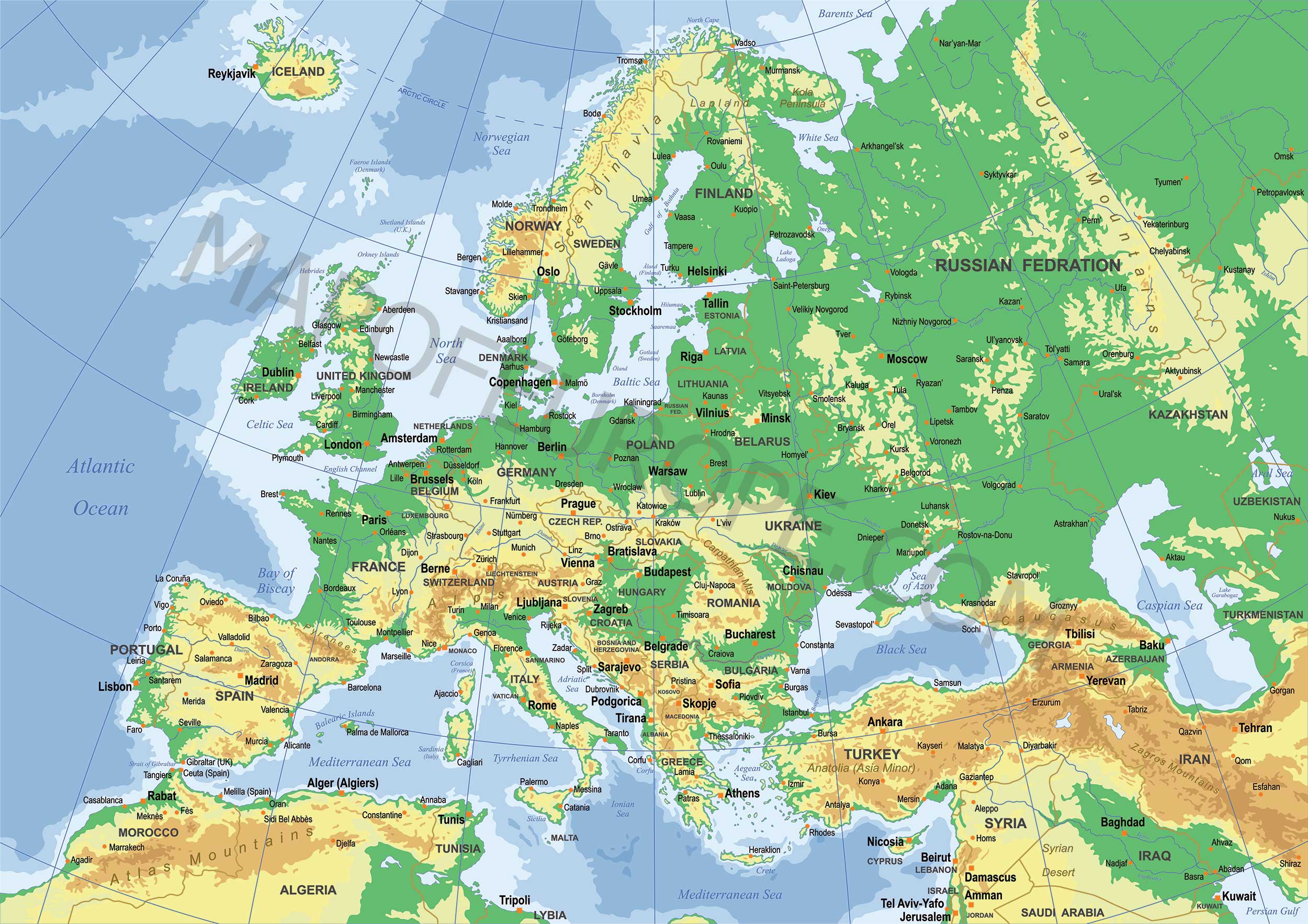
Understanding the physical features of Europe is crucial for appreciating the continent’s complexity. These features influence everything from climate patterns and agricultural practices to transportation networks and tourism destinations. The interplay of mountains, rivers, plains, and coastal regions creates a dynamic and fascinating environment.
This exploration will cover the major mountain ranges, significant rivers, expansive plains, and diverse coastlines, offering insights into their formation, impact, and importance.
Let’s embark on a journey across the European landscape.
Major Mountain Ranges of Europe
Europe’s mountain ranges are not only visually stunning but also play a critical role in shaping the continent’s climate and influencing human settlements. These ranges act as barriers, creating distinct climatic zones and fostering unique ecosystems.
The Alps
The Alps, stretching across several countries including Switzerland, Austria, Italy, and France, are the most iconic mountain range in Europe. Known for their dramatic peaks, such as the Matterhorn and Mont Blanc, the Alps are a major destination for skiing, mountaineering, and tourism. They also serve as a crucial source of fresh water, feeding numerous rivers and supporting agriculture in the surrounding lowlands. The Alps significantly affect regional weather patterns, influencing precipitation and temperature.
The Pyrenees
Forming a natural border between France and Spain, the Pyrenees are another significant mountain range. While not as high as the Alps, the Pyrenees offer a rugged and diverse landscape, ideal for hiking and outdoor activities. The region is home to unique flora and fauna, making it a valuable area for biodiversity conservation. The mountains also play a role in regulating the climate of the Iberian Peninsula and southern France.
The Carpathians
The Carpathians, a vast arc of mountains spanning Central and Eastern Europe, offer a different landscape. They are less dramatic than the Alps, but equally important, providing habitat for a diverse range of wildlife, including brown bears and wolves. The Carpathians are rich in natural resources, including timber and minerals. These mountains contribute significantly to the water resources of the region.
Other Notable Ranges
Other important mountain ranges include the Apennines in Italy, the Dinaric Alps in the Balkans, and the Urals, which technically separate Europe from Asia. Each range has unique characteristics and impacts on the local environment and human activities.
Significant Rivers of Europe
Europe’s rivers are vital arteries, shaping the continent’s geography and supporting its population. They provide water for drinking, irrigation, and transportation, as well as serving as natural borders and sources of hydroelectric power.
The Danube
The Danube, Europe’s second-longest river, flows through ten countries, making it a crucial waterway for trade and transportation. It connects the Black Sea to Central Europe and has played a significant role in the region’s history and economic development. The Danube’s delta is a UNESCO World Heritage site, known for its rich biodiversity.
The Rhine
The Rhine, originating in the Swiss Alps, is one of Europe’s most important rivers, flowing through several industrial and agricultural regions. It is a major transportation route and a source of hydroelectric power. The Rhine’s basin is densely populated and heavily industrialized, requiring careful management to balance economic activities with environmental protection.
The Volga
While primarily in Russia, the Volga is Europe’s longest river. It flows into the Caspian Sea and is a vital transportation route, connecting the interior of Russia to the sea. The Volga’s basin supports a large population and significant agricultural activities. It is also a source of hydroelectric power.
Other Important Rivers
Other crucial rivers include the Rhone, the Seine, the Elbe, and the Vistula, each playing a critical role in its respective region, providing water, transportation, and supporting ecosystems.
Expansive Plains of Europe
Europe’s plains are essential for agriculture, supporting large populations and facilitating transportation. They offer fertile soil and relatively flat terrain, making them ideal for farming and infrastructure development.
The North European Plain
The North European Plain, stretching from France to Russia, is one of the largest plains in the world. It is characterized by fertile agricultural land and a dense network of rivers and canals. This plain has been a historical cradle of European civilization, supporting major cities and facilitating trade and migration routes.
The Pannonian Plain
Located in Central Europe, the Pannonian Plain is known for its fertile soil and agricultural productivity. It is surrounded by mountains and is an important region for agriculture and industry. The plain’s strategic location has made it a historical crossroads for various cultures and empires.
Other Plains and Lowlands
Other significant plains and lowlands include the Po Valley in Italy and the plains of Eastern Europe. These areas are crucial for agricultural production and support large populations.
Diverse Coastlines of Europe
Europe’s coastlines are incredibly diverse, ranging from rugged cliffs to sandy beaches and sheltered bays. They have played a crucial role in European history, facilitating trade, fishing, and exploration.
The Mediterranean Coast
The Mediterranean coast, with its warm climate and diverse ecosystems, is a popular destination for tourism and recreation. The coastline is characterized by a mix of rocky cliffs, sandy beaches, and numerous islands. This region has a rich history and a unique cultural heritage.
The Atlantic Coast
The Atlantic coast, with its rugged beauty and strong tides, is known for its dramatic cliffs and sandy beaches. It has been a historically important area for fishing and maritime trade. The Atlantic coast offers diverse ecosystems and is home to several important ports.
The Baltic Sea Coast
The Baltic Sea coast, with its sheltered waters and sandy beaches, is a popular destination for tourism and recreation. The coastline is characterized by a mix of islands, bays, and lagoons. This region has a unique cultural heritage and a rich history.
The Scandinavian Coast
The Scandinavian coast, with its fjords and islands, is known for its dramatic beauty and unique geological formations. The coastline has been shaped by glaciers and is home to a diverse range of wildlife. This region is a major destination for tourism and outdoor recreation.
The Impact of Physical Features
The physical features of Europe have a profound impact on various aspects of life: climate, agriculture, human settlements, and economic activities. Mountains influence rainfall and temperature, while rivers provide water for irrigation and transportation. Plains offer fertile land for farming, and coastlines support fishing and trade.
Climate
The topography of Europe significantly affects its climate. Mountain ranges create barriers that influence precipitation patterns and temperature variations. Proximity to the sea moderates temperatures, leading to milder winters and cooler summers.
Agriculture
Fertile plains and valleys are ideal for agriculture, supporting a wide range of crops. River valleys provide water for irrigation, and coastal regions support fishing industries.
Human Settlements
Human settlements often develop near rivers, coastlines, and fertile plains. Mountains can limit settlement, while also providing natural defenses. The availability of resources, such as water and arable land, influences population distribution.
Economic Activities
Physical features impact economic activities, such as transportation, tourism, and resource extraction. Rivers and coastlines are crucial for trade, while mountains offer opportunities for tourism and resource extraction.
How to Use a Physical Features Map
A physical features map is an essential tool for understanding the geography of Europe. It provides a visual representation of the continent’s topography, including mountains, rivers, plains, and coastlines. These maps can be used to study the relationships between physical features and human activities, such as agriculture, transportation, and tourism.
- Identify Major Features: Begin by identifying the major mountain ranges, rivers, plains, and coastlines.
- Analyze Relationships: Study how these features interact with each other. For example, observe how rivers flow through plains and mountains.
- Understand Scale and Distance: Pay attention to the map’s scale to estimate distances and sizes of features.
- Consider Elevation: Use contour lines to understand the elevation changes and the steepness of slopes.
- Explore Regions: Focus on specific regions or countries to study the local geography in detail.
Conclusion
The physical features of Europe are a tapestry of natural wonders, each contributing to the continent’s unique character. From the towering Alps to the meandering Danube and the diverse coastlines, these features have shaped Europe’s history, culture, and economy. Understanding these features enhances our appreciation of Europe’s beauty and the complex interplay between nature and human activity. Exploring these geographical elements is key to understanding the continent’s past, present, and future.
By studying the physical features of Europe, we gain a deeper understanding of the continent’s rich diversity and the forces that have shaped its destiny.