From ancient trade routes to modern-day tourist attractions, French rivers are much more than mere bodies of flowing water. They are dynamic ecosystems, vital transportation arteries, and sources of inspiration for artists and writers throughout history. This comprehensive guide will navigate the major and minor rivers, exploring their unique characteristics and the profound impact they have had.
The Five Major Rivers of France: Pillars of the Landscape
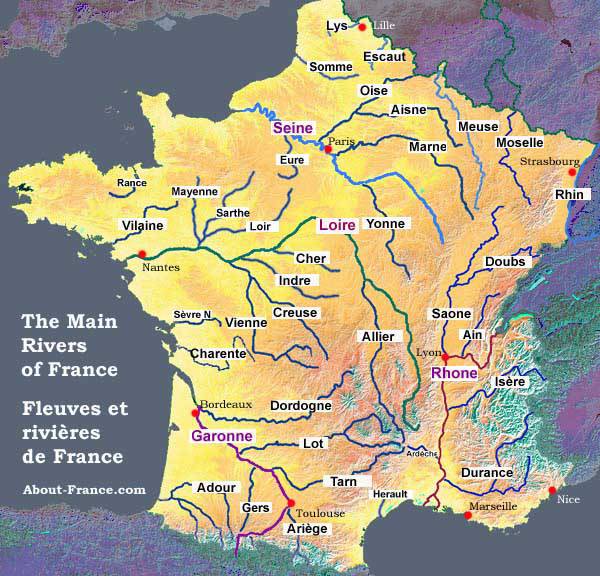
When discussing the major rivers of France, five stand out for their length, historical significance, and economic impact: the Seine, the Loire, the Garonne, the Rhône, and the Rhine. Each possesses a distinct personality and contributes uniquely to the French landscape and way of life.
The Seine: Heartbeat of Paris
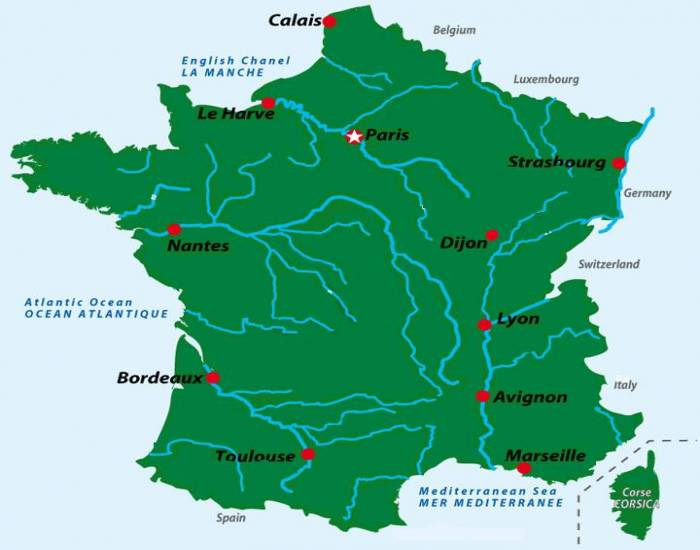
The Seine is arguably the most famous river in France, largely due to its intimate connection with the capital city, Paris. Originating in Source-Seine, a commune in Burgundy, it flows northwest for approximately 777 kilometers (483 miles) before emptying into the English Channel (La Manche) at Le Havre.
Beyond Paris, the Seine passes through cities like Troyes and Rouen. Its banks in Paris are a UNESCO World Heritage site, adorned with iconic landmarks such as the Eiffel Tower, Notre Dame Cathedral, and the Louvre Museum. The river is highly navigable, facilitating considerable commercial barge traffic and popular tourist cruises.
Historically, the Seine has been crucial for trade and communication, connecting inland France to the sea. Its reliable flow and gentle gradient made it ideal for early transportation, fostering the growth of settlements along its banks.
The Loire: France’s Longest Wild River
Stretching approximately 1,012 kilometers (629 miles), the Loire holds the distinction of being the longest river in France. It rises in the Cévennes mountains in the Ardèche department and flows generally westwards, emptying into the Atlantic Ocean near Saint-Nazaire.
The Loire Valley, often referred to as the ‘Garden of France,’ is famous for its breathtaking châteaux, vineyards, and picturesque towns. Unlike many other major European rivers, the Loire remains relatively untamed, with natural sandbanks and islands, contributing to its designation as a UNESCO World Heritage site for its living cultural landscape.
Its basin supports diverse ecosystems and agricultural practices, particularly viticulture, producing some of France’s renowned wines. While parts are navigable, especially downstream, its natural character presents challenges for extensive commercial shipping compared to other rivers.
The Garonne: Southwestern Artery
The Garonne river originates in the Spanish Pyrenees, flowing through southwestern France for about 529 kilometers (329 miles) within French territory. It eventually joins the Dordogne river to form the Gironde estuary, which then empties into the Atlantic Ocean.
Major cities along the Garonne include Toulouse and Bordeaux, both significant economic and cultural centers. Bordeaux, in particular, owes much of its prosperity to its strategic location on the river, facilitating wine trade for centuries. The Garonne is connected to the Canal du Midi, forming part of a vital waterway link between the Atlantic and the Mediterranean.
The river’s hydrology is influenced by snowmelt from the Pyrenees, leading to significant seasonal variations in flow. Its valley is a fertile agricultural region, contributing to local economies.
The Rhône: Mediterranean Connection
The Rhône is unique among France’s major rivers for its powerful flow and its journey to the Mediterranean Sea. Originating in the Swiss Alps, it enters France near Lake Geneva, flowing south through major cities like Lyon, Avignon, and Arles, covering about 522 kilometers (324 miles) within France.
Known for its hydroelectric power generation, the Rhône is a heavily engineered river with numerous dams and locks that facilitate navigation. It is a crucial artery for cargo transport, particularly connecting industrial areas of eastern France to the Mediterranean port of Marseille.
The Rhône Valley is also a celebrated wine region, producing world-class wines. Its delta, the Camargue, is a unique wetland ecosystem known for its wild horses, flamingos, and rich biodiversity.
The Rhine: European Border River
While only a portion of the Rhine forms the eastern border of France with Germany, its significance is immense. Originating in the Swiss Alps, the Rhine flows northward, acting as a natural frontier for approximately 180 kilometers (112 miles) along the Alsace region.
The Rhine is one of Europe’s busiest waterways, crucial for international trade and transport. Cities like Strasbourg, a major European capital, are situated on its banks. Its extensive canal system connects it to other major European rivers, including the Rhône via the Rhône-Rhine Canal, creating a vast network for inland navigation.
The river’s valley is historically and culturally rich, bearing witness to centuries of European history and cross-border interactions. It’s a testament to how natural features can both divide and connect nations.
Other Significant Rivers and Waterways
Beyond the ‘big five,’ numerous other rivers contribute significantly to France’s geography and economy.
The Dordogne: Scenic Beauty and Prehistory
Rising in the Massif Central, the Dordogne flows west for about 483 kilometers (300 miles) before merging with the Garonne to form the Gironde estuary. Its valley is famed for its stunning landscapes, prehistoric caves (like Lascaux), and charming medieval villages. It’s a popular destination for tourism, canoeing, and gastronomic exploration.
The Saône: A Gentle Giant
The Saône is a major tributary of the Rhône, joining it at Lyon. Known for its calm waters, it is extensively navigable and forms a critical link in France’s inland waterway network, connecting the north and east to the Rhône-Mediterranean axis.
The Marne: Historical Significance
A major tributary of the Seine, the Marne is historically significant, particularly for its role in the two World Wars. It flows through the Île-de-France region and is popular for leisure boating and its scenic banks.
The Moselle: Vineyards and Industry
Originating in the Vosges mountains, the Moselle flows through northeastern France, Luxembourg, and Germany before joining the Rhine. Its French section is known for its picturesque vineyards and industrial heritage.
The Charente: The Cognac River
Flowing through the Cognac region of southwestern France, the Charente river is intimately linked with the production of the famous brandy. It’s a tranquil river, popular for pleasure boating and its charming riverside towns.
River Basins and Hydrology of France
France’s diverse geography leads to several distinct river basins. These basins are essentially the areas of land where precipitation collects and drains into a common river. The major basins correspond largely to the major rivers: the Seine basin (north), Loire basin (west-central), Garonne basin (southwest), Rhône basin (southeast), and the Rhine basin (east).
The varied topography, from the Alps and Pyrenees to the Massif Central and the gentle plains, dictates the flow and characteristics of these rivers. Snowmelt, rainfall, and geological formations all play a role in France’s complex hydrology, influencing everything from water levels to sediment transport.
Economic and Cultural Importance: Lifelines of a Nation
French rivers have been the backbone of the nation’s development for millennia. They facilitated early human settlement, provided fertile ground for agriculture, and served as natural highways for trade and communication. This rich history is evident in the numerous castles, abbeys, and cities strategically built along their banks.
Transportation and Trade: Historically, rivers were the primary arteries for moving goods. Today, while roads and railways dominate, inland waterways remain vital for bulk cargo, especially on the Seine, Rhône, and Rhine. France’s extensive canal network, such as the Canal du Midi and the Canal de Bourgogne, further integrates these river systems, creating a seamless national and international shipping route.
Agriculture and Viticulture: The fertile floodplains of rivers like the Loire, Garonne, and Rhône have long been prime agricultural land. Many of France’s world-renowned wine regions, including Bordeaux, Burgundy, and the Loire Valley, owe their success to the unique microclimates and soils created by proximity to these rivers.
Tourism and Recreation: River cruises, houseboat holidays, canoeing, and fishing are popular activities, especially on the Seine, Loire, and Dordogne. The scenic beauty, historical sites, and tranquil atmosphere attract millions of tourists annually, contributing significantly to local economies.
Energy Production: The powerful flow of rivers like the Rhône has been harnessed for hydroelectric power, providing a significant source of renewable energy for the country.
Environmental Aspects and Conservation
French rivers are home to diverse aquatic ecosystems, supporting a wide array of flora and fauna. However, like rivers worldwide, they face environmental challenges including pollution from agricultural runoff and industrial discharge, habitat degradation, and the impacts of climate change.
Significant efforts are underway for river conservation and restoration. Projects focus on improving water quality, restoring natural river banks, managing flood risks, and protecting endangered species. The concept of ‘ecological continuity’ is central to these efforts, aiming to remove obstacles and allow fish migration.
Navigability and the Canal Network
Are French rivers navigable? Absolutely. France boasts one of Europe’s most extensive networks of navigable waterways, encompassing rivers and an impressive system of canals. Many major rivers, particularly the Seine, Rhône, and parts of the Loire and Garonne, are navigable for commercial vessels and pleasure craft.
The canals, a marvel of engineering, connect these natural river systems, allowing boats to traverse the country from the Atlantic to the Mediterranean, and from the north to the south. This network is not only economically important but also a popular destination for leisure boating and canal holidays.
Conclusion: The Enduring Legacy of France’s Rivers
The rivers of France are more than just lines on a map; they are living entities that have shaped the nation’s past, define its present, and will continue to influence its future. From the majestic Loire, flowing freely through the heart of France, to the industrious Rhône, powering the southeast, each river tells a unique story.
Whether you’re exploring the romantic banks of the Seine in Paris, marveling at the châteaux of the Loire Valley, or tracing ancient trade routes along the Garonne, the profound connection between the French people and their rivers is undeniable. They are vital for commerce, agriculture, tourism, and biodiversity, truly serving as the aquatic lifelines of France.
Understanding the geography and significance of these waterways offers a deeper appreciation for the country’s rich tapestry of landscapes, cultures, and economies. The map of France’s rivers is, in essence, a map of its soul.