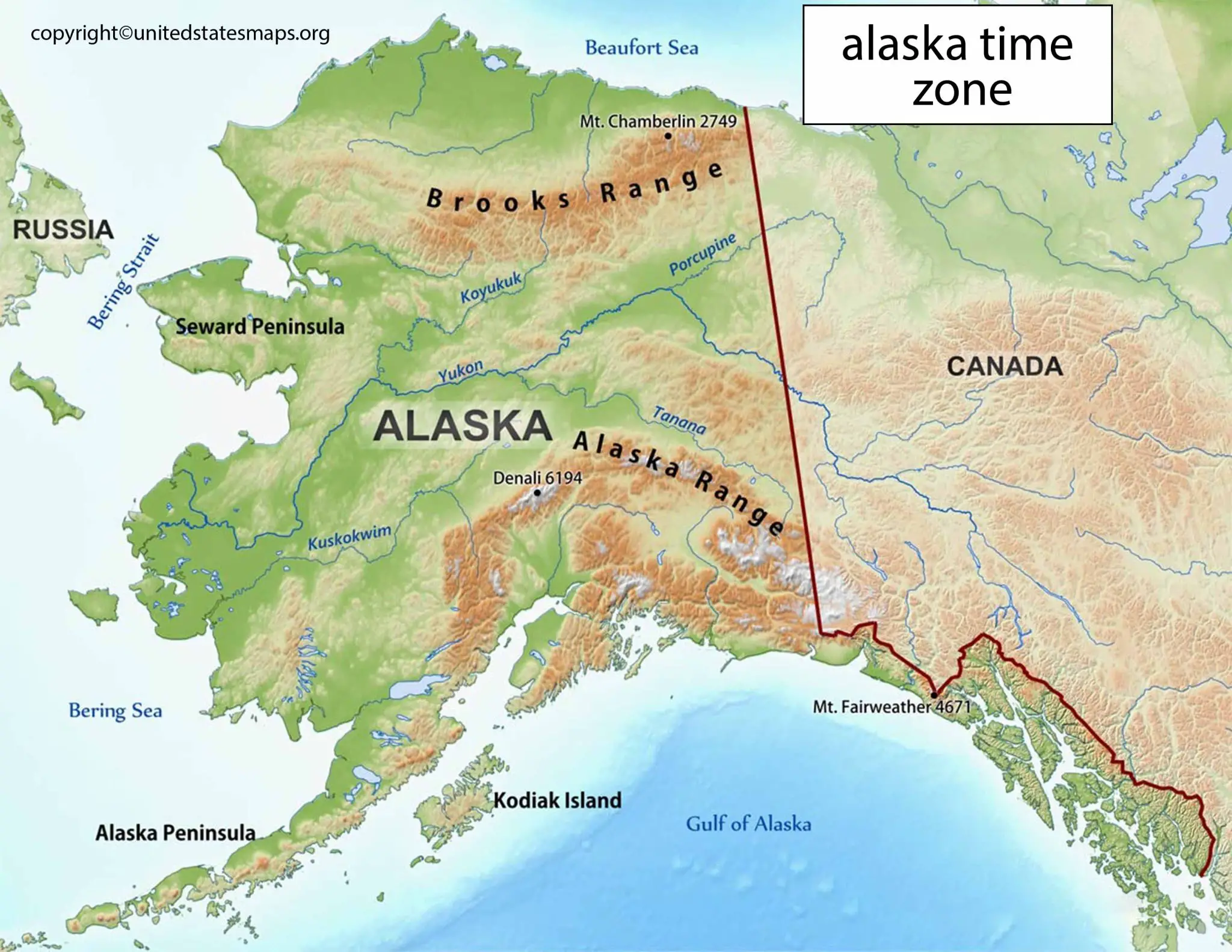
Understanding the time zones in Alaska is crucial for planning travel, conducting business, and simply comprehending daily life across its diverse regions. While many might assume a single time zone for such a large state, the reality is more complex, involving two primary zones and a fascinating historical context.
The primary time zone covering most of Alaska is Alaska Standard Time (AKST). During Daylight Saving Time, this shifts to Alaska Daylight Time (AKDT). This zone encompasses the vast majority of the state’s landmass, including major cities like Anchorage, Fairbanks, and the capital, Juneau.
AKST is observed at UTC-9, meaning it is nine hours behind Coordinated Universal Time. When Daylight Saving Time is in effect, from the second Sunday in March to the first Sunday in November, it shifts to AKDT, which is UTC-8.
This puts most of Alaska four hours behind Eastern Standard Time (EST) in the contiguous U.S. and one hour behind Pacific Standard Time (PST). For instance, if it’s 12:00 PM EST in New York, it would be 8:00 AM AKST in Anchorage.
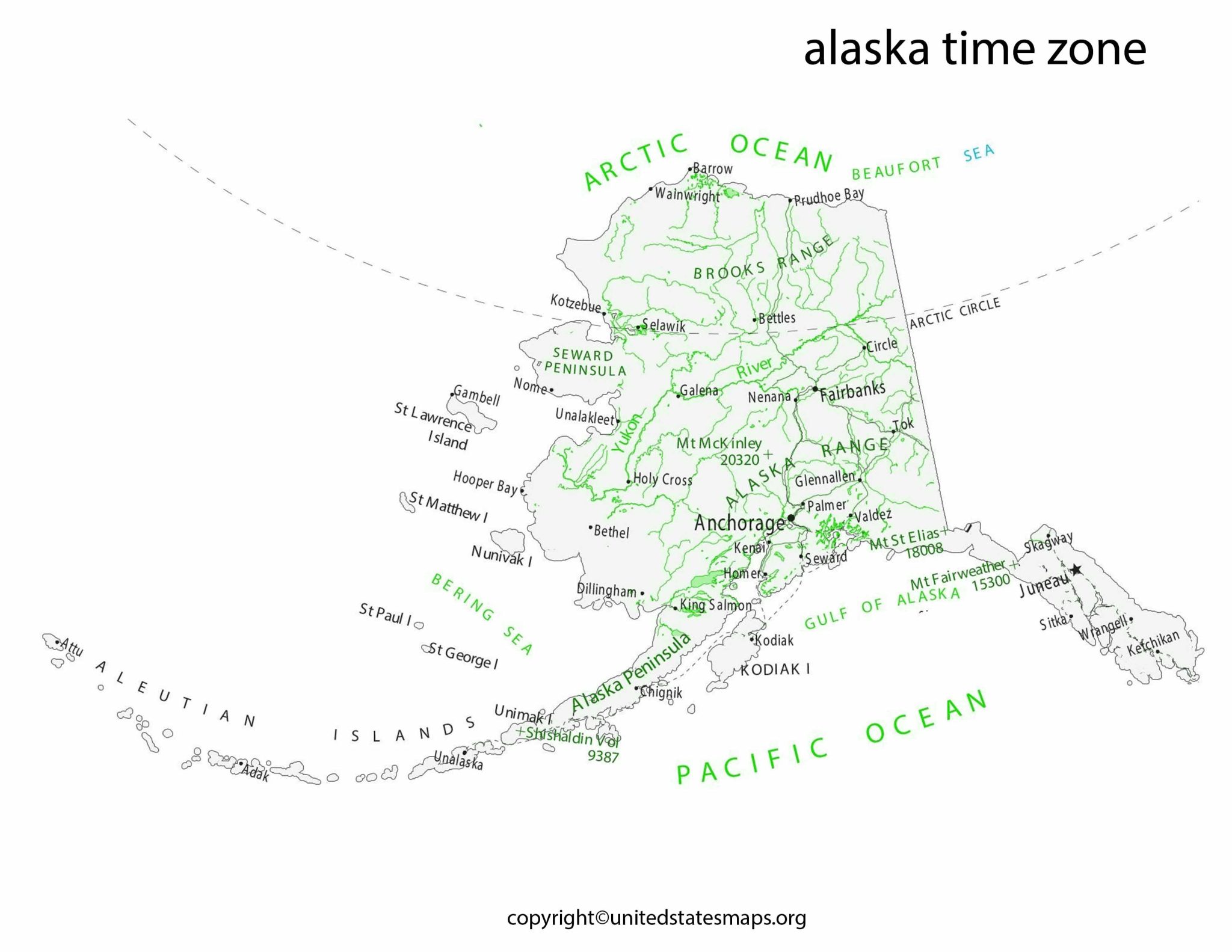
The second, less common but equally important, time zone found within Alaska is Hawaii-Aleutian Standard Time (HAST), which becomes Hawaii-Aleutian Daylight Time (HADT) during the warmer months. This zone applies specifically to the westernmost Aleutian Islands.
HAST is observed at UTC-10, placing it ten hours behind Coordinated Universal Time. During Daylight Saving Time, it shifts to HADT, at UTC-9. This means that for a brief period each year, the western Aleutian Islands share the same UTC offset as mainland Alaska’s standard time.
The inclusion of the Aleutian Islands in the Hawaii-Aleutian time zone highlights their extreme westward extension. Some parts of the Aleutian chain are so far west that they are closer to Russia than they are to the Alaskan mainland, geographically bridging the gap towards the International Date Line.
This geographical quirk means that traveling across Alaska can sometimes involve a time zone change, particularly if your journey takes you to the remote islands of the Aleutian chain. Understanding this distinction is vital for accurate scheduling.
Why Does Alaska Have Multiple Time Zones?
The primary reason for Alaska’s multiple time zones is its sheer longitudinal expanse. Alaska stretches approximately from 130° W to 172° E longitude. To put this into perspective, its easternmost point is roughly aligned with the Pacific Northwest of the U.S., while its westernmost point (Attu Island) crosses the 180° meridian, placing it in the Eastern Hemisphere.
This immense east-west spread makes a single time zone impractical for maintaining a reasonable solar noon across the entire state. Without multiple zones, sunrise and sunset times would be drastically misaligned with clock times in certain regions, leading to significant disruptions in daily routines.
The U.S. Department of Transportation (DOT) is responsible for time zone boundaries in the United States. Their decisions are based on a balance of scientific accuracy (aligning with solar time) and practical considerations for commerce, travel, and community life.
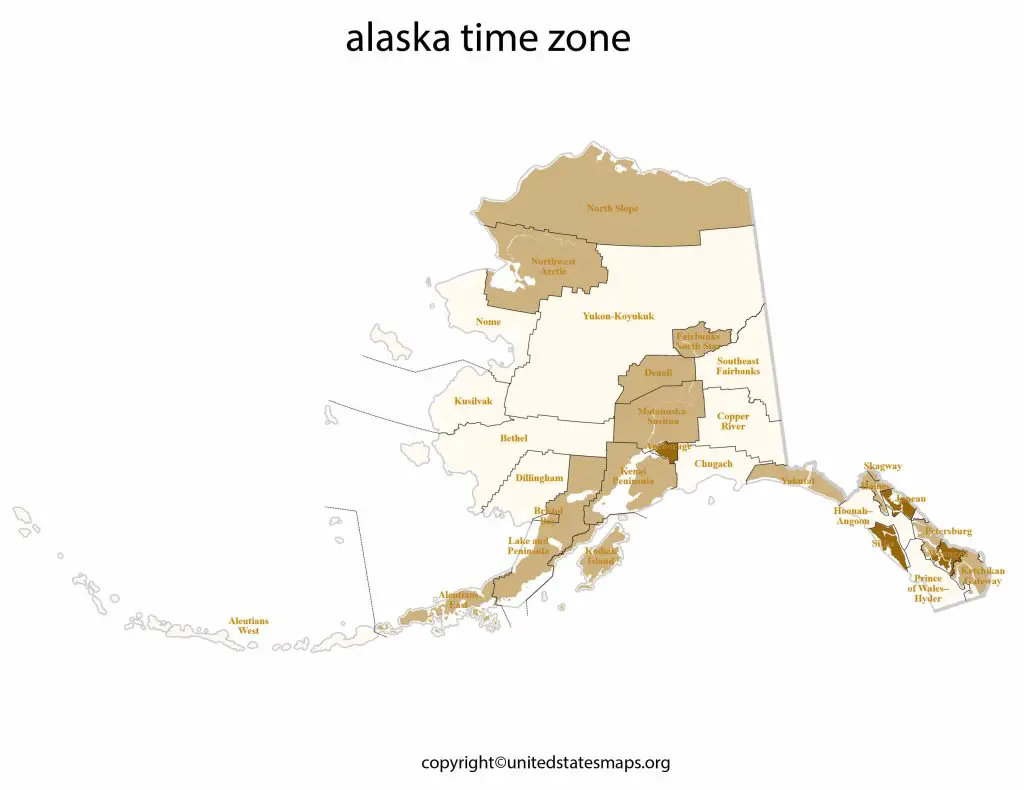
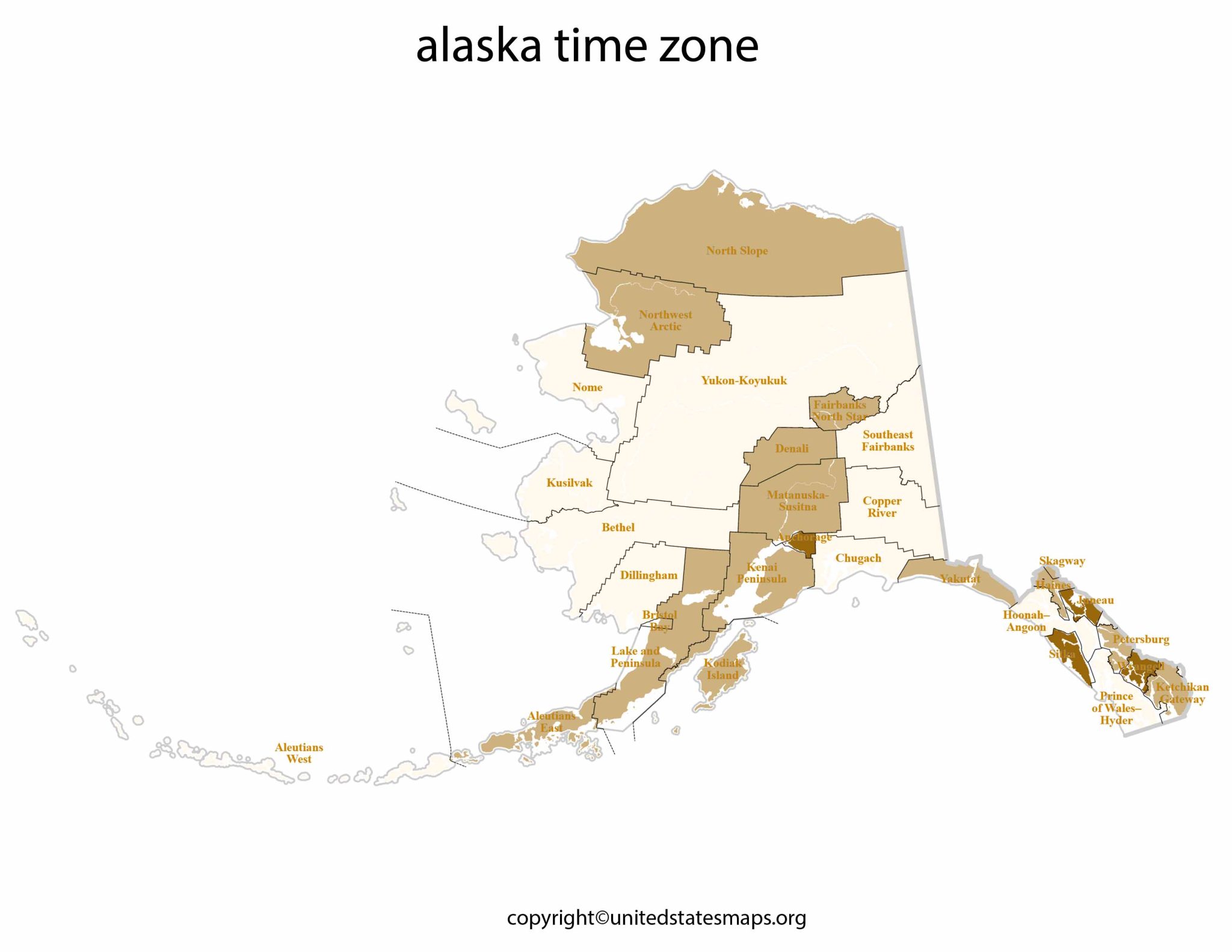
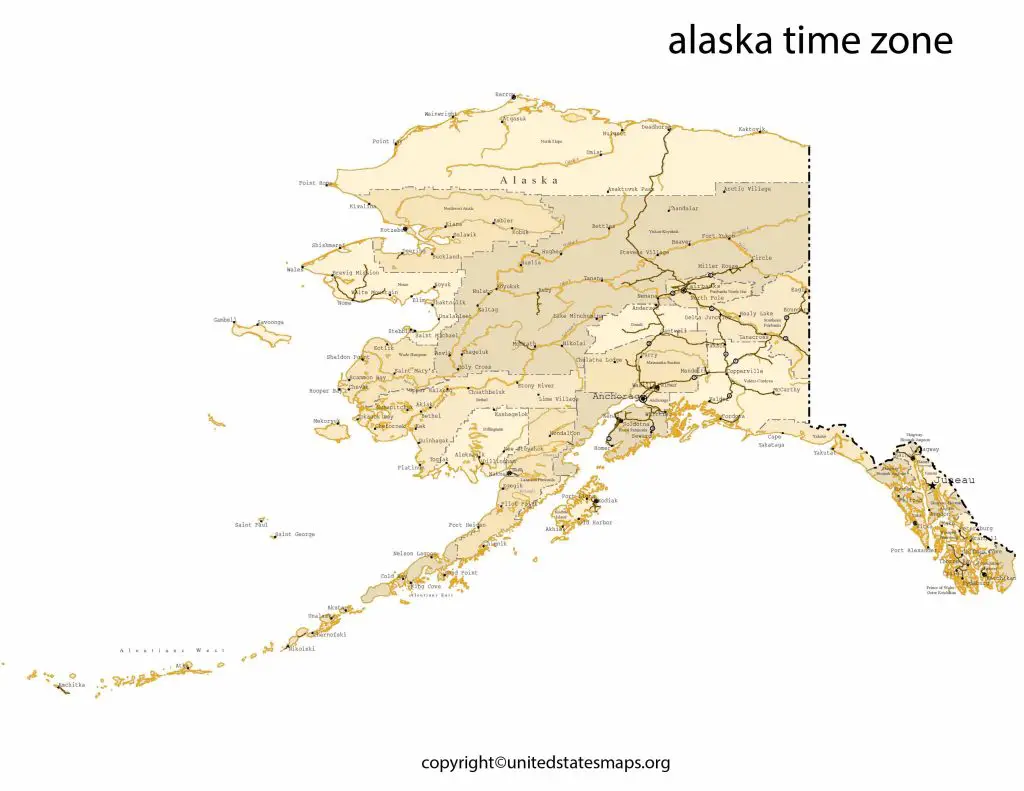
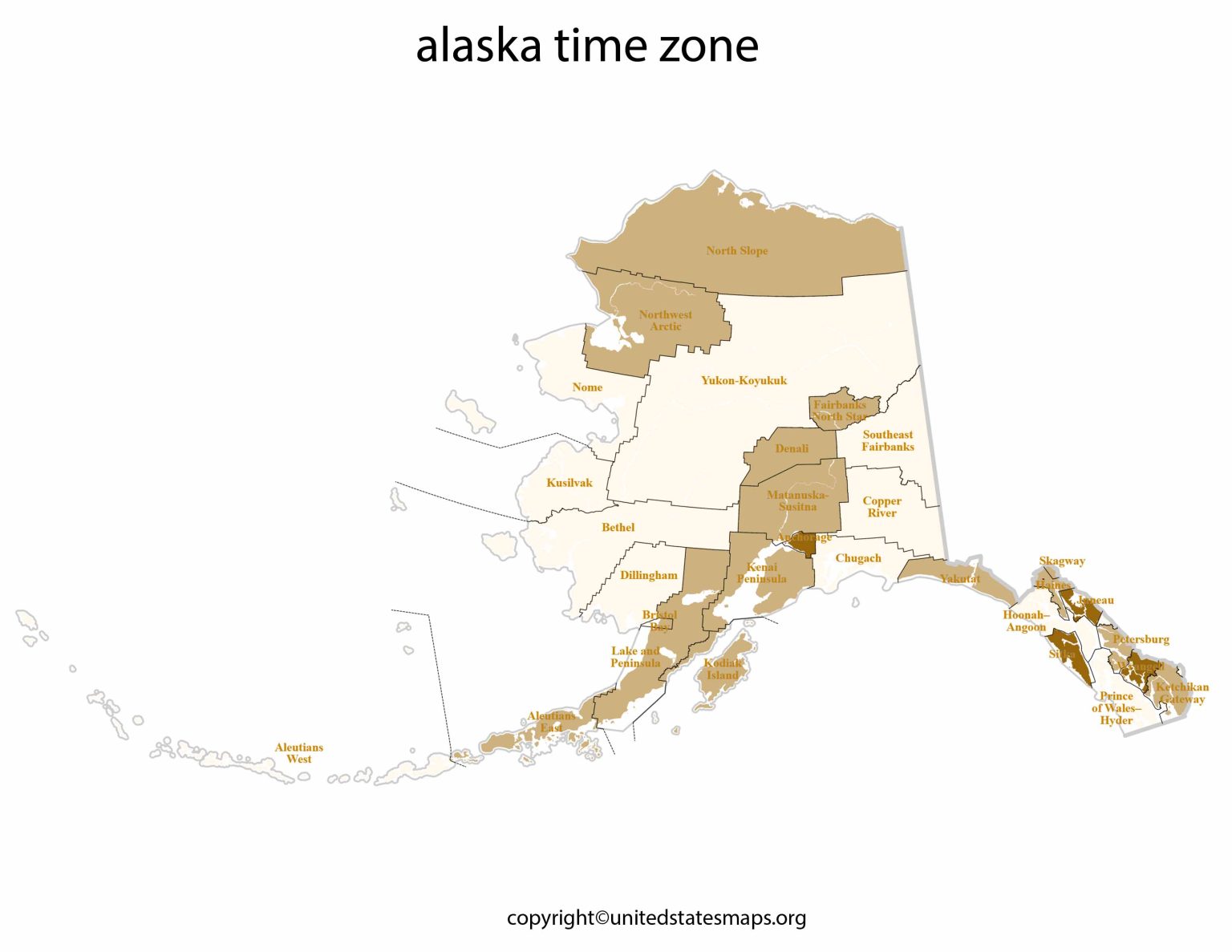
Key Regions and Their Time Zones on an Alaska Time Zone Map
- Alaska Standard Time (AKST / AKDT): This covers the vast majority of Alaska. Major cities and regions include:
- Anchorage
- Fairbanks
- Juneau
- Seward
- Kodiak Island
- Kenai Peninsula
- Mat-Su Valley
- Most of the Interior
- The Panhandle (Southeast Alaska)
- The Arctic Slope
- Hawaii-Aleutian Standard Time (HAST / HADT): This applies exclusively to the western Aleutian Islands, specifically west of 169°30′ W longitude. Key islands in this zone include:
- Attu Island
- Adak Island
- Shemya Island
It’s important to note that the small community of Metlakatla in Southeast Alaska historically observed Pacific Standard Time (PST) due to its unique ties to Canadian time zones, but officially, it now follows AKST/AKDT like the rest of Southeast Alaska. Always verify local time if traveling to very specific, isolated communities.
Daylight Saving Time in Alaska
Like most of the United States, Alaska observes Daylight Saving Time (DST). This means that on the second Sunday in March, clocks ‘spring forward’ by one hour, and on the first Sunday in November, they ‘fall back’ by one hour. This adjustment applies to both AKST (becoming AKDT) and HAST (becoming HADT).
The impact of DST in Alaska can be quite dramatic due to its high latitude. In summer, areas like Fairbanks experience nearly 24 hours of daylight, making the one-hour shift less noticeable in terms of light but still relevant for scheduling.
Practical Implications for Travelers and Residents
For travelers visiting Alaska, understanding the time zones is critical to avoid missed flights, appointments, or tours. Most visitors will primarily encounter AKST/AKDT. However, if your itinerary includes remote parts of the Aleutian chain, be prepared for an additional time change.
- Flight Schedules: Always confirm departure and arrival times in local time.
- Business Meetings: When coordinating with partners in the contiguous U.S., remember the significant time difference.
- Communication: Factor in the time gap when calling friends or family outside Alaska.
- Jet Lag: Travelers from the East Coast of the U.S. will experience a significant time shift (4-5 hours), requiring adjustment.
Common Questions About Alaskan Time Zones
How many time zones does Alaska have? Officially, Alaska utilizes two time zones: Alaska Standard Time (AKST/AKDT) and Hawaii-Aleutian Standard Time (HAST/HADT).
What is the main time zone in Alaska? The vast majority of Alaska, including all its major population centers, operates on Alaska Standard Time (AKST), which is UTC-9 (or AKDT, UTC-8 during Daylight Saving Time).
Does Anchorage use Alaska Time? Yes, Anchorage, being the largest city in Alaska, uses Alaska Standard Time (AKST) and Alaska Daylight Time (AKDT).
What time zone are the Aleutian Islands in? The westernmost Aleutian Islands (west of 169°30′ W longitude) are in the Hawaii-Aleutian Standard Time (HAST), UTC-10 (or HADT, UTC-9 during Daylight Saving Time). The eastern Aleutians, closer to mainland Alaska, observe AKST/AKDT.
Why is Alaska’s time zone different from the contiguous US? Alaska’s immense longitudinal spread, stretching far to the west, necessitates its own time zones to keep local clock time reasonably aligned with the sun’s position. Its westernmost points are further west than Hawaii, justifying the use of the Hawaii-Aleutian zone.
How does daylight saving time affect Alaska? Daylight Saving Time shifts clocks forward by one hour from March to November. While it impacts scheduling, the extreme seasonal variations in daylight hours at Alaska’s high latitudes mean the practical effect on perceived daylight is often less dramatic than in lower latitudes.
Conclusion: Navigating the Alaskan Clock
By understanding the distinctions between Alaska Standard Time and Hawaii-Aleutian Standard Time, and the implications of Daylight Saving, both visitors and residents can better navigate the rhythms of life in this incredible state. Always consult a reliable time zone map or local sources when planning activities across Alaska’s diverse regions to ensure you’re always on time in the Last Frontier.
Whether you’re exploring the glaciers of Juneau or the remote beauty of Adak, being aware of the local time zone is an essential part of a seamless Alaskan experience. It’s a small detail that makes a big difference in the grand scheme of your Alaskan adventure.