But where exactly is this mythical land located? And what incredible geographical features define its unique character? This comprehensive guide will delve deep into the cartography of Patagonia, providing you with the insights needed to navigate its immense beauty and plan your adventure responsibly.
What is Patagonia? Defining a Land of Legend
Before we pinpoint its location, it’s crucial to grasp the sheer scale of Patagonia. It’s not a single country or a specific administrative region, but rather a geographical and cultural territory shared by two nations: Argentina and Chile. Its name is believed to derive from the ‘Patagones’, the name given by Ferdinand Magellan to the native Tehuelche people, whom he thought were giants.
This immense territory spans approximately 1.04 million square kilometers (400,000 square miles), making it larger than many European countries combined. Its vastness contributes to its diverse climates and ecosystems, from arid plateaus to lush temperate rainforests and icy polar deserts.
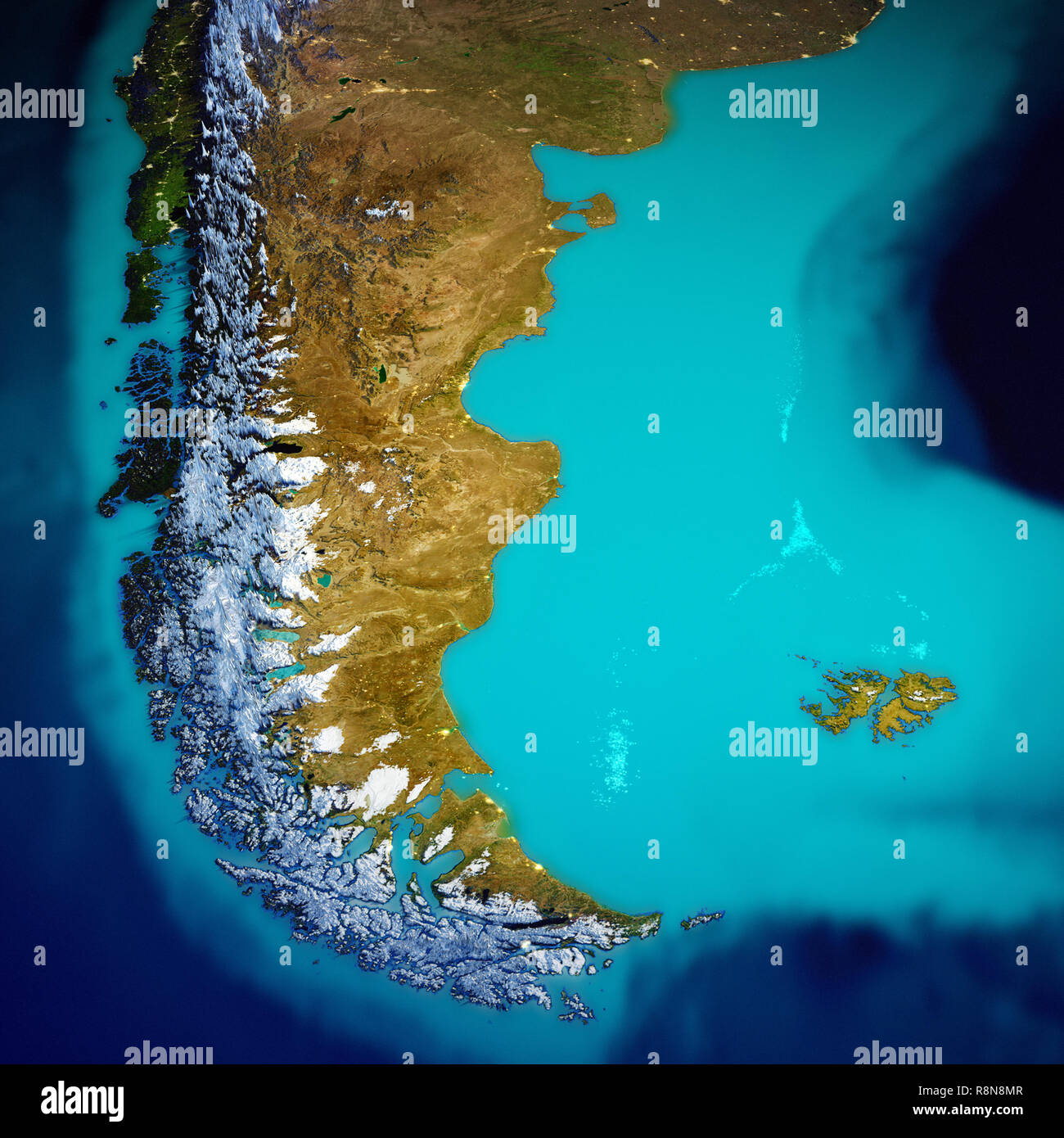
Geographically, Patagonia occupies the southern portion of the South American continent, extending south from approximately the Colorado River in Argentina and the Chiloé Archipelago in Chile, all the way down to Tierra del Fuego and Cape Horn. It represents the southernmost landmass of the Americas before reaching the Antarctic Peninsula.
To locate it on a world map, imagine drawing a line across the lower third of Chile and Argentina. Everything south of that line, down to the very tip of the continent, is generally considered Patagonia. It’s truly at the ‘end of the world’ for many.
Dividing the Wilderness: Chilean vs. Argentinian Patagonia
- Argentinian Patagonia: This eastern side is characterized by vast, arid steppes, expansive ranches (estancias), and dramatic ice fields, including the renowned Perito Moreno Glacier. Major cities include Bariloche, El Calafate, and Ushuaia. Its landscape is generally flatter in the east, rising dramatically towards the Andes in the west.
- Chilean Patagonia: The western side is a realm of jagged peaks, deep fjords, temperate rainforests, and numerous islands. Iconic destinations like Torres del Paine National Park and the Carretera Austral are found here. Its geography is rugged, often characterized by a complex network of channels and islands.
While distinct, both sides offer incredible opportunities for trekking, wildlife viewing, and experiencing raw nature. The differences in terrain, climate, and cultural nuances make exploring both sides a truly enriching experience.
Key Geographical Features on the Map of Patagonia
- The Andes Mountains: The spine of Patagonia, offering world-class climbing and trekking opportunities around peaks like Monte Fitz Roy and Cerro Torre.
- Glaciers and Ice Fields: The Southern Patagonian Ice Field, the third-largest freshwater reserve in the world, feeds numerous glaciers including Perito Moreno, Upsala, and Grey Glacier.
- Fjords and Channels: Particularly prevalent in Chilean Patagonia, these deep, narrow inlets carved by glaciers offer spectacular boat excursions and unique ecosystems.
- Steppes: The vast, semi-arid plains of Argentinian Patagonia, home to unique wildlife like guanacos and rheas.
- Lakes: Numerous glacial lakes dot the landscape, such as Lake Nahuel Huapi (Bariloche), Lake Argentino (El Calafate), and Lake Pehoé (Torres del Paine), known for their stunning turquoise and emerald hues.
- Strait of Magellan and Beagle Channel: Historically significant waterways at the southern extreme, offering passage between the Atlantic and Pacific oceans.
Navigating Patagonia: Key Cities, Parks, and Routes
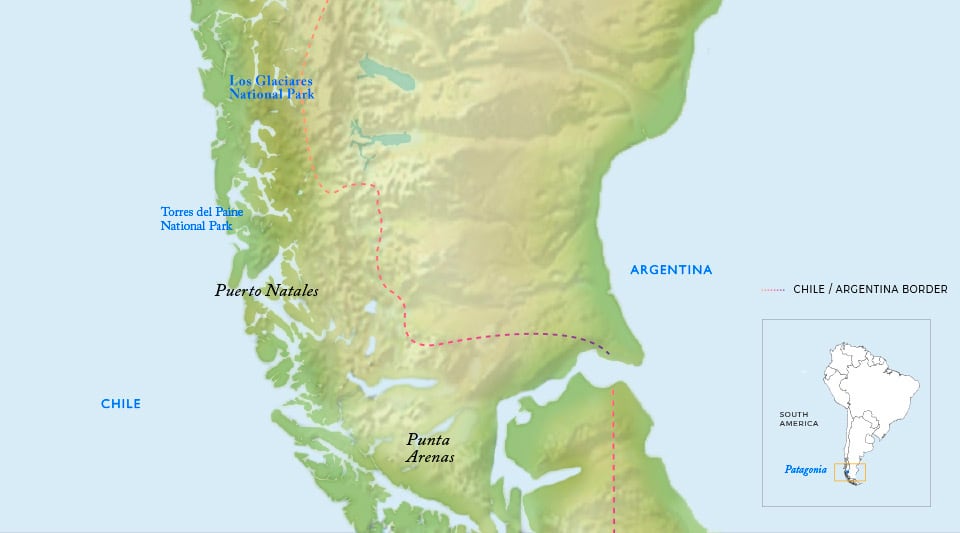
- Major Hubs: Key cities like Bariloche (Argentina’s Lake District), El Calafate (gateway to Los Glaciares National Park), Ushuaia (the ‘End of the World’ city in Tierra del Fuego), Punta Arenas (Chilean port city), and Puerto Natales (base for Torres del Paine) serve as starting points for explorations.
- National Parks: Essential for any itinerary are parks like Torres del Paine National Park (Chile), Los Glaciares National Park (Argentina), and Tierra del Fuego National Park (Argentina), each offering distinct experiences and breathtaking scenery.
- Iconic Routes: The legendary Ruta 40 in Argentina, stretching thousands of kilometers, and Chile’s remote Carretera Austral are dream destinations for road-trippers, offering unparalleled access to the region’s raw beauty.
Why a Detailed Map is Essential for Your Patagonian Journey
- Route Planning: Understanding distances, road conditions, and geographical barriers helps in crafting realistic itineraries.
- Safety: In remote areas with limited connectivity, physical maps can be life-savers, guiding you through trekking trails or remote driving routes.
- Understanding Scale: Patagonia’s vastness can be deceptive. A map helps visualize the immense distances between attractions.
- Spotting Wildlife: Thematic maps can sometimes indicate prime wildlife viewing areas, from penguin colonies to condor nesting sites.
- Cultural Context: Maps often include names of indigenous territories, historical sites, and local communities, adding depth to your travel experience.
Types of Maps for Patagonia Adventure
- Road Maps: Essential for driving, detailing highways (like Ruta 40 and Carretera Austral), secondary roads, and town locations.
- Topographical Maps: Crucial for hikers and trekkers, showing elevation contours, trails, water sources, and shelters in national parks like Torres del Paine or around El Chaltén.
- Thematic Maps: These might focus on specific attractions, wildlife distribution, or geological features, providing specialized information.
- Digital Maps vs. Physical Maps: While digital maps (Google Maps, Maps.me) are convenient, always carry physical, waterproof maps for remote areas where cell service is non-existent.
Best Time to Visit Patagonia (Map-Informed Planning)
The map also helps in understanding seasonal variations. The austral summer (December to February) is generally considered the best time for trekking and exploring due to longer daylight hours and milder weather, though it’s also the busiest. Shoulder seasons (October-November and March-April) offer fewer crowds and beautiful transitional landscapes.
Common Questions About the Map of Patagonia Answered
Many travelers often have similar questions when looking at a map of Patagonia.
Is Patagonia in Argentina or Chile? As established, it’s proudly shared by both, with distinct characteristics on each side of the Andes.
How big is Patagonia? It’s enormous, covering over a million square kilometers, a scale best appreciated by tracing its extent on a map.
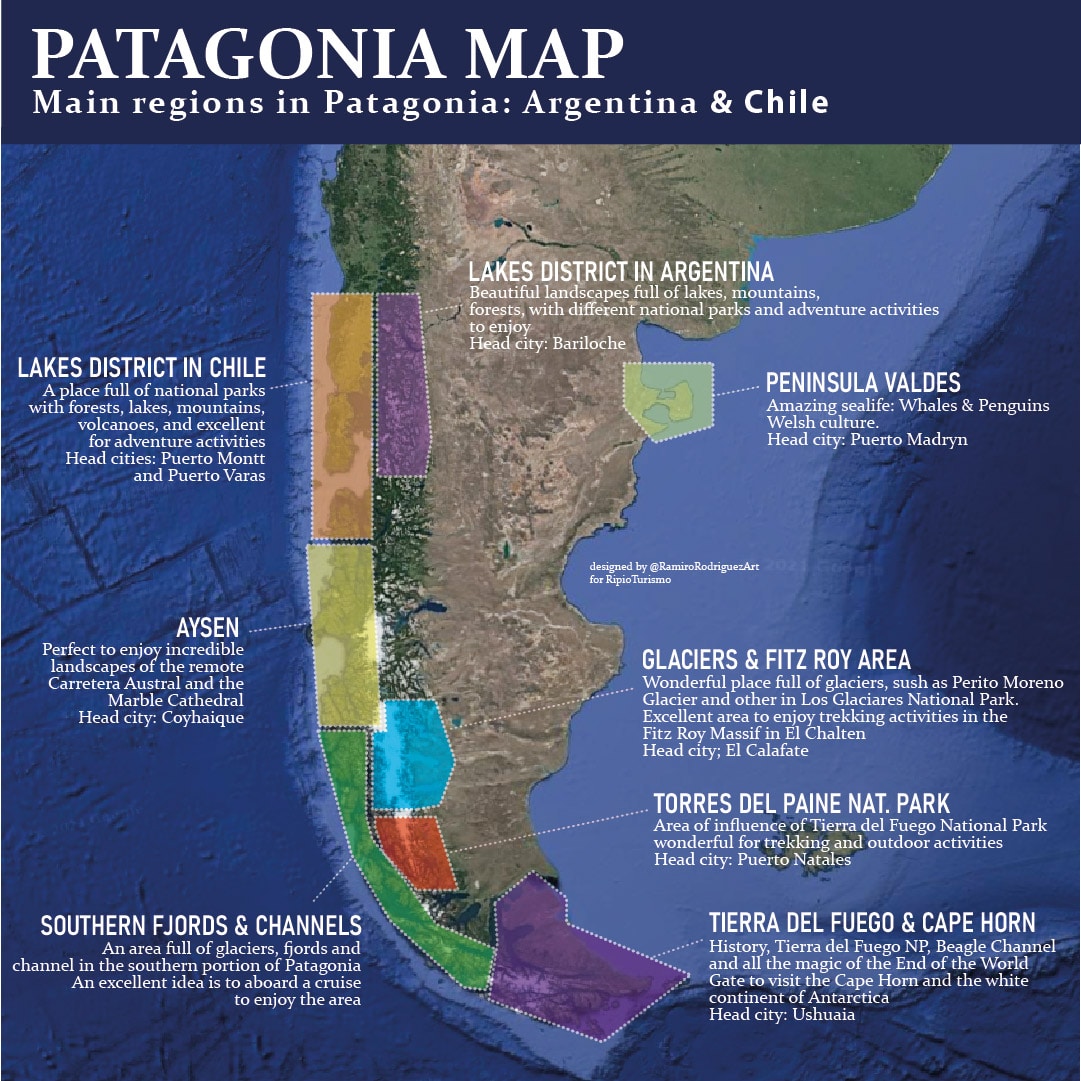
What are the main regions within Patagonia? Beyond the Chilean and Argentinian divide, you can consider regions like the Lake District (north), the Southern Patagonian Ice Field area (central), and Tierra del Fuego (far south), each with unique features.
Conclusion: Charting Your Course Through Patagonia’s Grandeur
The map of Patagonia, South America, is far more than just lines and labels; it’s a blueprint for adventure, a guide to understanding one of the planet’s most spectacular and untouched regions. From the jagged peaks of the Andean Cordillera to the vastness of the Patagonian steppe and the icy embrace of its glaciers, every contour and marker tells a story.
Whether you’re planning a challenging trek through Torres del Paine, a scenic drive along Ruta 40, or a voyage through the Beagle Channel, a comprehensive understanding of Patagonia’s geography, aided by detailed maps, will elevate your journey from a simple trip to an immersive exploration. Embrace the map, and let it lead you to the heart of this magnificent South American wilderness.
Safe travels, and may your Patagonian adventure be as boundless as the landscapes you explore!