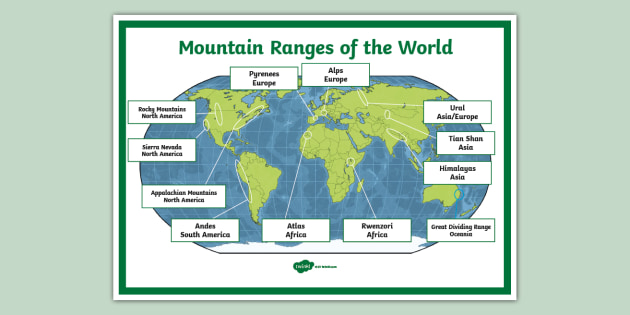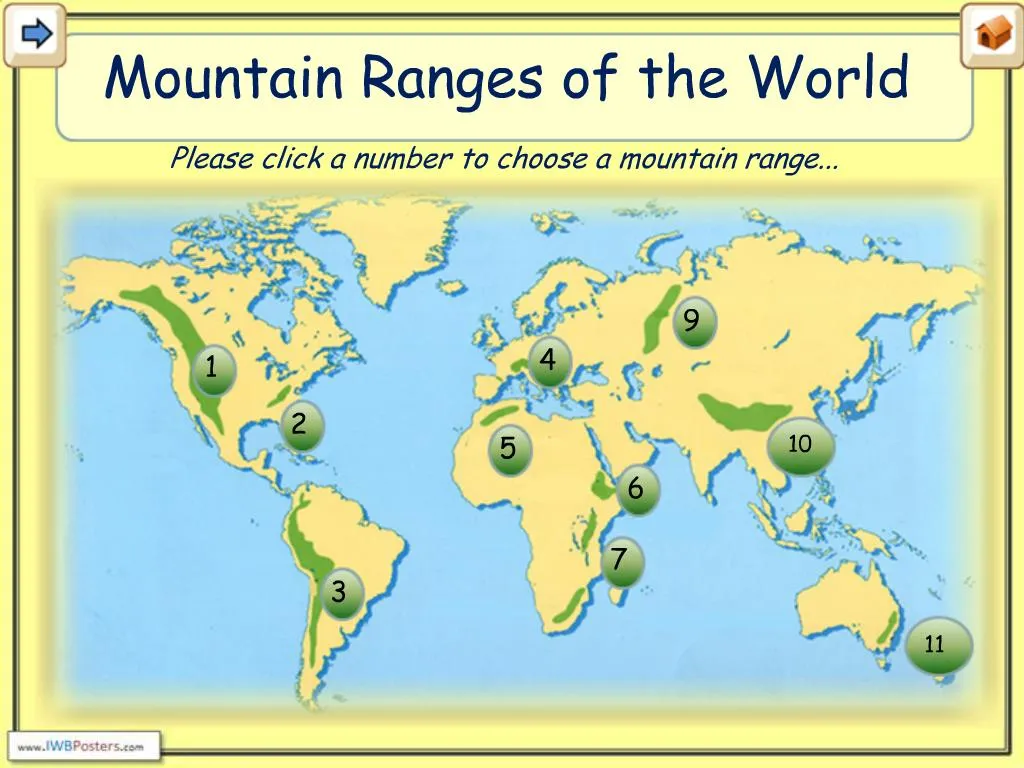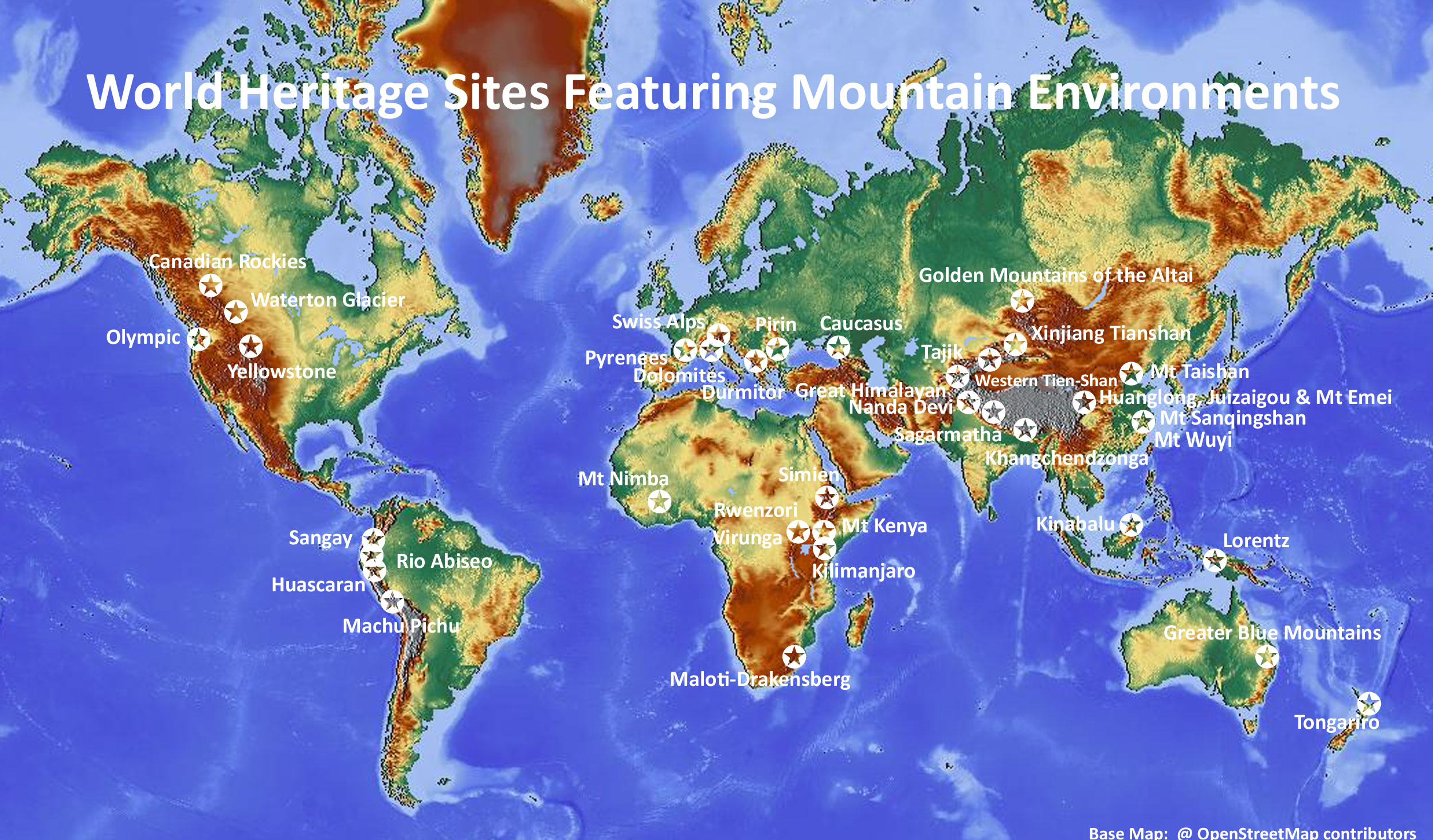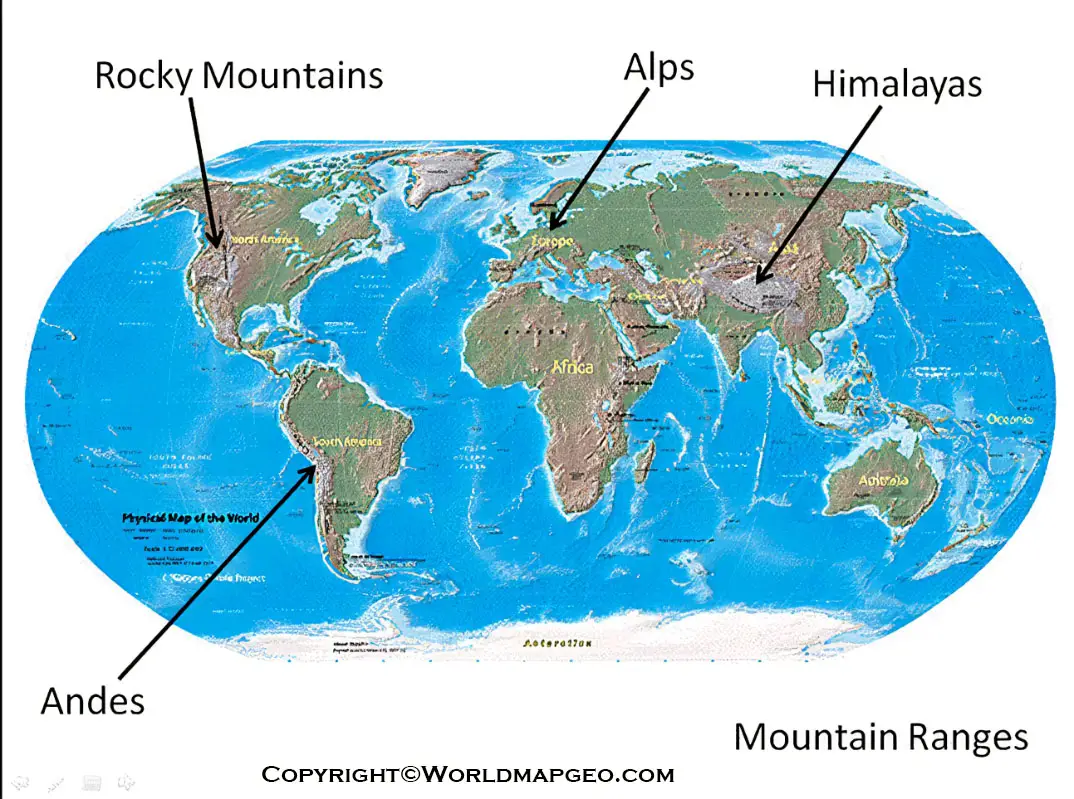
This article serves as a comprehensive guide to the world’s major mountain ranges. We’ll explore their locations, geological origins, ecological importance, and the human stories intertwined with these monumental landscapes. Whether you’re a geography enthusiast, an aspiring mountaineer, or simply curious about the natural world, this exploration of mountain ranges on the world map will offer a fascinating journey.
What Defines a Mountain Range?
Before diving into specific ranges, it’s crucial to understand what exactly constitutes a mountain range. Unlike isolated mountains, a mountain range is a series of mountains or hills closely related in position and direction, often formed by the same geological processes. These processes primarily involve tectonic plate movements, volcanic activity, and erosion.
Tectonic Plate Collisions
The most common way mountain ranges form is through the collision of tectonic plates. When two continental plates collide, the immense pressure causes the Earth’s crust to buckle and fold, creating towering mountain ranges. The Himalayas, the world’s highest mountain range, are a prime example of this process, formed by the collision of the Indian and Eurasian plates.
Volcanic Activity
Volcanic mountain ranges arise from the accumulation of lava and volcanic ash over time. As volcanoes erupt repeatedly, they build up layers of material, gradually forming mountains. The Andes Mountains, a significant portion of which are volcanic in origin, demonstrate this process along the western edge of South America.
Erosion and Weathering
While tectonic activity and volcanism initiate mountain formation, erosion and weathering play a crucial role in shaping the final form of mountain ranges. Wind, water, and ice carve away at the rock, creating valleys, peaks, and other characteristic features. The Appalachian Mountains, significantly older and more eroded than the Himalayas, showcase the impact of long-term erosion.
Major Mountain Ranges Around the World
The Himalayas: The Roof of the World
The Himalayas, stretching across Asia, are home to the world’s highest peak, Mount Everest. Formed by the collision of the Indian and Eurasian plates, this range is relatively young and still actively growing. The Himalayas influence the climate of the Indian subcontinent and are the source of major rivers like the Ganges and the Indus. The range spans across several countries, including Nepal, India, Pakistan, Bhutan, and China.
The Andes: A South American Spine
The Andes Mountains, the longest continental mountain range in the world, run along the western coast of South America. This range is characterized by its volcanic activity, high plateaus, and diverse ecosystems. The Andes have played a crucial role in the development of South American civilizations, including the Inca Empire. Countries within the Andes range include Venezuela, Colombia, Ecuador, Peru, Bolivia, Chile, and Argentina.
The Rocky Mountains: North American Backbone
The Rocky Mountains, extending from Canada to the United States, form the major mountain range in western North America. This range is known for its rugged peaks, abundant wildlife, and scenic beauty. The Rockies have significant mineral resources and are a popular destination for outdoor recreation. The Continental Divide runs along the crest of the Rockies.
The Alps: European Majesty
The Alps, located in central Europe, are a relatively small but highly influential mountain range. Known for their dramatic peaks, glaciers, and picturesque valleys, the Alps have shaped the culture and history of Europe for centuries. The Alps are a popular tourist destination, offering skiing, hiking, and stunning scenery. Countries within the Alps include Austria, France, Germany, Italy, Liechtenstein, Monaco, Slovenia, and Switzerland.
The Ural Mountains: A Natural Border
The Ural Mountains, running north to south through western Russia, form a natural border between Europe and Asia. This range is relatively low in elevation but is rich in mineral resources. The Urals have played a significant role in Russian industry and are a region of diverse landscapes.
The Appalachian Mountains: Ancient and Eroded
The Appalachian Mountains, located in eastern North America, are an ancient mountain range that has been significantly eroded over millions of years. This range is characterized by its rounded peaks, forested slopes, and rich biodiversity. The Appalachians have a long history of human settlement and resource extraction.
The Great Dividing Range: Australia’s Eastern Highlands
The Great Dividing Range is Australia’s most substantial mountain range and the third-longest land-based range in the world. It stretches more than 3,500 kilometres (2,175 mi) from Dauan Island off the northeastern tip of Queensland, running the entire length of the eastern coastline through New South Wales, then into Victoria and turning westward, before finally dissolving into the central plain of the Grampians in western Victoria. The range divides the drainage of the eastern coastal rivers from those of the western plains.
The Ecological Importance of Mountain Ranges
Mountain ranges are biodiversity hotspots, supporting a wide variety of plant and animal life. The varying altitudes and microclimates within mountain ranges create diverse habitats, allowing different species to thrive. Mountain ecosystems provide essential ecosystem services, such as water regulation, soil conservation, and carbon sequestration.
Water Towers of the World
Mountain ranges act as natural water towers, collecting precipitation and releasing it slowly over time. Snowpack and glaciers in the mountains store water during the winter months and release it as meltwater during the spring and summer, providing a crucial water source for downstream communities. Many of the world’s major rivers originate in mountain ranges.
Biodiversity Hotspots
Mountain ranges are home to a disproportionately high number of plant and animal species, many of which are found nowhere else on Earth. The unique environmental conditions in mountain regions have led to the evolution of specialized adaptations, making these ecosystems particularly vulnerable to climate change and habitat loss.
The Human Impact on Mountain Ranges
Humans have interacted with mountain ranges for millennia, utilizing their resources, building settlements, and developing unique cultures. However, human activities can also have a significant impact on mountain ecosystems, leading to deforestation, soil erosion, and pollution. Sustainable management practices are essential to protect these valuable resources.
Resource Extraction
Mountain ranges are often rich in mineral resources, such as gold, silver, copper, and coal. Mining activities can have a significant impact on mountain ecosystems, leading to habitat destruction, water pollution, and soil erosion. Careful planning and mitigation measures are necessary to minimize the environmental impacts of resource extraction.
Tourism and Recreation
Mountain ranges are popular destinations for tourism and recreation, offering opportunities for hiking, skiing, climbing, and other outdoor activities. While tourism can bring economic benefits to mountain communities, it can also lead to environmental degradation if not managed sustainably. Overcrowding, pollution, and habitat disturbance are potential impacts of tourism.
Climate Change Impacts
Mountain ranges are particularly vulnerable to the impacts of climate change. Rising temperatures are causing glaciers to melt, snowpack to decline, and tree lines to shift upwards. These changes can have significant consequences for water resources, biodiversity, and human communities.
Frequently Asked Questions (FAQs)
What is the highest mountain range in the world?
The Himalayas are the highest mountain range in the world, containing all ten of the world’s highest peaks, including Mount Everest.
How are mountain ranges formed?
Mountain ranges are primarily formed by tectonic plate collisions, volcanic activity, and erosion.
What is the longest mountain range in the world?
The Andes Mountains are the longest continental mountain range in the world, stretching along the western coast of South America.
Why are mountain ranges important?
Mountain ranges are important for a variety of reasons, including their role as water towers, biodiversity hotspots, and sources of valuable resources.
What are the major threats to mountain ranges?
The major threats to mountain ranges include climate change, deforestation, mining, and unsustainable tourism.
Conclusion
Mountain ranges are magnificent and vital features of our planet. They shape our climate, provide essential resources, and inspire awe and wonder. Understanding their formation, characteristics, and ecological importance is crucial for their sustainable management and preservation. By appreciating the significance of these natural wonders, we can work towards protecting them for future generations. From the towering Himalayas to the ancient Appalachians, each mountain range tells a unique story of geological forces, ecological adaptation, and human interaction. As we continue to explore and learn about these majestic landscapes, let us strive to be responsible stewards of their future.