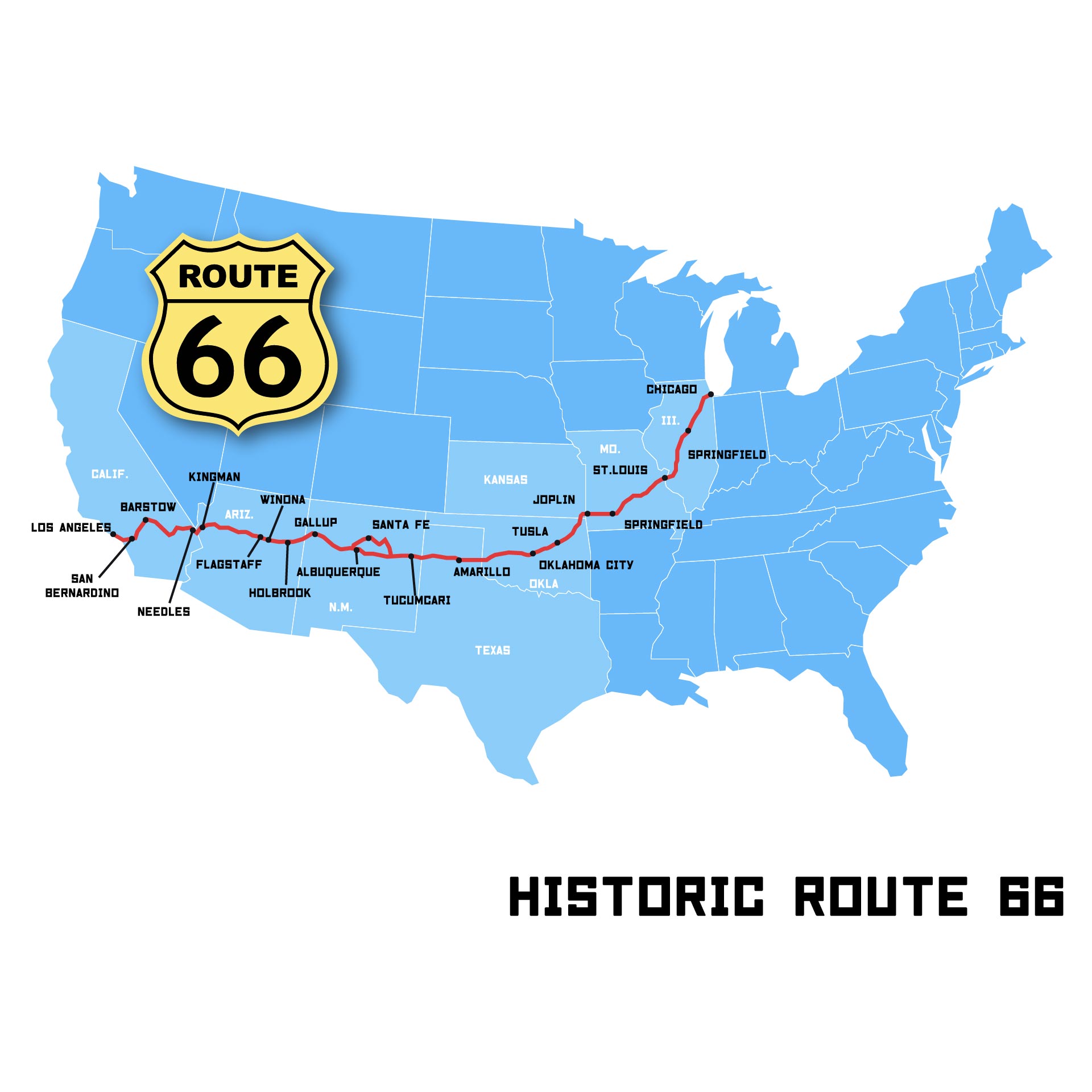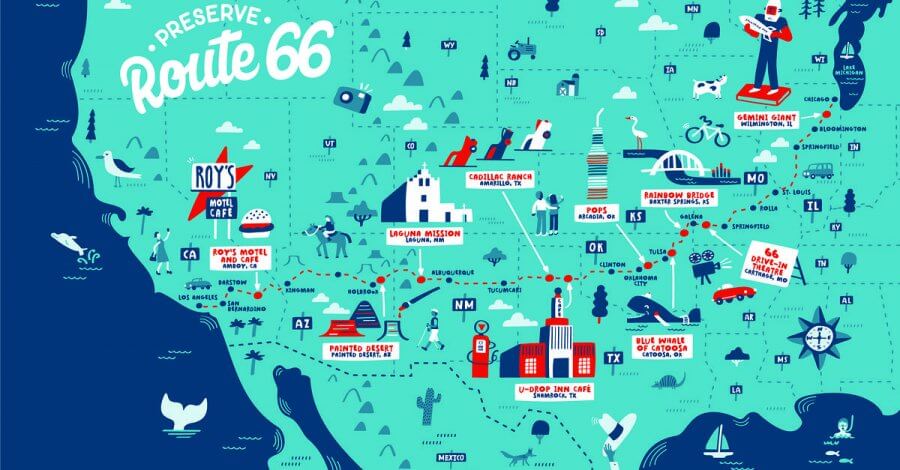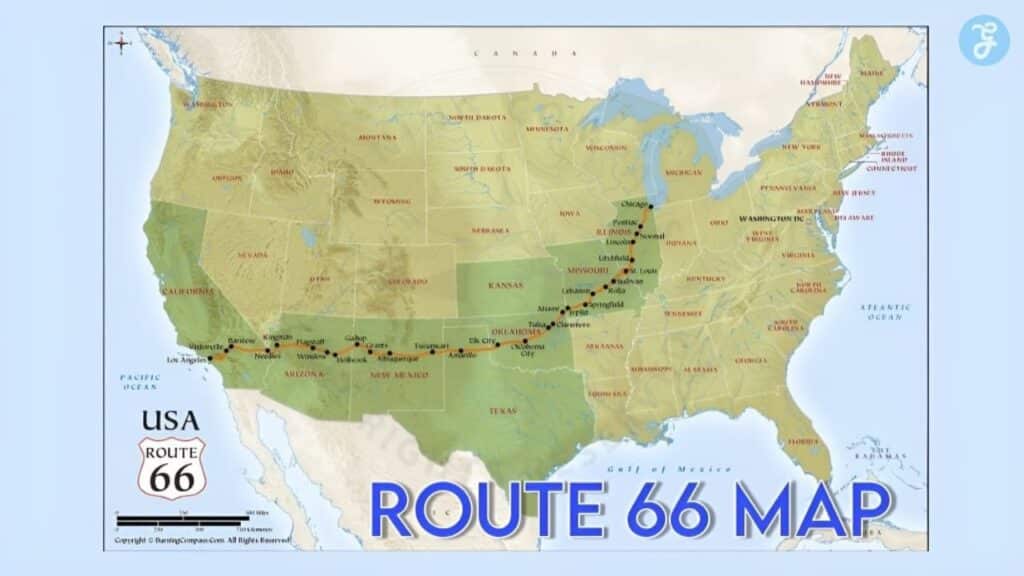
This guide provides a comprehensive overview of Route 66, focusing on the importance of maps and resources for planning your unforgettable journey. We’ll delve into the historical significance of the route, explore the states it traverses, highlight key attractions, and answer frequently asked questions to ensure you’re well-prepared for your adventure.
Why is a Route 66 Map Essential?
- Stay on the Original Route: Navigate the historic alignments, including the pre-1930s and post-1930s routes.
- Discover Hidden Gems: Locate quirky roadside attractions, vintage gas stations, and classic diners that are not visible from the interstates.
- Plan Your Itinerary: Identify points of interest, lodging options, and dining establishments along your desired route.
- Avoid Getting Lost: Ensure you stay on track, especially in rural areas where signage may be limited.
Historical Significance of Route 66
Route 66 was commissioned in 1926 and quickly became a vital artery for commerce and travel across the United States. During the Dust Bowl era of the 1930s, it served as a lifeline for migrants seeking a better life in California. The highway fostered a unique roadside culture, with mom-and-pop businesses catering to travelers. Though officially decommissioned in 1985, Route 66 remains a symbol of American ingenuity and resilience.
The States of Route 66: A Geographical Journey
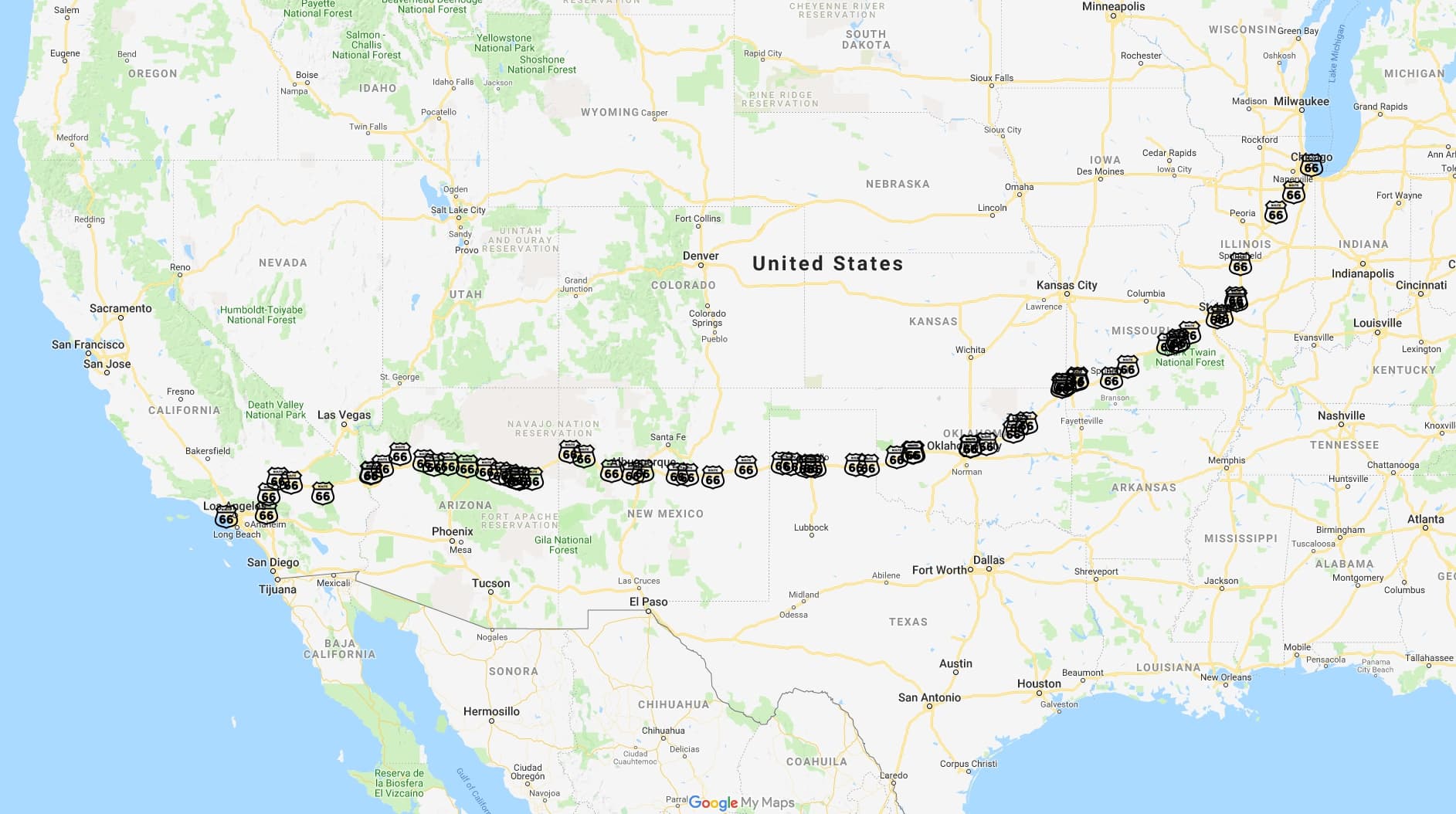
- Illinois: The starting point in Chicago, featuring iconic landmarks like the Route 66 Begin Sign and the Gemini Giant.
- Missouri: Home to the Gateway Arch in St. Louis and charming towns like Cuba, known for its murals.
- Kansas: A short but sweet stretch through southeastern Kansas, showcasing classic roadside diners.
- Oklahoma: The longest stretch of Route 66, boasting historical museums, Native American heritage sites, and the Blue Whale of Catoosa.
- Texas: Passing through the Texas Panhandle, offering wide-open landscapes and the Cadillac Ranch near Amarillo.
- New Mexico: Featuring stunning desert scenery, Native American pueblos, and the historic city of Santa Fe (a short detour).
- Arizona: Home to the Petrified Forest National Park, the Grand Canyon (a detour), and the quirky town of Seligman.
- California: The final leg, culminating at the Santa Monica Pier, with attractions like the Wigwam Motels and the Calico Ghost Town.
Key Attractions Along Route 66
- Gateway Arch National Park (St. Louis, Missouri): An iconic monument symbolizing westward expansion.
- Meramec Caverns (Stanton, Missouri): A vast cave system with stunning formations.
- Blue Whale of Catoosa (Catoosa, Oklahoma): A beloved roadside attraction shaped like a giant blue whale.
- Cadillac Ranch (Amarillo, Texas): A quirky art installation featuring Cadillacs buried nose-first in the ground.
- Petrified Forest National Park (Arizona): A surreal landscape of petrified wood and colorful badlands.
- Grand Canyon National Park (Arizona – Detour): One of the world’s most breathtaking natural wonders.
- Santa Monica Pier (Santa Monica, California): The official end of Route 66, offering amusement park rides, restaurants, and stunning ocean views.
Planning Your Route 66 Itinerary
- Time of Year: Spring and fall offer pleasant weather for driving. Summer can be hot, especially in the desert regions, while winter may bring snow and ice.
- Duration: Allow at least two weeks to fully experience Route 66. A shorter trip can focus on specific sections of the route.
- Budget: Factor in costs for gas, lodging, food, and attractions. Prices can vary depending on the season and location.
- Accommodation: Choose from a range of options, including historic motels, chain hotels, and campgrounds. Book in advance, especially during peak season.
- Transportation: Rent a car or RV, or drive your own vehicle. Ensure it’s well-maintained and suitable for long-distance travel.
Navigating Route 66: Maps, GPS, and Apps
- Paper Maps: Purchase a detailed Route 66 map or atlas from a bookstore or online retailer.
- GPS Devices: Use a GPS device or smartphone app for turn-by-turn directions. Be aware that GPS may not always be accurate on the older sections of Route 66.
- Smartphone Apps: Download Route 66-specific apps that provide information on attractions, lodging, and dining.
Tips for an Unforgettable Route 66 Road Trip
- Embrace the Detours: Don’t be afraid to explore off the main route. Some of the best discoveries are found on the backroads.
- Talk to the Locals: Engage with the people who live and work along Route 66. They can offer valuable insights and stories.
- Support Local Businesses: Patronize the mom-and-pop establishments that keep the spirit of Route 66 alive.
- Take Your Time: Don’t rush through the experience. Savor the scenery, the history, and the culture of the Mother Road.
- Be Prepared for the Unexpected: Route 66 can be unpredictable. Be prepared for flat tires, unexpected road closures, and other surprises.
Preserving Route 66 for Future Generations
Route 66 is a national treasure that deserves to be preserved for future generations. Support organizations like the National Historic Route 66 Federation, which work to protect and promote the highway. By respecting the history and culture of Route 66, you can help ensure its survival for years to come.
Frequently Asked Questions (FAQs) About Route 66
Q: How long does it take to drive Route 66?
A: It typically takes about two weeks to drive the entire length of Route 66, but it can vary depending on your pace and how many stops you make. A shorter trip can focus on specific sections of the route.
Q: What is the best time of year to drive Route 66?
A: Spring and fall are generally considered the best times to drive Route 66, as the weather is mild and comfortable. Summer can be hot, especially in the desert regions, while winter may bring snow and ice.
Q: How much does it cost to drive Route 66?
A: The cost of a Route 66 road trip can vary widely depending on your budget and travel style. Factors to consider include gas, lodging, food, attractions, and souvenirs. A rough estimate would be around $2,000-$5,000 per person for a two-week trip.
Q: Is Route 66 well-marked?
A: While Route 66 is generally well-marked, it’s important to have a good map or GPS device to stay on the correct route. Modern interstates have bypassed many original sections of the highway, so it’s easy to get off track.
Q: What are some must-see attractions on Route 66?
A: Some must-see attractions on Route 66 include the Gateway Arch in St. Louis, the Blue Whale of Catoosa, the Cadillac Ranch, the Petrified Forest National Park, and the Santa Monica Pier.
Q: Where can I find Route 66 maps?
A: Route 66 maps can be found at bookstores, online retailers, visitor centers, and some gas stations along the route. You can also download Route 66-specific apps for your smartphone.
Q: Are there any dangers I should be aware of when driving Route 66?
A: While Route 66 is generally safe, it’s important to be aware of potential dangers such as distracted driving, fatigue, and extreme weather conditions. Also, some sections of the road may be in poor condition, so drive carefully.
Q: What kind of car is best for driving Route 66?
A: The best kind of car for driving Route 66 is one that is reliable, comfortable, and well-maintained. A sedan, SUV, or RV are all good options. Consider the amount of luggage you’ll be carrying and the type of terrain you’ll be encountering.
Q: Can I still drive the entire original Route 66?
A: No, it is impossible to drive the entire original Route 66, as some sections have been paved over or are no longer accessible. However, you can still drive the vast majority of the historic route by following detailed maps and guides.
Conclusion: Your Route 66 Adventure Awaits
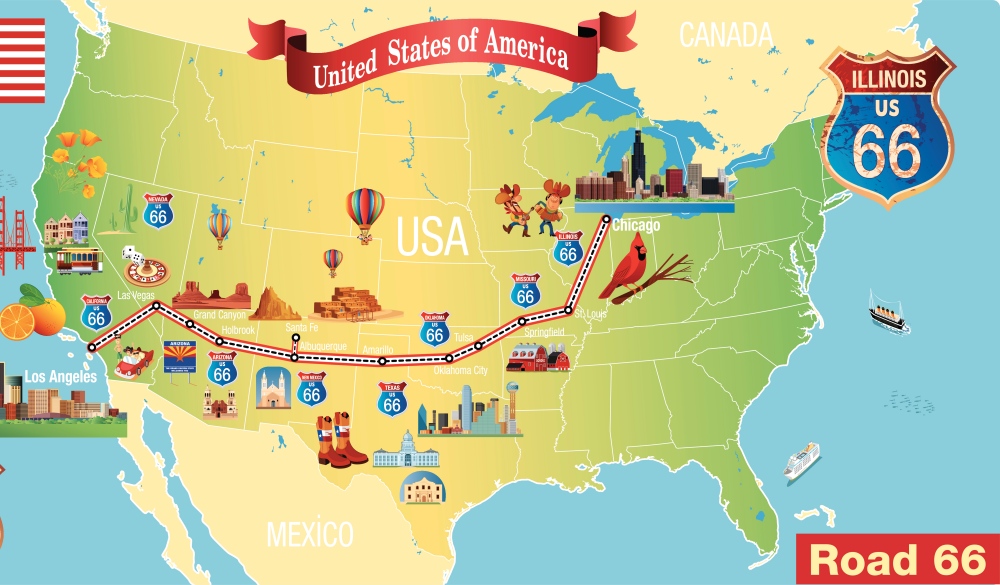
Route 66 is more than just a highway; it’s a journey through American history, culture, and landscapes. By using a detailed Route 66 in USA map, planning your itinerary carefully, and embracing the spirit of adventure, you can create an unforgettable road trip experience. So, pack your bags, hit the road, and discover the magic of the Mother Road!
Remember to consult reliable resources, respect local communities, and drive safely. The open road awaits – embark on your Route 66 adventure today!


:max_bytes(150000):strip_icc()/RoadTrip_Route66_NPS-566b0fbb3df78ce1615e75f6.jpg "Route 66 in USA Map: Your Ultimate Guide to the Mother Road")