This comprehensive guide will walk you through the various techniques for iterating over maps in Java, from traditional approaches to modern Java 8 features. We’ll explore their use cases, discuss performance implications, and highlight best practices to help you choose the most suitable method for your specific needs.
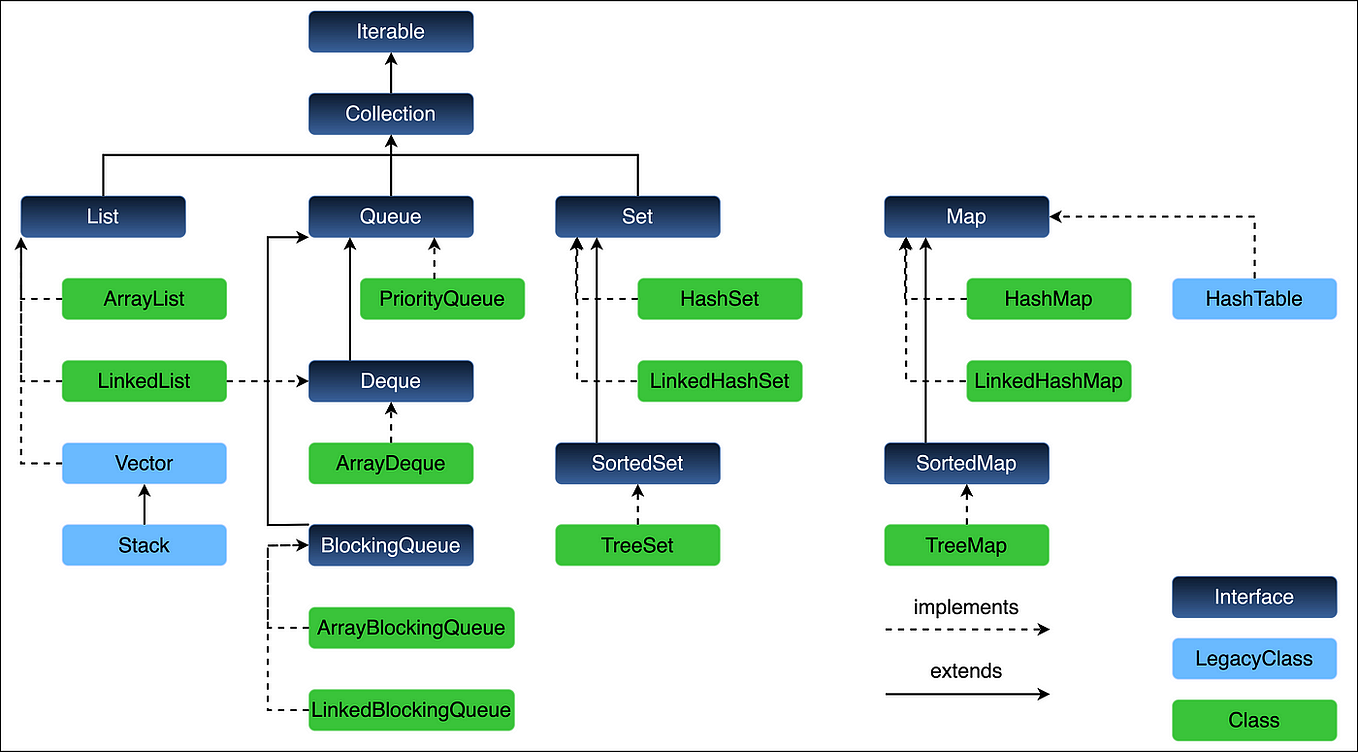
Before diving into iteration, let’s briefly recap what a Map is. A Map is an object that maps keys to values. A map cannot contain duplicate keys; each key can map to at most one value. Common implementations include HashMap, TreeMap, and LinkedHashMap, each offering different characteristics regarding order and performance.
Understanding the Core Iteration Strategies
- KeySet: A
Setof all the keys contained in the map. - Values: A
Collectionof all the values contained in the map. - EntrySet: A
SetofMap.Entryobjects, where eachEntryrepresents a key-value pair.
Each of these views provides a different perspective and is useful in distinct scenarios.
Iterating Over Keys Using keySet()
When your primary goal is to process only the keys of a map, the keySet() method is your go-to. It returns a Set view of the keys contained in this map. You can then iterate over this set using an enhanced for loop or an Iterator.
Map<String, Integer> studentScores = new HashMap<>();studentScores.put("Alice", 95);studentScores.put("Bob", 88);studentScores.put("Charlie", 92);
// Using enhanced for loopfor (String name : studentScores.keySet()) System.out.println("Student: " + name);
// To get the value, you'd perform a lookup (which can be less efficient for large maps)for (String name : studentScores.keySet()) System.out.println("Student: " + name + ", Score: " + studentScores.get(name));
When to use: This method is suitable when you only need to access the keys or when you perform operations that only depend on the keys. If you need both keys and values, and plan to retrieve values using map.get(key) inside the loop, consider entrySet() for better performance, especially with HashMap, as get() involves a hash calculation.
Iterating Over Values Using values()
If your application only requires processing the values stored in the map, the values() method is the most direct approach. It returns a Collection view of the values contained in the map. Note that this collection may contain duplicate values, as keys are unique but values are not.
Map<String, Integer> productPrices = new TreeMap<>();productPrices.put("Laptop", 1200);productPrices.put("Mouse", 25);productPrices.put("Keyboard", 75);
for (Integer price : productPrices.values()) System.out.println("Price: $" + price);
When to use: This method is ideal when you are interested solely in the values, perhaps to calculate a sum, find a maximum, or filter based on value properties, without needing access to their corresponding keys.
Iterating Over Key-Value Pairs Using entrySet()
The entrySet() method is arguably the most common and often the most efficient way to iterate over a map when you need both the key and its corresponding value. It returns a Set of Map.Entry<K, V> objects, where each Entry represents a single key-value mapping.
Map<String, String> userRoles = new LinkedHashMap<>();userRoles.put("admin", "Administrator");userRoles.put("editor", "Content Editor");userRoles.put("viewer", "Guest User");
for (Map.Entry<String, String> entry : userRoles.entrySet()) System.out.println("User: " + entry.getKey() + ", Role: " + entry.getValue());
When to use: This is generally the preferred method when you need to access both the key and the value of each entry. It avoids the overhead of repeated get(key) calls that would occur if you iterated over keySet() and then looked up each value.
Traditional Iteration with Iterator
While enhanced for loops are convenient, sometimes you need more control, such as when you want to remove elements from the map during iteration. In such cases, using an explicit Iterator is necessary. The Iterator‘s remove() method is the only safe way to modify a collection during iteration.
Map<String, Integer> inventory = new HashMap<>();inventory.put("Apples", 10);inventory.put("Bananas", 0);inventory.put("Oranges", 5);
Iterator<Map.Entry<String, Integer>> iterator = inventory.entrySet().iterator();while (iterator.hasNext()) Map.Entry<String, Integer> entry = iterator.next(); if (entry.getValue() == 0) System.out.println("Removing out-of-stock item: " + entry.getKey()); iterator.remove(); // Safely remove the entry System.out.println("Updated inventory: " + inventory);
When to use: Use an Iterator when you need to modify the map (add or remove elements) while iterating, or when working with older Java versions that don’t support enhanced for loops for certain collection types (though this is less common with modern Java). Failing to use iterator.remove() when modifying the map will result in a ConcurrentModificationException.
Modern Iteration with Java 8 Stream API and Lambda Expressions
Java 8 introduced powerful features like the Stream API and lambda expressions, which provide more concise and functional ways to iterate and process map data. These methods are particularly useful for complex data transformations and filtering.
Using forEach() with Lambda Expressions
The forEach() method, available on the Map interface itself, is a simple way to iterate over each key-value pair using a lambda expression.
Map<String, Double> exchangeRates = new HashMap<>();exchangeRates.put("USD", 1.0);exchangeRates.put("EUR", 0.92);exchangeRates.put("GBP", 0.79);
exchangeRates.forEach((currency, rate) -> System.out.println(currency + ": " + rate));
When to use: This is a very clean and modern way to perform an action on each key-value pair when you don’t need to modify the map or return a new collection. It’s often preferred for simple iteration tasks.
Using Streams for Advanced Operations
For more complex scenarios involving filtering, mapping, or collecting results, you can leverage the Stream API by first getting an entrySet(), keySet(), or values() view and then converting it to a stream.
Map<String, Integer> productQuantities = new HashMap<>();productQuantities.put("Widgets", 150);productQuantities.put("Gadgets", 75);productQuantities.put("Doodads", 200);
// Filter products with quantity > 100 and print themproductQuantities.entrySet().stream() .filter(entry -> entry.getValue() > 100) .forEach(entry -> System.out.println(entry.getKey() + " (High Quantity): " + entry.getValue()));
// Collect keys of high-quantity products into a ListList<String> highQuantityProducts = productQuantities.entrySet().stream() .filter(entry -> entry.getValue() > 100) .map(Map.Entry::getKey) .collect(Collectors.toList());System.out.println("Products with high quantity: " + highQuantityProducts);
When to use: The Stream API is powerful for declarative, functional-style programming. Use it when you need to perform intermediate operations like filter, map, sorted, or terminal operations like collect, reduce, count, or forEach on the map’s elements.
Performance Considerations and Best Practices
The choice of iteration method can have subtle performance implications, especially with very large maps.
entrySet()vs.keySet()+get(): For iterating over both keys and values,entrySet()is generally more efficient than iterating overkeySet()and then callingmap.get(key)for each key. The reason is thatget(key)involves a hash calculation (forHashMap) or tree traversal (forTreeMap) for each lookup, whileentrySet()provides direct access to both components of the entry.forEach()(Java 8): For simple actions on each element,forEach()with a lambda is often very performant due to internal optimizations and can be more concise.- Parallel Streams: For extremely large maps and computationally intensive operations, consider using
parallelStream()for potential performance gains on multi-core processors. Be mindful of thread safety and the overhead of parallelization for smaller datasets.
Avoiding ConcurrentModificationException
A common pitfall is attempting to modify a map (add or remove elements) while iterating over it using an enhanced for loop or forEach(). This will typically result in a ConcurrentModificationException. To safely modify a map during iteration, you must use an Iterator and its remove() method, as demonstrated earlier.
If you need to add elements or perform multiple modifications, it’s often safer to collect the elements to be modified or removed into a temporary collection and then perform the modifications after the iteration is complete.
Choosing the Right Map Implementation
HashMap: Offers average constant time performance for basic operations (getandput). Iteration order is not guaranteed.TreeMap: Stores entries in a sorted order based on keys (natural ordering or customComparator). Iteration overTreeMapwill always be in sorted key order. Performance is logarithmic for basic operations.LinkedHashMap: Maintains insertion order (or access order if configured). Iteration order is predictable, matching the order in which elements were inserted.
Your choice of map implementation should align with your requirements for order and performance characteristics.
Frequently Asked Questions (FAQ)
Which is the fastest way to iterate a Map in Java?
For iterating over both keys and values, entrySet() with an enhanced for loop or forEach() (Java 8) is generally considered the fastest and most efficient. Iterating over keySet() and then calling map.get(key) repeatedly will incur more overhead due to multiple lookups.
How do you iterate a Map in Java 8?
The primary way to iterate a Map in Java 8 is using the forEach() method directly on the map, which accepts a BiConsumer lambda expression: myMap.forEach((key, value) -> / do something / );. For more complex operations, you can convert entrySet(), keySet(), or values() to a stream and use the Stream API methods (filter, map, collect, etc.).
What is the best way to iterate a HashMap?
The ‘best’ way depends on your specific needs:
- If you need both keys and values:
HashMap.entrySet()with an enhanced for loop orHashMap.forEach()(Java 8). - If you only need keys:
HashMap.keySet(). - If you only need values:
HashMap.values(). - If you need to modify the map during iteration: Use an
Iteratorobtained fromentrySet().iterator().
Generally, entrySet() is recommended when both components are required due to its efficiency.
Conclusion
Mastering map iteration is a fundamental skill for any Java developer. We’ve explored a range of methods, from the traditional keySet() and values() to the versatile entrySet() and the modern, functional approaches offered by Java 8’s Stream API and lambda expressions.
- Use
entrySet()when you need both keys and values for optimal performance. - Leverage
keySet()orvalues()when you only require one part of the key-value pair. - Employ an
Iteratorif you need to safely modify the map during iteration. - Embrace Java 8’s
forEach()for concise iteration and streams for complex data processing. - Always be mindful of
ConcurrentModificationExceptionwhen modifying maps during iteration.
By understanding these different techniques and their nuances, you can write more efficient, readable, and robust Java applications that effectively manage and process data stored in maps. Choose the method that best fits your specific requirements for readability, performance, and functionality.